
Last updated November 15, 2026
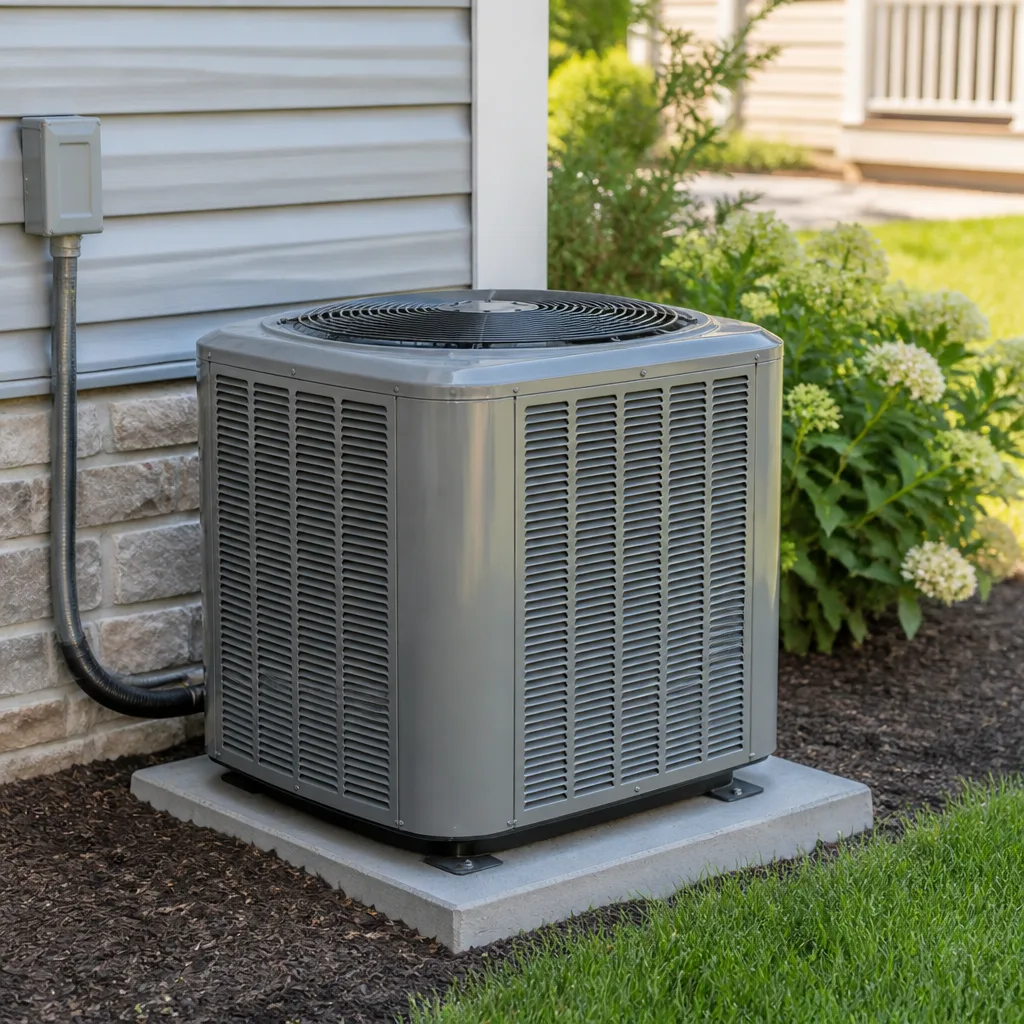 AC repair
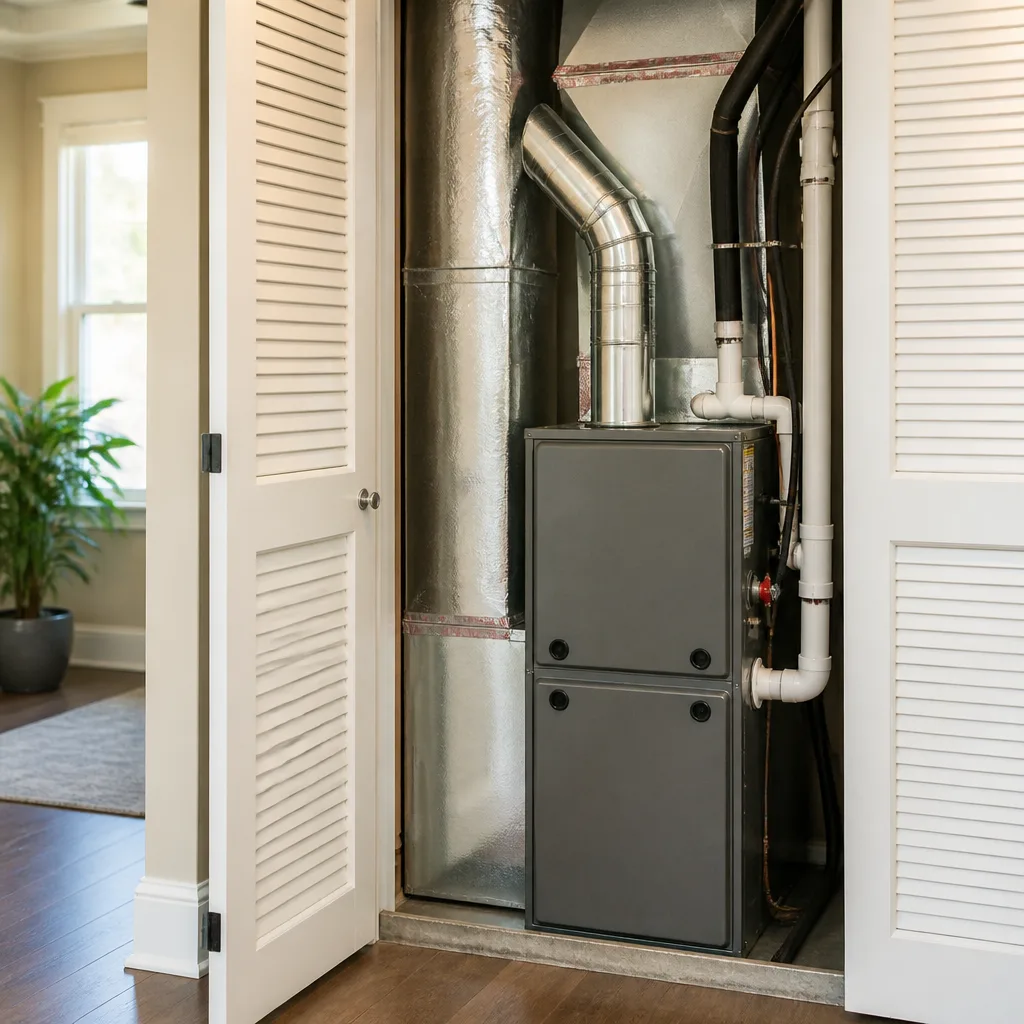 Furnace & heating
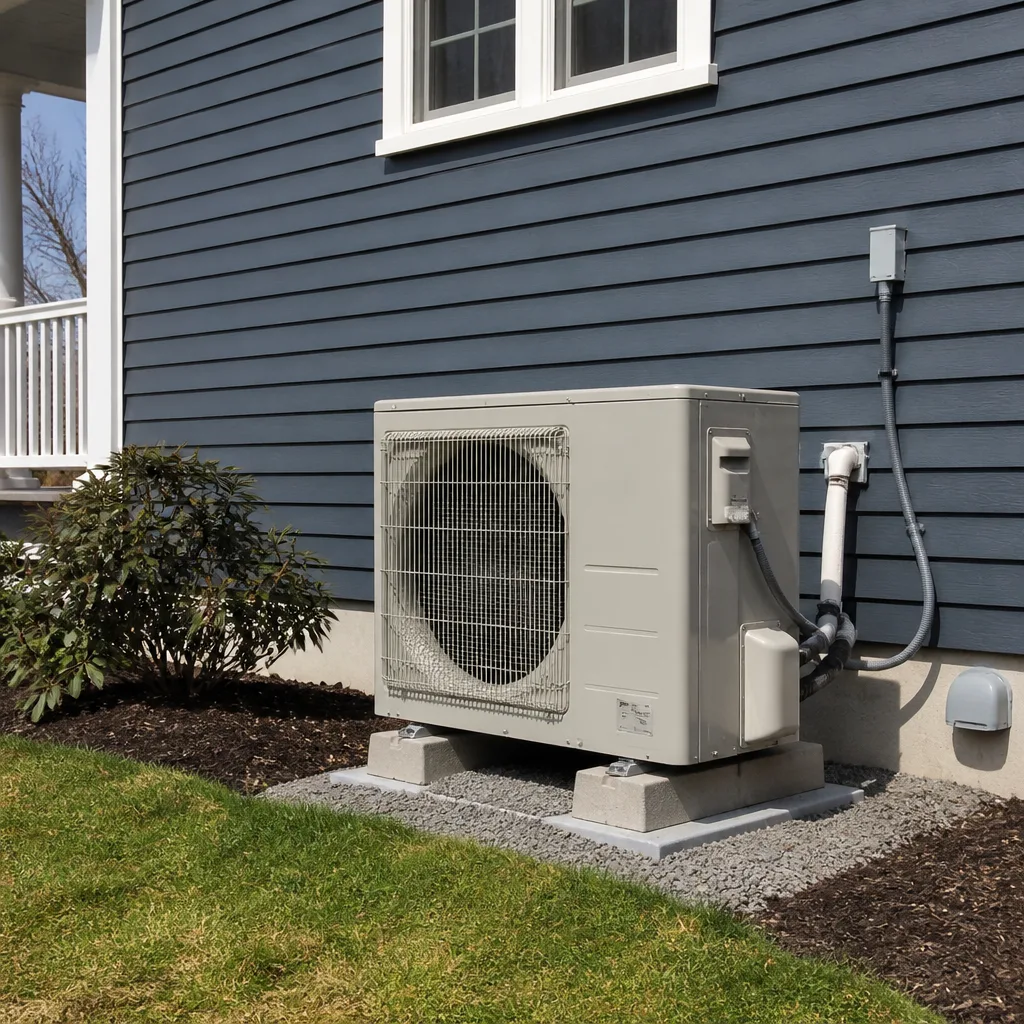 Heat pumps
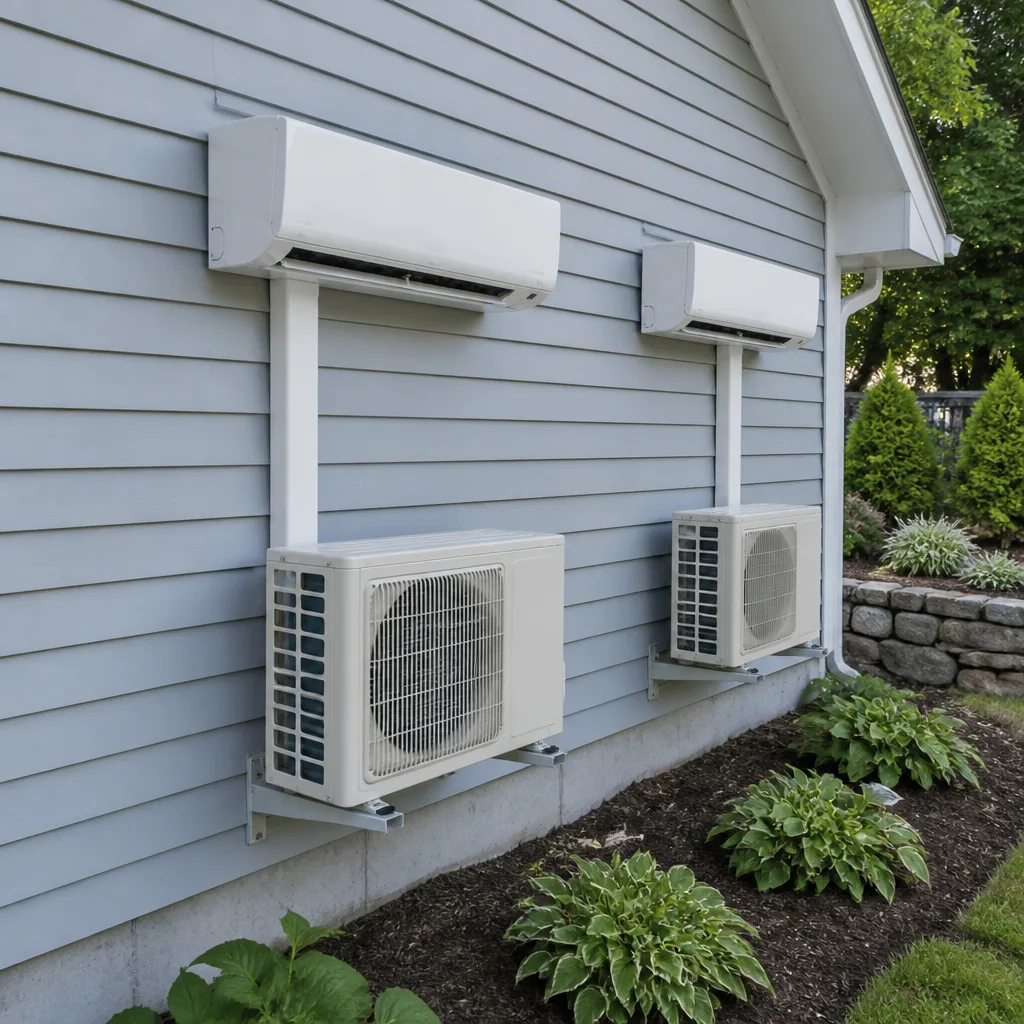 Ductless mini splits
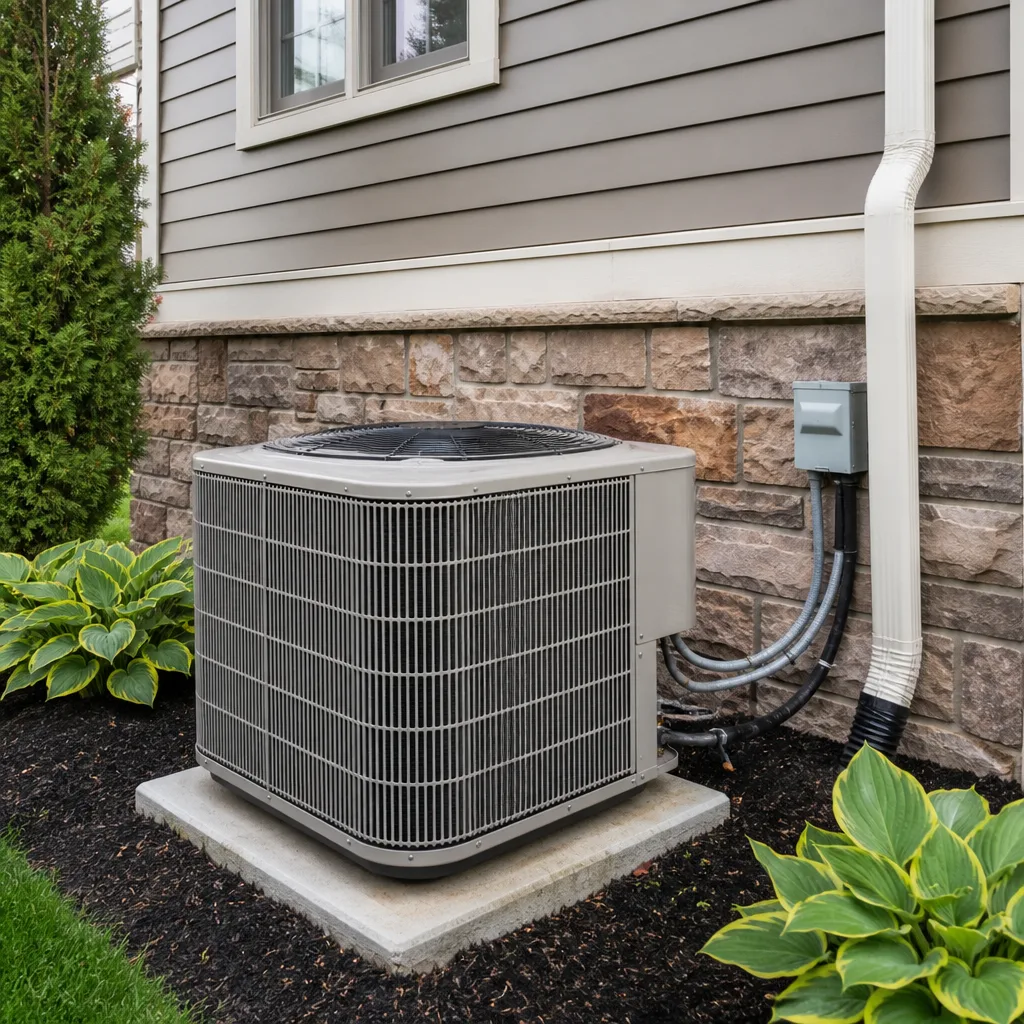 Carrier
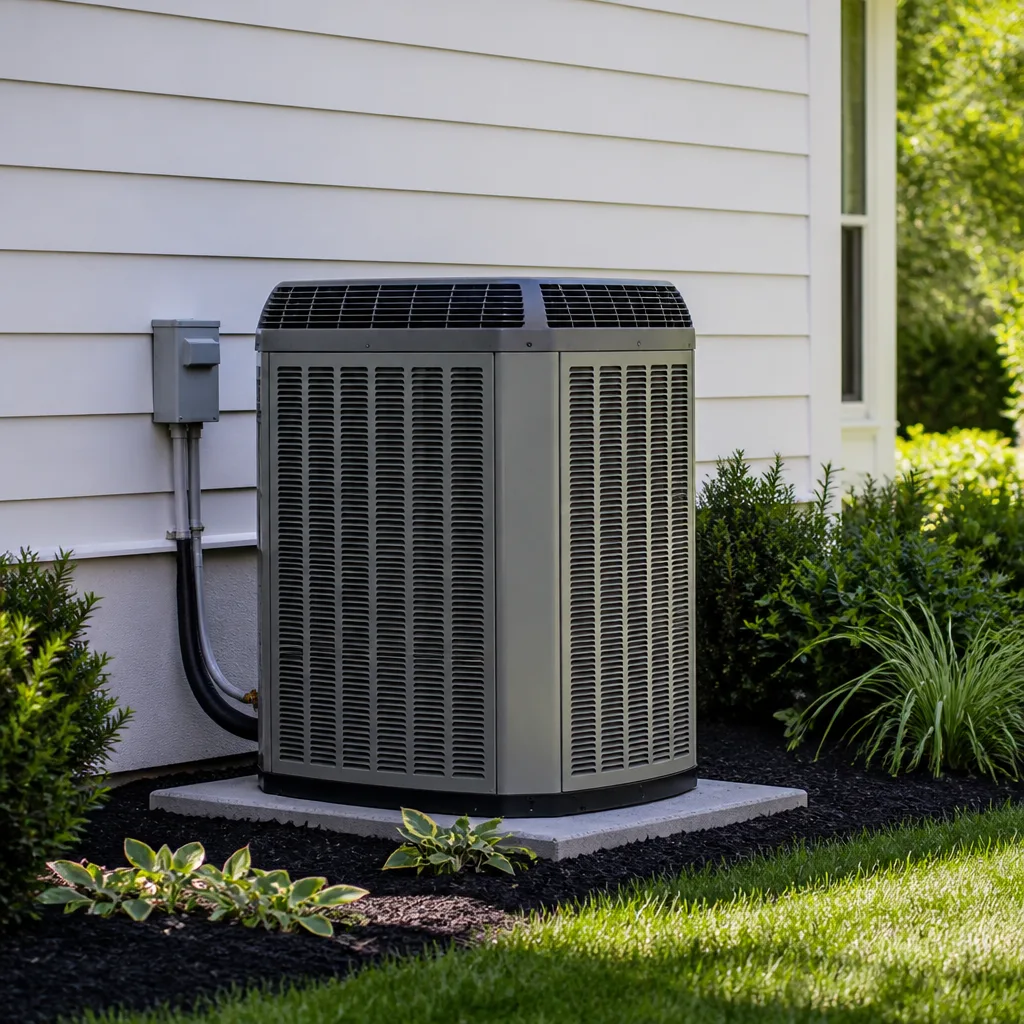 Trane
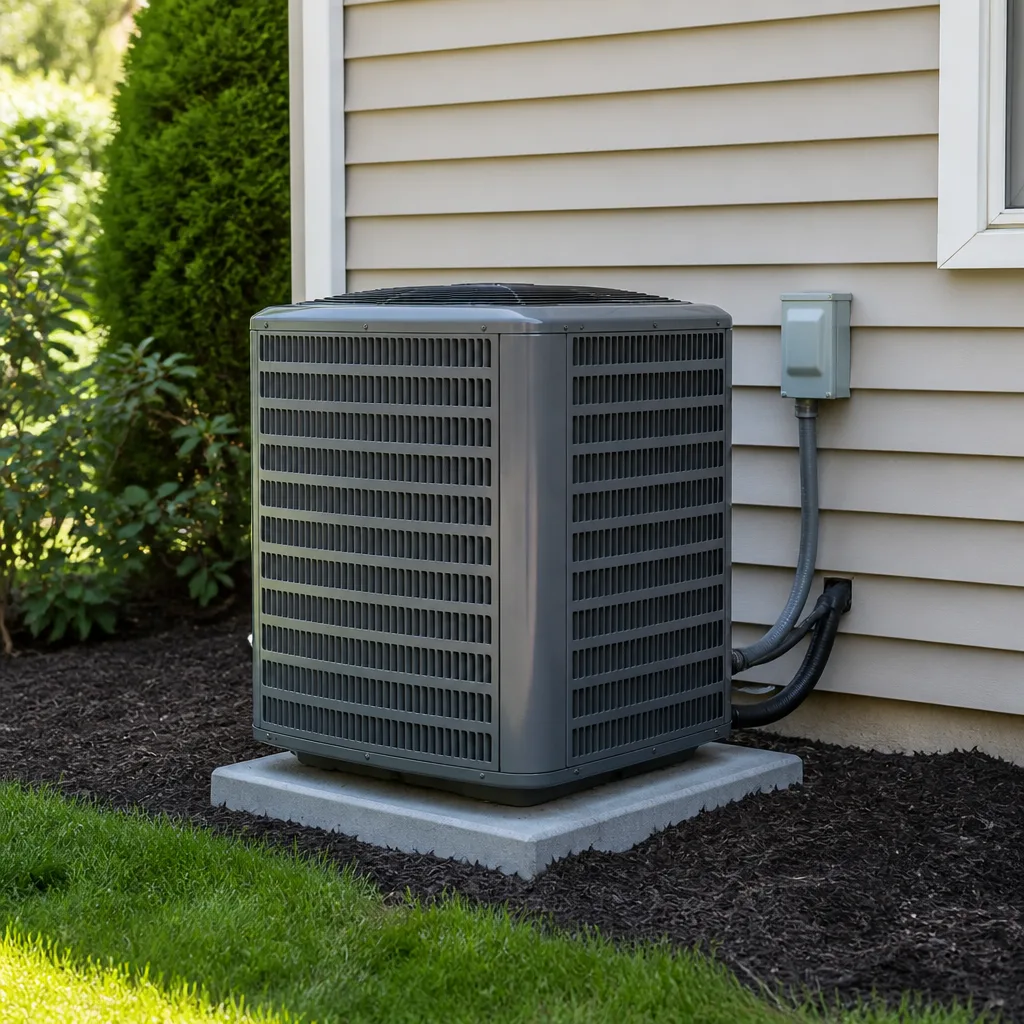 Goodman
Seasonal tune-up and full diagnostic on your Carrier, Trane, or Goodman system - readings shown to you before any repair is proposed
Diagnosis first, numbers second - you approve the repair price before a single part goes in.
Get your free estimateSeasonal HVAC Care for Glendale: Year-Round Homeowner’s Guide
Most seasonal HVAC advice assumes a place where the seasons are evenly spaced and roughly equal in severity. Glendale isn’t one of those places. We get a long, punishing summer that puts real strain on a condenser for months on end, a modest but genuine heating window that catches some homeowners off guard, and two stretches of dry, gusty weather that push dust, grit, and wildfire smoke through the coils and cabinetry of outdoor units. The result is that the standard “service it in spring and fall” calendar leaves gaps exactly where Glendale systems fail. This guide lays out a care calendar built around the way the year actually unfolds here: what to watch for from one phase to the next, which inspections earn their place, and which routine jobs you can reasonably handle yourself. What you’ll get out of it is a schedule you can keep on the fridge – not a sales pitch.
Quick Answer
A year-round HVAC calendar for Glendale should be built around five phases, not four: a post-summer inspection in September, a heating-readiness check in October and November, Santa Ana wind and smoke response whenever it comes (October through April), peak-heat monitoring in summer, and a wet-season filter check during the brief rainy stretches. The single most valuable appointment is the September inspection, because that’s when your system has just absorbed its hardest workload of the year and any damage is freshest. The single most neglected step is a fast cleanup after a Santa Ana wind event – waiting for the next scheduled visit leaves grit packed in the coil and working its way through the blower.
Styles & brands we work with
- AC repair
- Furnace & heating
- Heat pumps
- Ductless mini splits
- Carrier
- Trane
- Goodman
Table of Contents
- Why Glendale Needs Its Own HVAC Calendar
- What to Do After a Santa Ana Wind Event
- The October-November Switch: Cooling to Heating Readiness
- Wildfire Smoke, Filters, and the MERV Question
- Summer Peak-Load: Monitoring Before Something Fails
- The Case for a September Inspection
- What You Can Handle and What Needs a Technician
- Common Mistakes to Avoid
Why Glendale Needs Its Own HVAC Calendar
Start with the shape of the year. Glendale’s summer isn’t a handful of hot afternoons – it’s a long run of high temperatures that keeps an air conditioner cycling at or near capacity for weeks. That sustained load is what aging contactors, capacitors, and compressors actually feel. A system in a milder climate gets long recovery periods between heavy days. Yours doesn’t. By the time October arrives, your equipment has been on a treadmill since roughly May.
The second half of the picture is wind. Santa Ana wind events reach Glendale as early as October and as late as April, and they carry two different kinds of trouble. Coarse debris – leaves, palm fronds, seed pods, dust – lands on and in outdoor units. Fine particulate does the sneaky work: it slips past ordinary screens, coats the fins, and drifts into return ducts and filters faster than the brownish gray buildup on your carpet would suggest. After a dry, gusty week, the load on an air filter can jump well ahead of its normal replacement schedule.
The heating side is genuinely shorter but no less important. Glendale homeowners tend to run the furnace for a compact stretch and then forget about it until the next cold snap, which means a furnace can sit unused for eight or nine months and then be asked to fire on the first cold evening without any check in between. That’s how small issues – a dirty flame sensor, a clogged filter, a stubborn igniter – turn into a no-heat call in the middle of the first genuinely cold week.
And then there’s what wildfire smoke does to the indoor air picture during the same season. Smoke events are not rare in this part of Los Angeles County, and a furnace or air handler with a marginal filter will quietly pull that haze into the living space. All of this is why a five-phase calendar beats a quarterly one. The transitions matter more than the solstices. If you’re ready to book an inspection before the next phase arrives, you can call us and we’ll get it on the calendar – for a look at how we handle the local area, see our Glendale page.
What to Do After a Santa Ana Wind Event
The most common mistake after a Santa Ana wind event is to do nothing and wait for the next scheduled service. Don’t. Hours matter more than weeks here, because grit that settles on a wet or oily coil surface starts to pack and cement, and debris that drifts into a return or filter starts being drawn straight through your blower the next time you run the system. A short, careful response within the first day or two prevents most of the damage. Do this:
- Turn the system off before you look. Switch off the thermostat, and if it’s safe and clear at the service switch, cut power to the outdoor unit. This lets you inspect without a spinning fan pulling more dust through the cabinet.
- Check the outdoor cabinet from a safe distance. Look for obvious debris – fronds, leaves, seed pods, trash – lodged against the grille or dropped on top of the unit. Clear what you can reach with a broom or by hand. Never open the cabinet or reach through the fan grille: the fan and the electrical components behind it are a serious hazard, and the disconnect may not be where you think it is.
- Inspect and replace your filter. If it’s visibly loaded with dust after a wind event, change it. This is the single highest-value thing you can do yourself, and it’s also the fastest way to protect the blower.
- Check for fine dust around the return grille. A gritty haze on the grille or on nearby furniture is a signal that the fine stuff got past the filter – a fresh filter is prudent, and a coil inspection is worth scheduling if this happens repeatedly.
- Book a coil and cabinet inspection if the event was a heavy one. A technician can rinse the outdoor coil, check that the fins aren’t bent or packed, verify the blower isn’t drawing more current than it should, and confirm the drainage is clear – all within the same visit.
What you should not do is pull the outdoor cabinet apart to rinse the coil yourself. Coil fins are fragile, the fan motor and capacitor sit right there, and the disconnect can leave line voltage present in places a homeowner doesn’t expect. Cleaning from the outside with a garden hose on low pressure, with the power off, is the safe home version. Anything deeper belongs to a trained technician. If a wind event has left your system running hotter, noisier, or longer than usual, call (855) 473-8857. We answer 24/7. Fast dispatch from 7am to 7pm, Sunday through Friday.
The October-November Switch: Cooling to Heating Readiness
The October and November window is the one most homeowners get wrong, and it’s easy to see why. The days are still warm, so the AC is running. Then the first cool week arrives, the furnace fires for the first time since last spring, and whatever was going to go wrong shows up all at once. Planning for that transition costs a single inspection and prevents most of the surprise.
A heating-readiness inspection is not a full rebuild – it’s a set of checks a technician can run in one visit. It should cover:
- First-fire test. The furnace is run and observed from startup through a full heating cycle, which is when igniter, flame sensor, burners, and the draft path actually prove themselves.
- Flame sensor and burner condition. A dirty flame sensor is a common no-heat cause and usually a quick fix – but only if someone catches it before the cold snap.
- Filter and return-air check. After a summer of heavy cycling and at least one dry wind event, the filter often needs changing and the return isn’t as free-flowing as it was in spring.
- Heat exchanger inspection where accessible. This is the safety-critical piece. A cracked heat exchanger can leak combustion gases into the supply air, and it’s not a job for a homeowner to inspect. This is a genuine safety caveat: combustion components, gas piping, and electrical connections in a furnace should be handled by a trained technician, full stop. If your carbon monoxide detector has gone off, don’t run the system – ventilate, get out, and call for help.
- Thermostat check. Confirm heating mode engages proper sequences and that the thermostat isn’t stuck in a cooling schedule that keeps the furnace off.
- Condensate and drain check (where applicable). A drain that ran hard through summer is sometimes just one clogged trap away from an overflow.
If the inspection turns up something that no longer makes sense to repair – an aging system with a failing heat exchanger, or a furnace that’s on borrowed time – that’s the right moment to have the replacement conversation, not in the middle of a cold snap. Our team handles both sides of the year, so if you’re weighing a furnace repair against a full replacement, we’ll give you a straight answer and let you decide. One company, both seasons is genuinely how we’re set up.
Wildfire Smoke, Filters, and the MERV Question
Wildfire smoke events change the filter math in Glendale, and they raise a question we hear a lot: should I upgrade to a MERV-13 filter to deal with the smoke? The short answer is that MERV-13 is a real step up for fine particulate and is a reasonable choice on a properly designed system – but it is not safe to assume your ducts, blower, and air handler can handle it without checking first. On older duct systems with marginal return capacity, a denser filter can raise static pressure and make the blower work harder than it should. In practice that shows up as weaker airflow from the registers, longer run times, and a blower running hotter. This is a “measure before you upgrade” conversation, not a “buy the biggest number” one.
What we usually recommend:
- Treat a smoke event as a filter interval reset. If the AQI has been high for several days running, check the filter then – not at the next scheduled interval. Replace it if it’s loaded or visibly discolored. Don’t assume a filter that was fine two weeks ago is fine now.
- Check the MERV rating of what’s in there. Cheap fiberglass filters catch the big stuff and not much else. A pleated filter in the MERV-8 to MERV-11 range is a common middle ground that most residential systems tolerate.
- Ask before stepping up to MERV-13. A quick check of return size, duct condition, and blower type tells you whether a MERV-13 will work in your home or need a duct or air handler adjustment. It’s a five-minute question for a technician and a coin flip otherwise.
- Close up and recirculate during events. If you have a fresh-air intake or a whole-house fan, don’t run it during smoke. Run the system in fan-only mode with a fresh filter to keep air moving through the filter media rather than pulling unfiltered air in.
- Don’t stack filters. Layering a second filter in front of the first seems like it would help, and it usually just chokes the return.
If you’ve had a string of smoke events and your system is suddenly louder, weaker, or slower than usual, that’s a signal to have the airflow checked – not to guess. Whether you’re running a Daikin, a Bryant, or an older American Standard, the blower is the part with the most to lose and the least to say about it. Call (855) 473-8857 for an assessment. Estimates are free.
Summer Peak-Load: Monitoring Before Something Fails
Glendale’s summer is the part of the year that separates a well-cared-for system from a system on its way out. Peak-load care isn’t about hovering over the thermostat – it’s about knowing which signals actually mean something when they show up, and knowing which ones are just how a system behaves on a hot afternoon. Watch for these early signs of stress:
- Longer run times than usual. Some run time is normal on a hot day. If your system used to hit setpoint comfortably and now runs most of the afternoon and still falls short, that’s a capacity signal, not a thermostat problem.
- Warmer supply air. Put a hand near a register on a hot afternoon: the air should feel noticeably cool, not just “cool-ish.” A push of lukewarm air is a common sign of a dirty outdoor coil, low refrigerant charge, or a failing capacitor.
- Outdoor unit making more noise. A new rattle, a louder hum, a fan that sounds strained – these are worth a check before they turn into a no-cool call on the hottest weekend of the year.
- Water or ice where it shouldn’t be. Ice on the refrigerant lines, or a puddle near the indoor unit, both point to problems that get worse with continued use.
- Rising energy use. A system that’s quietly working harder shows up on the bill before it shows up as a breakdown. Across Glendale, a jump in summer usage that isn’t matched by a change in how you’re running the house is worth a look.
The practical move is to do a short self-check once a month through June, July, August, and September: change or check the filter, clear the outdoor cabinet, look at the coil from outside (don’t reach in), and note whether anything sounds or feels different. If something’s off, get it diagnosed while the system is still running, not after it’s blown a capacitor on a hot afternoon. The alternative is a repair that could have been a maintenance item. Our technicians have up to 15 years of experience, and spot-checking a system under load is one of the most useful things we do all year. Call (855) 473-8857. We answer 24/7, and crews run fast dispatch from 7am to 7pm, Sunday through Friday.
The Case for a September Inspection
Here’s where we diverge from the standard calendar: the most useful inspection you can book is not in April. It’s in September. That’s because your system’s hardest hits all come before September, and the inspection should come after them, not before.
Think about what a system has actually been through by early September in Glendale. It’s cycled hard for months, taken at least one Santa Ana event somewhere between October and April (typically a spring round), pulled a season’s worth of dust through the coil, and often run through at least one wildfire smoke event with a filter that may have been changed late. The next stretch – October and November – is when it’s briefly out of heavy use and about to be asked to fire the furnace for the first time. That’s the natural repair window. Finding a failing contactor, a dirty coil, an aging igniter, or a marginal capacitor in September means fixing it before it becomes an emergency in December.
The alternative is the “spring tune-up” tradition, which was designed for a climate that has a quiet winter. In Glendale, the inspection is more valuable after the load, not before it. A September inspection typically covers:
- Coil cleaning and a look at the fins for packed debris.
- Electrical check of the contactor, capacitor, and connections.
- Refrigerant charge check (only where the system allows it; some units need an access port added first).
- Blower and airflow check, including filter condition and return static.
- Condensate drain and safety switch check.
- A quick furnace readiness look, even though the heating season is still weeks away.
We run this kind of inspection on any major brand we’re certified for – Carrier, Trane, Lennox, Goodman, Rheem, York, Daikin, Bryant, and American Standard – so the equipment you bought is the equipment we work on. If you want to see how we structure the cooling side of that work, our AC installation page gives the full picture of what we handle. If you’re on the fence about whether your system needs a September look or a full replacement conversation, call us at (855) 473-8857 and we’ll tell you honestly.
What You Can Handle and What Needs a Technician
Not every HVAC task needs a technician, and pretending otherwise is a sales move. Here’s where the line actually falls.
Safe for most homeowners:
- Changing the filter – and remembering to check it during smoke events and after low-desert wind events.
- Clearing leaves and visible debris from around the outdoor unit, by hand or with a broom.
- Keeping the two or three feet around the outdoor cabinet clear of plants and stored items so it can breathe.
- Checking the thermostat programming and confirming cooling and heating modes fire when they should.
- Rinsing the outdoor coil with a garden hose on low pressure, with the power off, from the outside of the cabinet.
Needs a trained technician:
- Any work inside the outdoor cabinet or indoor air handler – the capacitor, contactor, compressor, blower motor, and fan motor all sit behind line-voltage components that can injure you badly even after the system is “off” at the thermostat.
- Any refrigerant work, gas-line work, or combustion work. These have real safety consequences – a cracked heat exchanger, a gas leak, or an electrical fault in a furnace or panel can be dangerous, and this is the area where shortcuts hurt people.
- Duct sealing, duct replacement, or any modification that changes airflow – these need measurement, not just material.
- Diagnosing “no cool” or “no heat.” Guessing at the cause and swapping parts is a good way to spend money on the wrong fix.
One more safe-home habit worth building: keep a small log of the dates you change the filter, whether a wind event happened, and any change in sound or run time. When a technician shows up, that log is the single most useful piece of information on the table. It turns a guess into a diagnosis.
Common Mistakes to Avoid
- Waiting for the next scheduled service after a Santa Ana wind event. Debris and fine dust settle in fast, and grit that sits long enough starts to pack against the coil. A quick check within the first day or two is far cheaper than a packed coil cleanup later.
- Assuming a MERV-13 filter is always an upgrade. On older Glendale duct systems, a dense filter can choke the return airflow and make the blower work harder than it should. Ask before you upgrade.
- Running the system through smoke events without checking the filter. A filter that was fine a week ago can be loaded after several days of high AQI. Check it then, not at the next interval.
- Doing the “spring tune-up” and skipping a September inspection. In Glendale, the inspection matters most after the load, not before it. September is when you catch what summer and spring wind events have actually done.
- Ignoring a cracked-heat-exchanger warning sign. A carbon monoxide detector that fires, a yellow-flame burner, or a burned smell on first fire are all safety events, not “watch it and see” events. Don’t run the furnace; call for help.
- Reaching into the outdoor cabinet to clear the fan or coil. The fan, the capacitor, and the contactor are all right there, and the disconnect is not always where you think. Work from outside the cabinet only.
- Letting a first “no heat” call happen in the middle of a cold snap. Firing the furnace for the first time in months without a check is the highest-risk moment of the year for a heating system. October and November exists for exactly this reason.
See the difference
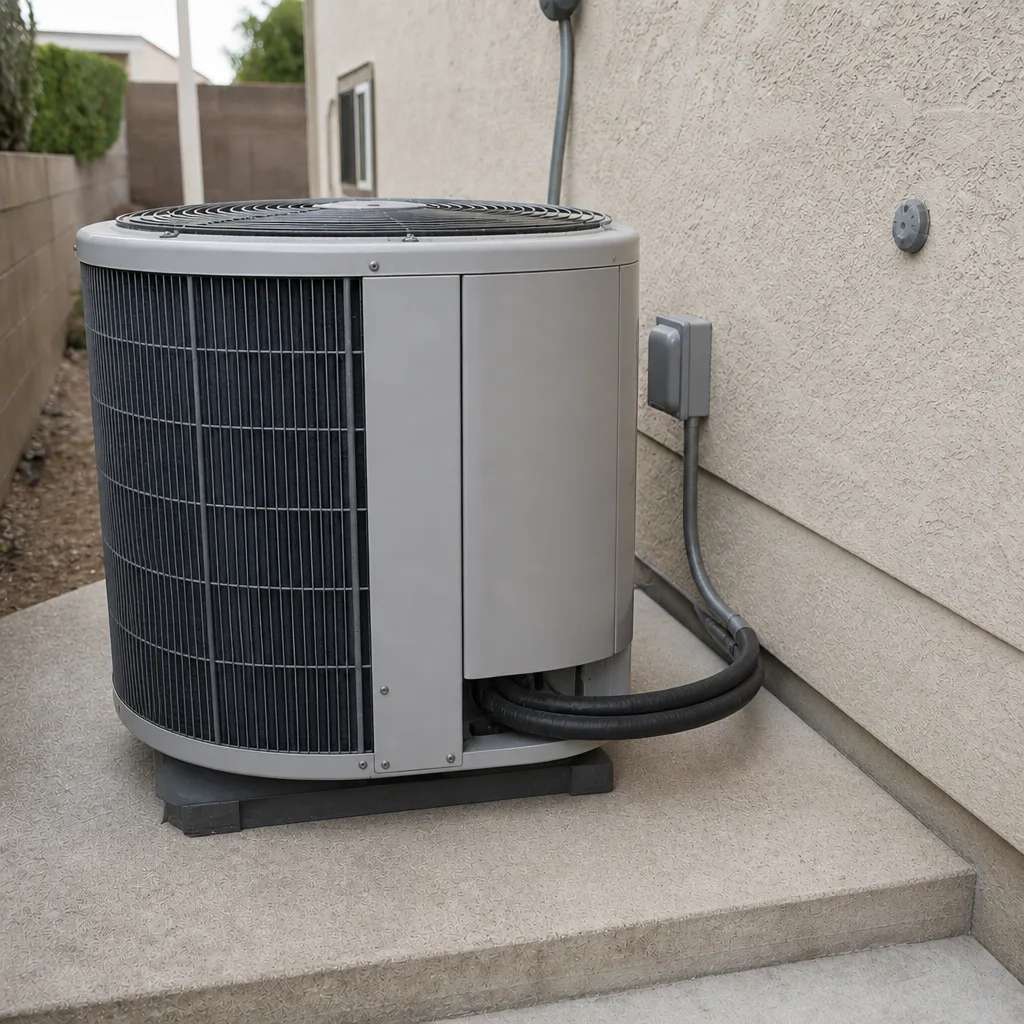
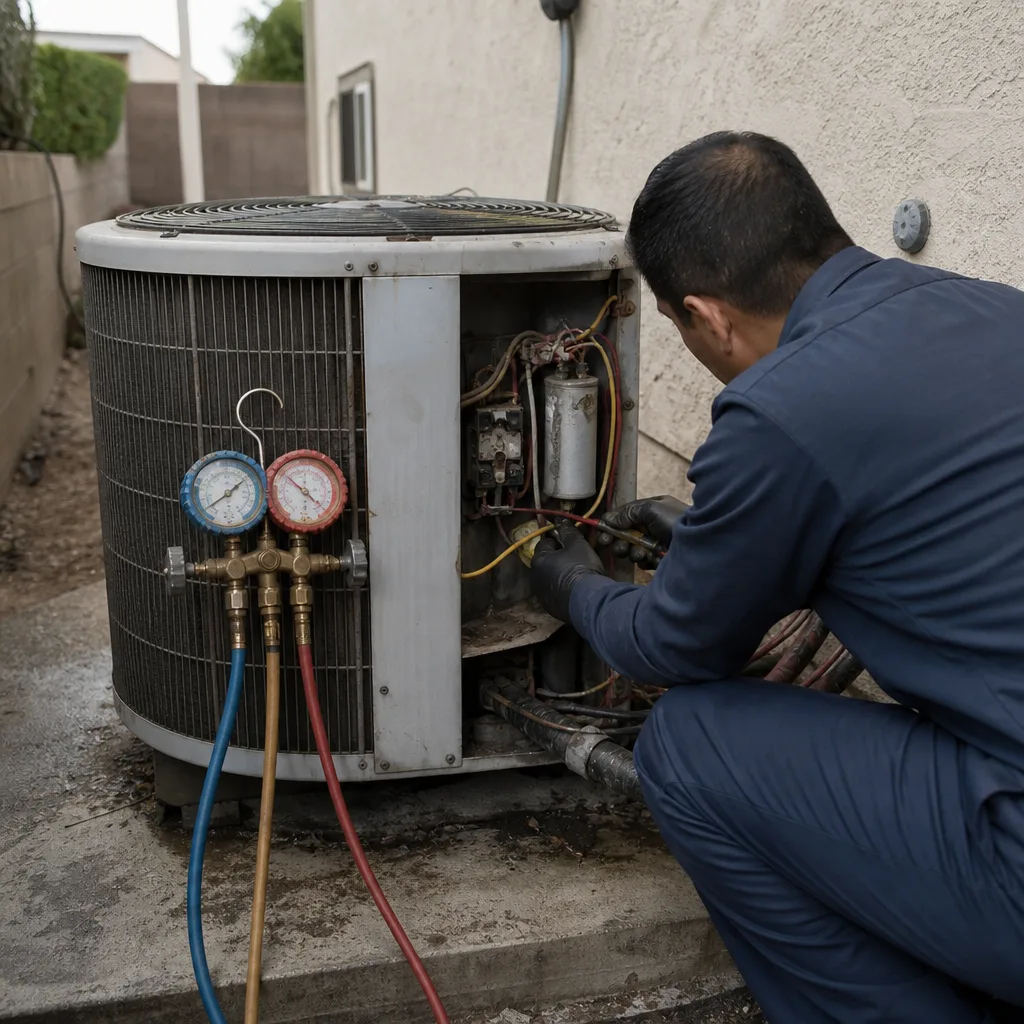 Before
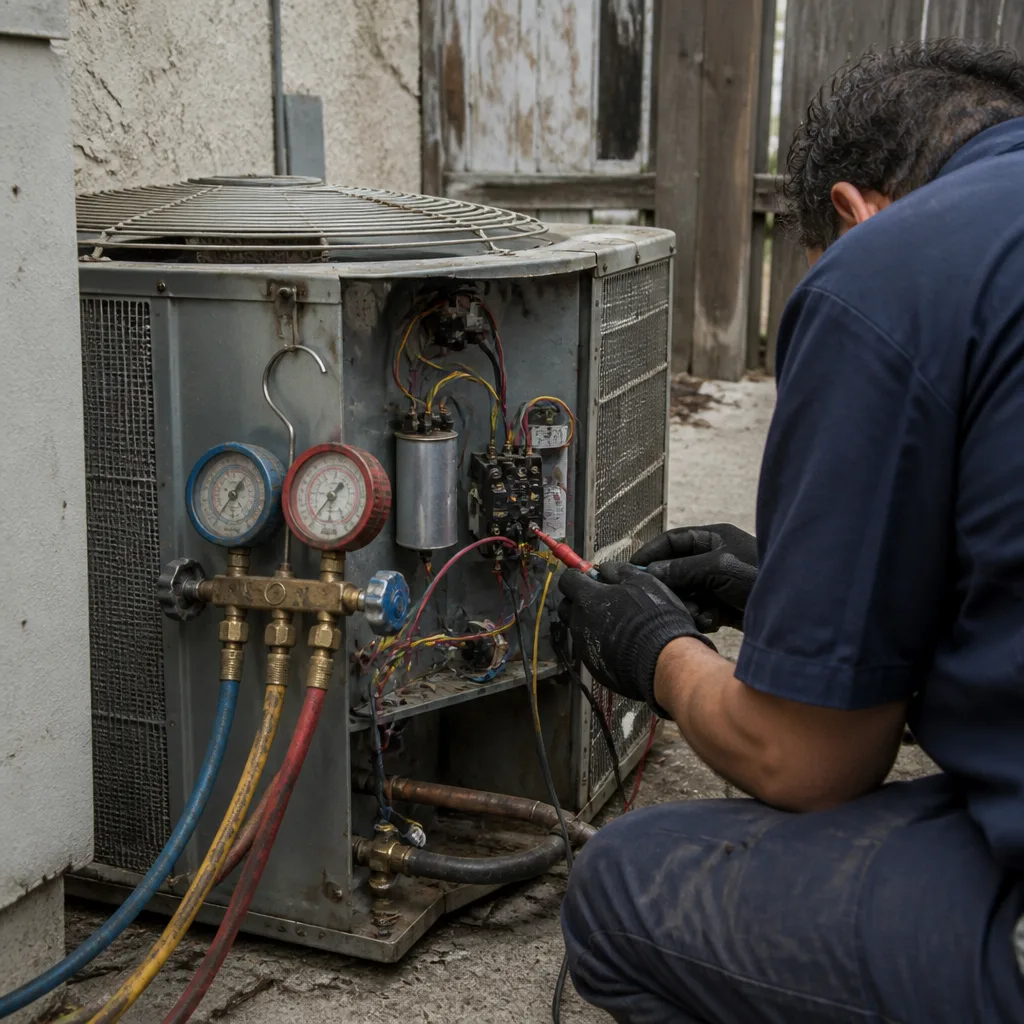
 After
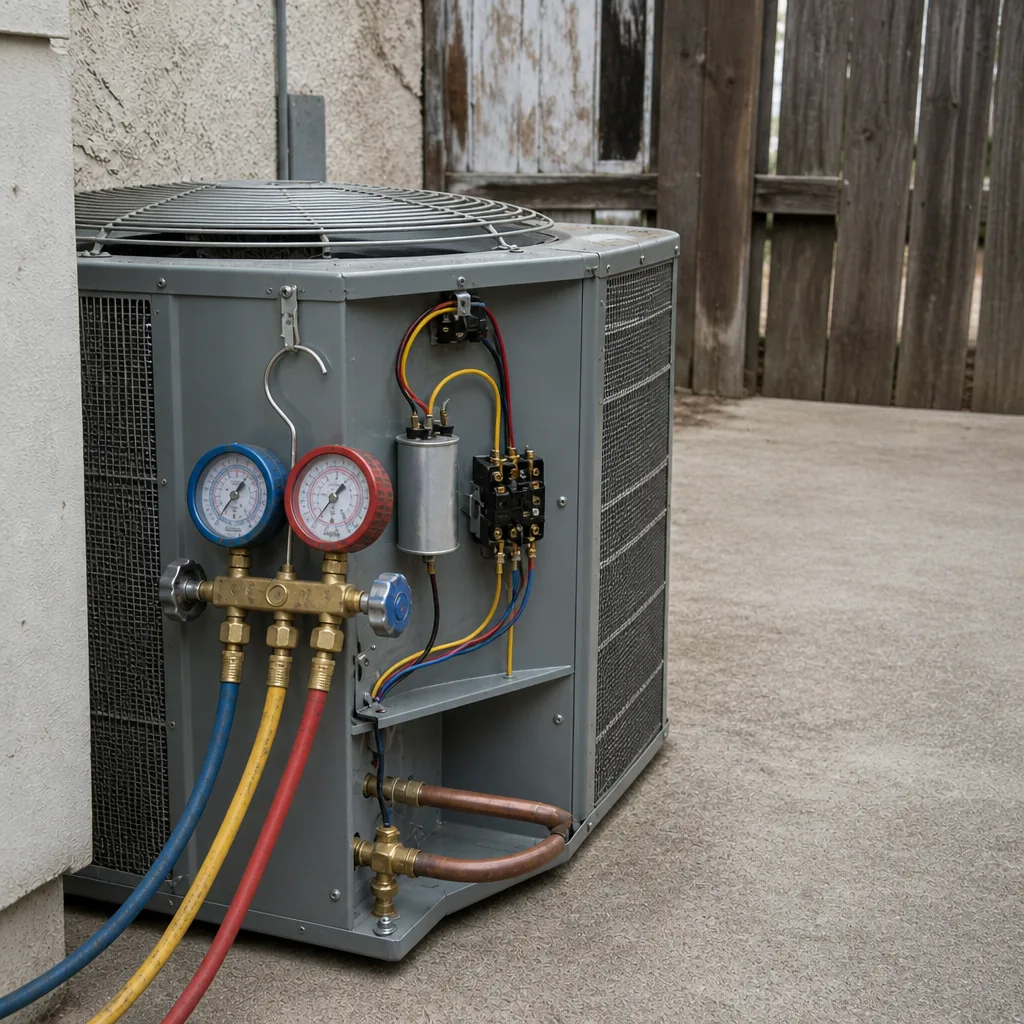
 Before
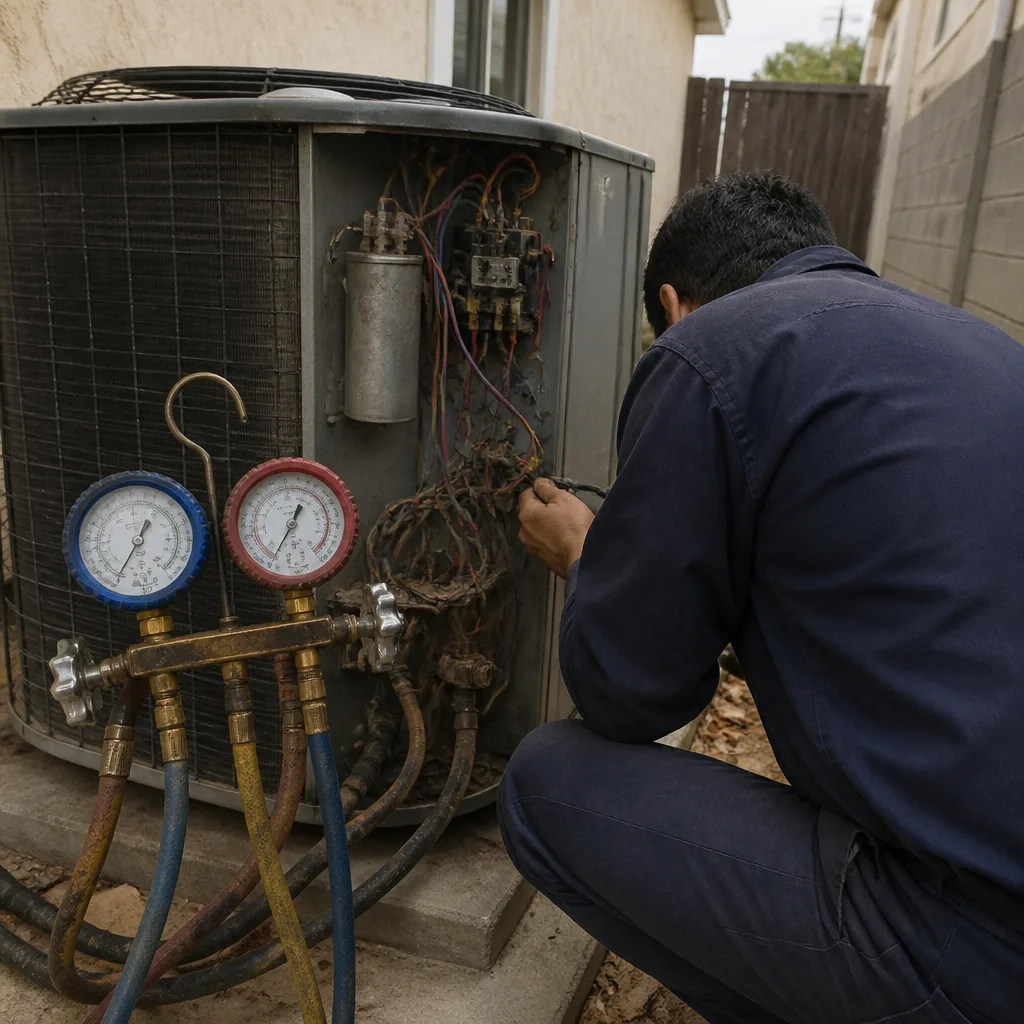
 After
 Before
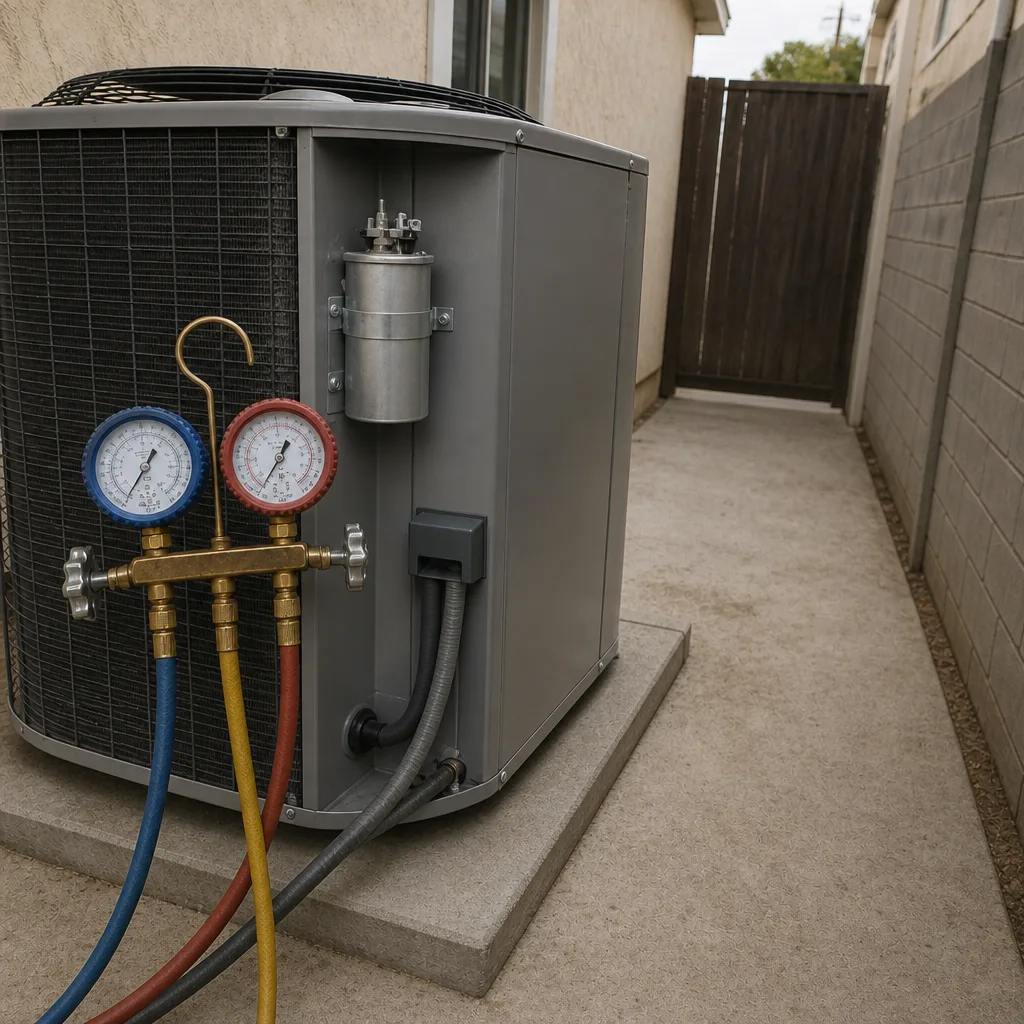 After
When to Call a Professional
Call a professional when the system’s behavior has clearly changed: run times that have stretched out with no change in how you’re running the house, supply air that feels lukewarm on a hot afternoon, a new rattle or hum from the outdoor unit, ice on refrigerant lines, water near the indoor unit, or a furnace that fires and then shuts off. Call immediately if a carbon monoxide detector fires or you smell gas – leave the area and get help. Call after a heavy Santa Ana wind event if the system is running hot, weak, or loud. And call if a filter check tells you the airflow is off and a fresh filter doesn’t fix it. Jasper AC Repair offers free estimates in Glendale – call (855) 473-8857 to book one. We answer 24/7, and we run fast dispatch from 7am to 7pm, Sunday through Friday.
Frequently Asked Questions
Twice a year, but not on the standard April-and-October calendar – the useful visits for a Glendale home are a post-summer inspection in September and a heating-readiness check in October or November. The September visit catches what a long cooling season and spring wind events have actually done to the system while there’s still time to fix small things before the heating season. The October or November visit gets the furnace ready to fire for the first time. If a heavy Santa Ana wind event or wildfire smoke episode comes through in between, add a filter and coil check on top of that schedule. Call (855) 473-8857 to book either visit – estimates are free.
Turn the system off, check the filter and replace it if it’s loaded, clear any visible debris from around and on top of the outdoor unit by hand or broom, and check the return grille for grit. Then book a coil inspection if the event was a heavy one. What you should not do is open the outdoor cabinet or reach through the fan grille – the electrical components inside are dangerous even with the thermostat off. Grit and debris settle in fast after these events, and a check within the first day or two prevents most of the damage a packed coil would cause. Call (855) 473-8857 if the system is running louder, weaker, or hotter than usual after a wind event.
Not automatically – it’s a real upgrade for smoke and fine particulate, but on older ducts with marginal return capacity a MERV-13 can raise static pressure and make your blower work harder than it should. The symptom is weaker airflow from registers and longer run times. A technician can check return size, duct condition, and blower type in a short visit and tell you whether your specific system tolerates a MERV-13 or needs to stay in the MERV-8 to MERV-11 range. If you’ve just upgraded and the system is suddenly weaker, call (855) 473-8857 and we’ll check the airflow – estimates are free.
Yes. Treat a sustained smoke event as a filter interval reset – check the filter during and after, and replace it if it’s loaded or visibly discolored, regardless of how many weeks it’s been in service. Fine smoke particulate loads a filter much faster than ordinary household dust, and a filter that looked fine a week ago can be packed after several days of high AQI. If you have a fresh-air intake or a whole-house fan, don’t run it during a smoke event – run the system in fan-only mode with a fresh filter instead. Call (855) 473-8857 if you’re not sure whether your filter is doing its job.
You can rinse the outside of the cabinet with a garden hose on low pressure, with the system switched off – that clears loose debris and light dust and is safe for most homeowners. What you can’t safely do is open the cabinet or reach through the fan grille to clean the coil from the inside, because the fan motor, capacitor, and contactor sit right behind that grille and the disconnect can leave line voltage present. Packed or oily debris needs a technician, and so does any coil that’s been sitting through a heavy wind event without a cleanup. Call (855) 473-8857 to schedule a coil inspection in Glendale.
Longer run times without a change in how you run the house, supply air that feels lukewarm on a hot afternoon, a new rattle or hum from the outdoor unit, ice on the refrigerant lines, water near the indoor unit, and a rise in energy use that isn’t matched by a change in your habits – any of these is a strain signal. Some run time on a hot afternoon is normal, so the useful thing to watch is a change from baseline, not the raw number. If you spot any of these, get the system diagnosed while it’s still running. Call (855) 473-8857. We answer 24/7. Fast dispatch from 7am to 7pm, Sunday through Friday, and same-day service when you need it.
The Bottom Line
Glendale doesn’t run on a four-season calendar, and your HVAC care shouldn’t either. The year breaks into five phases – a post-summer inspection in September, a heating-readiness check in October and November, Santa Ana wind and smoke response whenever those arrive, summer peak-load monitoring, and a wet-season filter check – and each one earns its place. The highest-value habit is the September inspection, because that’s when a system has just taken its hardest hits and small problems are still cheap to fix. The highest-value response is the fast cleanup after a wind event. And the highest-value mindset is treating a change from baseline – run time, sound, airflow, energy use – as information, not a nuisance. Keep the filter clean, keep the outdoor unit clear, and get the system looked at after the worst of it, not before.
If you’d like help reading your own system, or you’re ready to book a phase of the calendar, call Jasper AC Repair at (855) 473-8857 for a free estimate. We answer 24/7, with fast dispatch from 7am to 7pm, Sunday through Friday. Our technicians have up to 15 years of experience, and we work on whatever brand you already own – Carrier, Trane, Lennox, Goodman, Rheem, York, Daikin, Bryant, and American Standard. For a fuller view of how we work, start at Jasper AC Repair.
Written by the team at Jasper AC Repair.