
Last updated November 15, 2026
 AC repair
 Furnace & heating
 Heat pumps
 Ductless mini splits
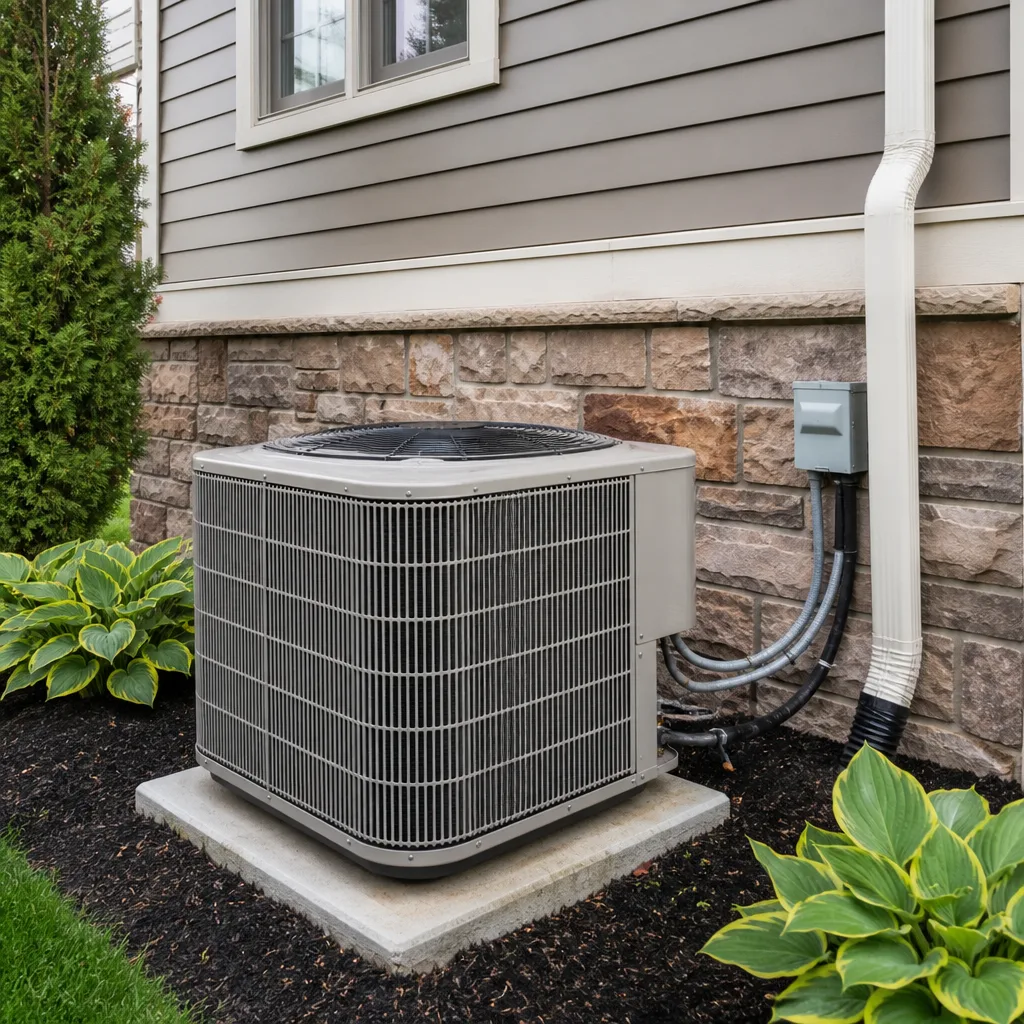 Carrier
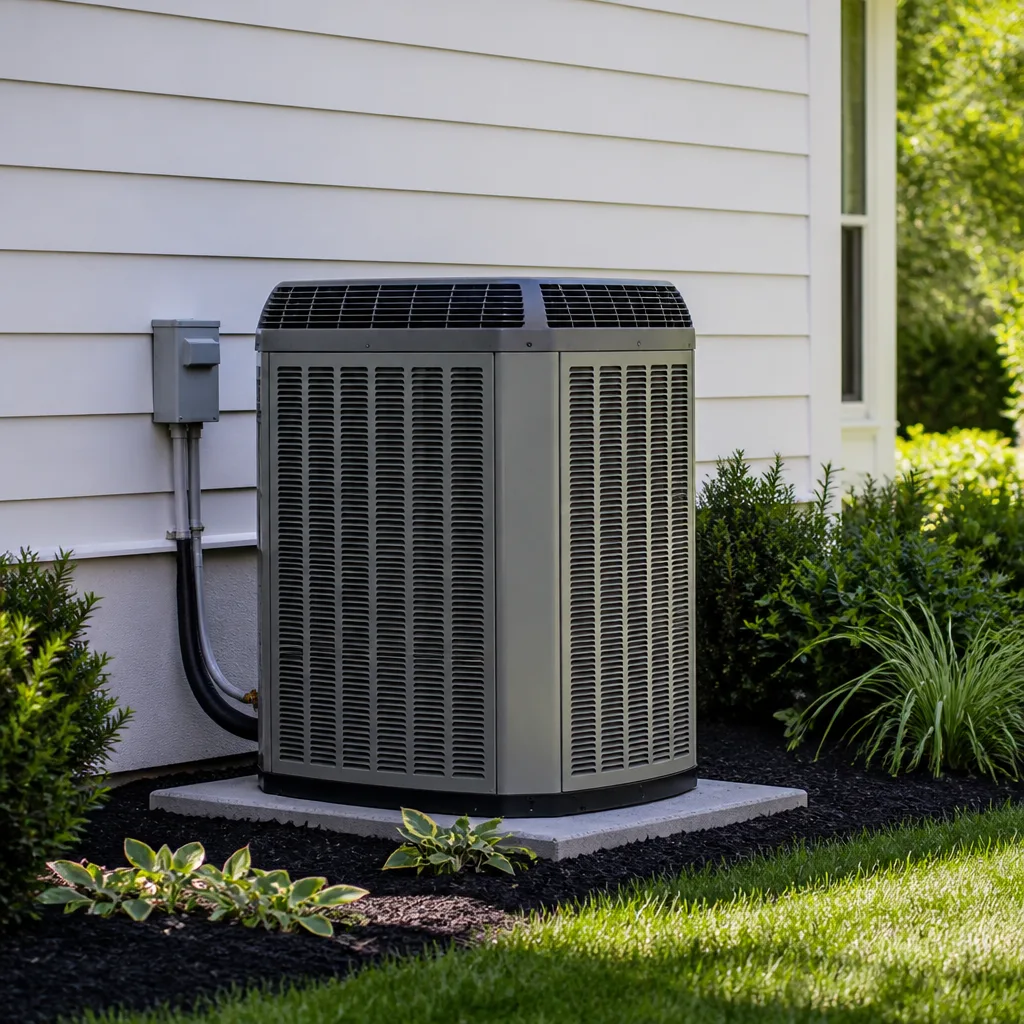 Trane
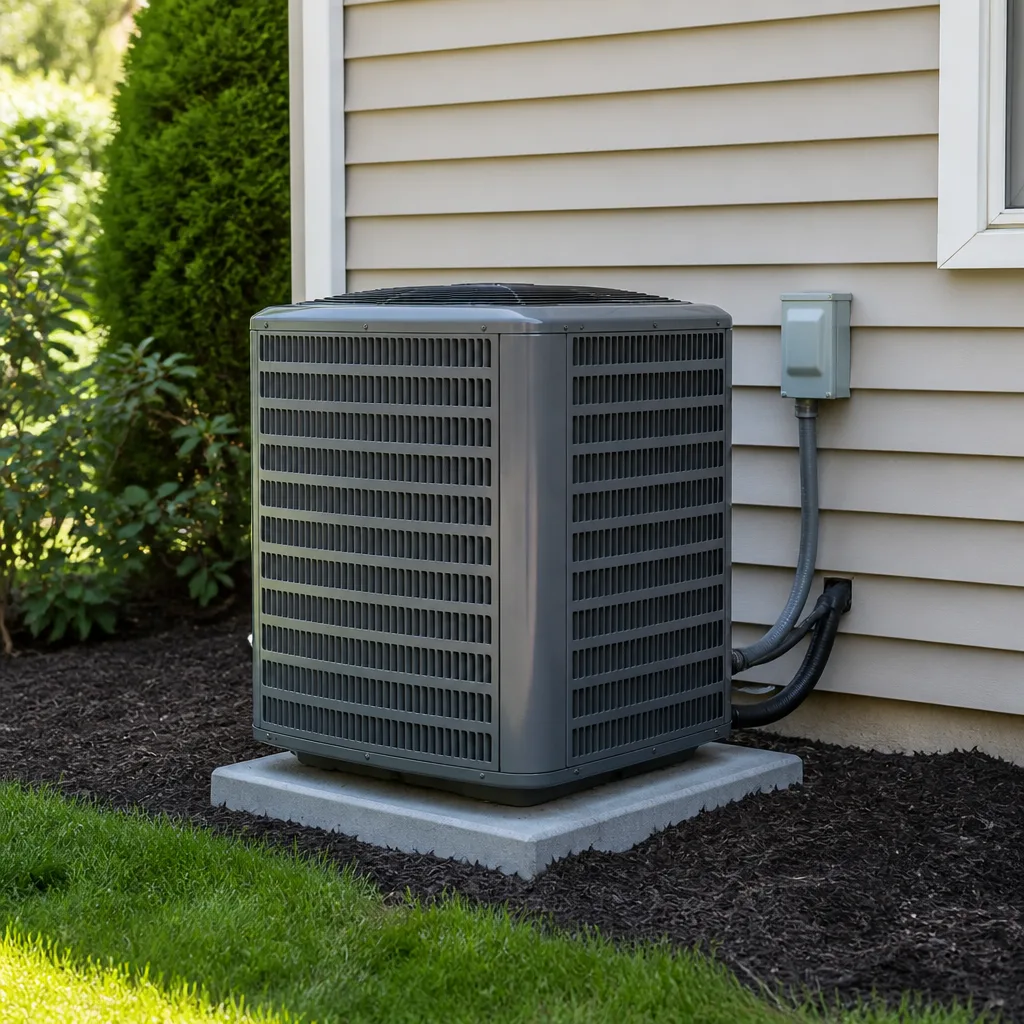 Goodman
Seasonal tune-up and full diagnostic on your Carrier, Trane, or Goodman system - readings shown to you before any repair is proposed
Diagnosis first, numbers second - you approve the repair price before a single part goes in.
Get your free estimateHVAC Cost Breakdown: The Glendale Homeowner’s Reference for 2026
Here’s the part most pricing guides skip: a quote that looks high in Glendale often isn’t padding. The national average for a central AC replacement is frequently cited at $5,000-$7,000. In Glendale, the realistic range for the same job starts $1,500-$2,500 higher once local labor, permit fees, and the actual cost of HERS testing are factored in. That gap is legitimate, and it’s the number homeowners can’t see when they compare bids side by side. This reference breaks down a Glendale HVAC quote line by line, explains why two bids for “the same job” can differ by $3,000, and gives you the cost math to tell a fair quote from an inflated one – including where repair still beats replacement and how equipment tier affects five-year total cost of ownership, not just the sticker price.
Quick Answer
A typical central AC replacement in Glendale runs roughly $6,500-$9,500 for a standard-efficiency system, with high-efficiency or hillside-access jobs pushing toward $11,000-$14,000. Subtract $1,500-$2,500 from most national averages and you’re underestimating; the honest Glendale range sits above most published national figures because of regional labor rates, permit costs, and the complex access and HERS testing that hillside homes require. The written estimate from your contractor sets the final price on any job.
Styles & brands we work with
- AC repair
- Furnace & heating
- Heat pumps
- Ductless mini splits
- Carrier
- Trane
- Goodman
Table of Contents
- Why HVAC Work Costs More in Glendale Than the National Average
- Line-by-Line: What a Glendale AC Replacement Actually Includes
- Good, Better, Best: How Equipment Tier Changes Five-Year Cost
- What GWP Rebates and TECH Clean California Incentives Are Actually Worth in 2026
- Why Two Quotes for the Same Job Can Differ by $3,000
- Repair vs. Replace: The Cost Math Using Glendale Labor Rates
- The Furnace Side: What Replacement Costs When the Heat Goes
- How to Read a Glendale HVAC Quote Before You Sign
Why HVAC Work Costs More in Glendale Than the National Average
HVAC pricing in Glendale is higher than the California average for three quantifiable reasons: regional labor rates, permit costs, and the prevalence of hillside homes with complex installation logistics. Each one shows up on a real invoice, and each one is fair. Understanding them is the difference between recognizing a legitimate premium and paying for someone’s new boat.
Start with labor. Trades wages in the Los Angeles metro area run above the state median, and Glendale sits inside that metro labor market. A project that takes a two-person crew a full day in a cheaper part of California costs more here before a single part is ordered. That’s not a markup – it’s the going rate for skilled installation work in a dense, high-demand market.
Permits come next. Most cities require a permit for HVAC replacement, so ask your city’s building department what applies to your address, and expect the permit and inspection to be a real line on the quote rather than a hidden cost folded into “labor.” A contractor who won’t itemize permits is telling you something.
Then there’s geography. Large parts of Glendale – the hillside neighborhoods above the valley floor, the streets that climb toward the Verdugo foothills – were never laid out with equipment access in mind. Condensers sit on steep pads, behind gates, or on roofs reached by ladder alone. Getting a new unit to the pad sometimes requires a crane, sometimes a longer crew day, sometimes both. That logistics cost is real, and it’s the single most common reason a Glendale quote lands higher than a national average that assumes a flat lot and a walk-up driveway.
Winters here are mild, which shapes the other half of the equation. Heating loads are lighter than in colder states, so a furnace replacement in Glendale is often a smaller-capacity job than the same square footage elsewhere. Cooling, though, carries a long, hot season, and that’s where the money goes. For a fuller picture of the local market, see our Glendale service page.
Line-by-Line: What a Glendale AC Replacement Actually Includes
A Glendale AC replacement is built from six or seven cost buckets, and a quote that hides any of them is a quote you can’t compare. Here’s what a complete, honest breakdown looks like.
1. Equipment
The condenser, air handler or coil, and any line-set or thermostat changes. This is the largest single line and the one most sensitive to efficiency tier. Expect equipment to account for roughly half of a mid-range replacement.
2. Labor
Removal of the old system, placement and connection of the new one, refrigerant charging, and startup testing. Glendale labor rates run above the California median, which is why a national-average quote rarely holds here.
3. Permits and inspection
Most cities require a permit for a system replacement, so ask your city’s building department for the current requirement and fee at your address. The permit protects you: it triggers an inspection that catches shortcuts.
4. HERS testing
In California, residential HVAC changeouts commonly require third-party HERS verification – duct sealing verification and refrigerant charge verification among them. These tests are performed by a certified HERS rater, not the installing contractor, and they’re a genuine cost that many out-of-state pricing guides omit entirely. If a quote doesn’t mention HERS, ask who’s paying for it.
5. Crane or access surcharge
For hillside homes, roof-mounted condensers, or units boxed in behind structures, a crane or extra crew may be needed to remove the old unit and set the new one. This is a legitimate line item, and it should be itemized, not buried.
6. Disposal
Refrigerant recovery, hauling away the old equipment, and proper disposal fees. Refrigerant recovery is required by law and isn’t optional.
7. Ductwork or line-set repairs found during the job
A changeout often uncovers leaking ducts or a failing line set. A good quote states how these will be priced if found, rather than surprising you mid-job.
If you want a system sized correctly to your home before pricing gets locked, that conversation starts with AC installation, where load calculation and equipment selection get sorted first.
Good, Better, Best: How Equipment Tier Changes Five-Year Cost
Within a single brand, most manufacturers offer several tiers of the same nominal capacity – a base model, a mid-tier, and a premium model. The purchase price spread between the entry and top tier on the same tonnage is often in the range of $1,500-$3,000 installed. The question isn’t which costs less today; it’s which costs less over five years.
Here’s how the math works, in plain terms:
- Purchase price rises with tier. That’s obvious.
- Energy use falls with higher efficiency. Over Glendale’s long cooling season, the efficiency difference compounds – an entry-tier unit running through a hot summer uses meaningfully more electricity than a high-efficiency unit of the same capacity.
- Repair frequency generally trends lower on premium equipment, though installation quality matters as much as the badge on the box.
- Resale value: documented, permitted, well-installed equipment with a clean HERS record is an easier sell at resale.
The honest answer: the entry tier of a proven brand, installed correctly and sized right, is often the smart financial choice for a homeowner who plans to stay put for a decade. Jumping to the top tier rarely pays back in energy savings alone unless you’re replacing an old, inefficient system and running it hard. The mid-tier is usually where careful buyers land. Because we service equipment from Lennox, Goodman, Rheem, and York alongside other major brands, our recommendations are driven by your home and budget, not by which brand pays the best spiff. Whatever brand you have, we know it – and when it’s time to choose a new one, we’ll tell you plainly which tier makes sense for your house and why.
What GWP Rebates and TECH Clean California Incentives Are Actually Worth in 2026
Rebates get oversold in most pricing guides. Here’s the straight version: GWP (Glendale Water & Power) offers efficiency rebates on qualifying HVAC equipment, and TECH Clean California offers statewide incentives that can apply to qualifying heat pump and efficiency upgrades. In 2026, the realistic combined value of these programs typically lands in the low-to-mid four figures for a qualifying system swap – enough to meaningfully move the five-year cost calculation, but not enough to make a high-efficiency system cheaper than a standard one outright.
The catch is qualification. Incentives are tied to specific efficiency ratings, equipment types, and installation practices. What actually qualifies depends on the exact model, the HERS results, and the current program rules, and those rules change. What you need to know going in:
- Efficiency threshold: the equipment must meet or exceed a set efficiency rating to qualify. The cheapest tier usually doesn’t.
- Permitted and inspected: unpermitted work generally disqualifies the job. Permits protect your rebate.
- HERS verification: the correct testing has to be on record, performed by a certified rater.
- Application deadlines: rebate applications have windows, and the money is finite. File promptly.
- One program, or stacked: some incentives can be combined, some can’t. Read the fine print, or ask us to walk through it with you.
We can work with your situation on rebate and incentive paperwork as part of a system replacement, and we’ll tell you honestly which programs your job is likely to qualify for before you commit. For the heating side of the same conversation, furnace repair is where we usually start – because a system that’s repairable today may not be the right candidate for a rebate-driven swap.
Why Two Quotes for the Same Job Can Differ by $3,000
Two contractors look at the same house and quote $3,000 apart. One is not necessarily gouging. The gap usually comes down to scope, and scope differences hide in plain sight on a one-page proposal.
The most common legitimate reasons two bids diverge:
- Permit included or excluded. A quote that omits the permit isn’t cheaper – it’s incomplete. The city will still want its fee.
- HERS testing included or excluded. Same story. Some quotes quietly leave third-party verification off the page.
- Line set replaced or reused. Reusing an old line set can save money but risks refrigerant leaks and failed charge tests. Replacing it adds cost that shows up on the higher quote.
- Duct sealing included or excluded. Duct leakage is a real efficiency loss in Glendale’s older housing stock. Sealing is extra work.
- Crane or access handled or hand-waved. If a hillside job needs a crane, a quote that doesn’t mention it will find a way to charge for it later.
- Equipment tier and efficiency. A mid-tier unit and a base unit of the same tonnage aren’t the same product, even when both quotes say “3-ton Lennox.”
- Disposal and refrigerant recovery. Legitimate costs that some quotes fold in and some quietly leave out.
Bottom line: compare itemized quotes, not bottom lines. The $3,000 gap almost always maps to a specific scope difference – and a quote that itemizes permits, HERS, access, and disposal is the one you can actually evaluate. That’s the level of detail you should expect from a residential HVAC specialist.
Repair vs. Replace: The Cost Math Using Glendale Labor Rates
The repair-or-replace question has a real numerical answer once you plug in Glendale labor rates rather than national averages. Here’s how we walk through it with homeowners.
Age is the first filter
A system under ten years old with a single component failure – a capacitor, a contactor, a blower motor – is almost always a repair. Glendale repair labor typically lands in the low hundreds for these, and the system has plenty of life left.
The 50% rule
A common rule of thumb: if the repair costs more than half of what a full replacement would cost for the same job, and the system is more than a decade old, replacement usually wins on total cost. A compressor failure in a fifteen-year-old unit is the classic example – the repair is a serious spend, and you’ll likely be back in the same room within a few years for something else.
The five-year view
Add up the expected repairs over five years plus the energy cost of running the old system, then compare it to the five-year cost of a new system. In Glendale’s cooling climate, an aging, low-efficiency unit running hard through long summers tilts the math toward replacement faster than the same unit would in a milder climate.
What we actually do
We diagnose first and tell you plainly whether a repair makes financial sense or whether you’re patching a system toward an inevitable replacement. Furnace replacement expertise matters here – we can execute the full transition when repair stops making sense, rather than handing you off to another company. That conversation is one most repair-only shops avoid.
If you want an honest look at your system, our team at Jasper AC Repair offers free estimates in Glendale – call (855) 473-8857.
The Furnace Side: What Replacement Costs When the Heat Goes
The cost conversation changes when it’s the furnace instead of the AC. Glendale’s mild winters mean heating loads are modest – less extreme than colder parts of California – so a furnace job here is often scaled down relative to other markets. The components are the same shape as an AC replacement, but the price bands differ.
A furnace replacement typically breaks down across:
- Equipment: the furnace itself, sized to your home’s actual heating load
- Labor: removal, install, gas line connection, venting work as needed
- Permits and inspection: same rule as AC, ask your city’s building department
- Disposal: hauling away the old unit
The furnace replacement numbers usually come in below the AC side because the equipment is less expensive and the install is generally shorter. But the honest conversation isn’t about sticker price – it’s about whether repair still makes sense. A twenty-year-old furnace that’s failed twice in two years is not a good candidate for another repair. That’s a money-saving conversation, not a hard sell, and we treat it that way.
Because we handle both cooling and heating under one company – new AC installation on one side, furnace repair and complete furnace replacement on the other – you don’t hand off to a second contractor mid-project. One company. Both seasons. Cooling and heating, handled.
How to Read a Glendale HVAC Quote Before You Sign
You don’t need to become an HVAC estimator to spot a fair quote. You need to know what a complete quote contains and what it’s missing. Here’s the checklist we’d hand a friend.
- Is the equipment model number spelled out? “3-ton mid-efficiency” isn’t an answer. A real quote names the exact model, and you can look up its efficiency rating.
- Are permits itemized? If they’re not on the page, ask. Most cities require a permit for this work – and the permit triggers your inspection.
- Is HERS testing on the quote? In California, it commonly is required for changeouts. If it’s missing, ask who pays for it.
- Is access addressed? Hillside homes, roof-mounted units, gated equipment – if access needs a crane or an extra crew, a real quote says so up front.
- Is disposal and refrigerant recovery included? If not, it’s coming as an add-on.
- Is the written estimate actually written? Verbal quotes evaporate. The written estimate is what sets the final price.
- Is the technician brand-agnostic? Recommendations should be based on your home, not the installer’s sales quota. A contractor who only recommends one brand is telling you something.
Our technicians have up to 15 years of experience, and they work across Carrier, Trane, Lennox, Goodman, Rheem, York, Daikin, Bryant, and American Standard, so the recommendation you get is driven by your house, your budget, and your existing infrastructure. Get a free estimate – call (855) 473-8857. We answer 24/7. Fast dispatch from 7am to 7pm, Sunday through Friday.
Common Mistakes to Avoid
- Comparing bottom lines instead of itemized scopes. Two quotes $3,000 apart usually reflect different scope, not markup. Before choosing, line up equipment, permits, HERS, access, and disposal side by side – the gap will explain itself.
- Ignoring HERS testing on a California changeout. HERS verification is commonly required on HVAC changeouts in California, and a quote that leaves it off isn’t saving you money – it’s deferring a cost you’ll still pay. Ask directly who is performing the test.
- Skipping the permit to save a few hundred dollars. An unpermitted changeout can complicate a future sale, void some rebate eligibility, and skip the inspection that would have caught a shortcut. The permit is protection, not paperwork.
- Buying the cheapest equipment tier in a Glendale cooling climate without running the five-year math. Long, hot summers mean efficiency differences compound. That entry-tier unit might be the right call – but only after the numbers are run, not by default.
- Assuming a crane or access surcharge is a scam. For hillside homes and roof-mounted units, the access cost is real. If it’s on the quote, it’s because the job needs it – ask for the explanation, not the removal.
- Repairing a system that’s already at the end of its life. A second or third repair on a fifteen-year-old unit is a sign to have the repair-vs-replace conversation, not another round of tape.
- Assuming rebate money is automatic. GWP and TECH Clean California incentives are real but conditional – efficiency thresholds, permits, HERS records, application windows. File promptly, and know the rules before you commit.
See the difference
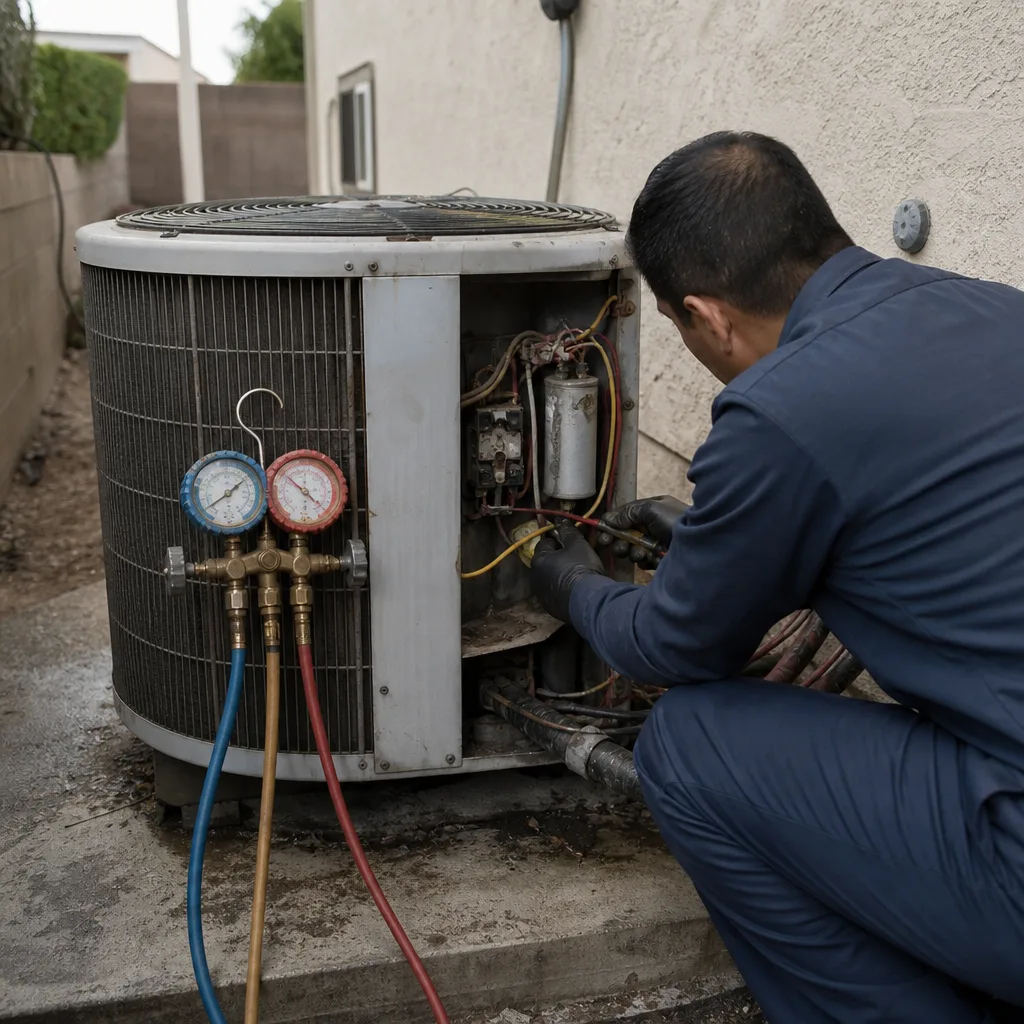 Before
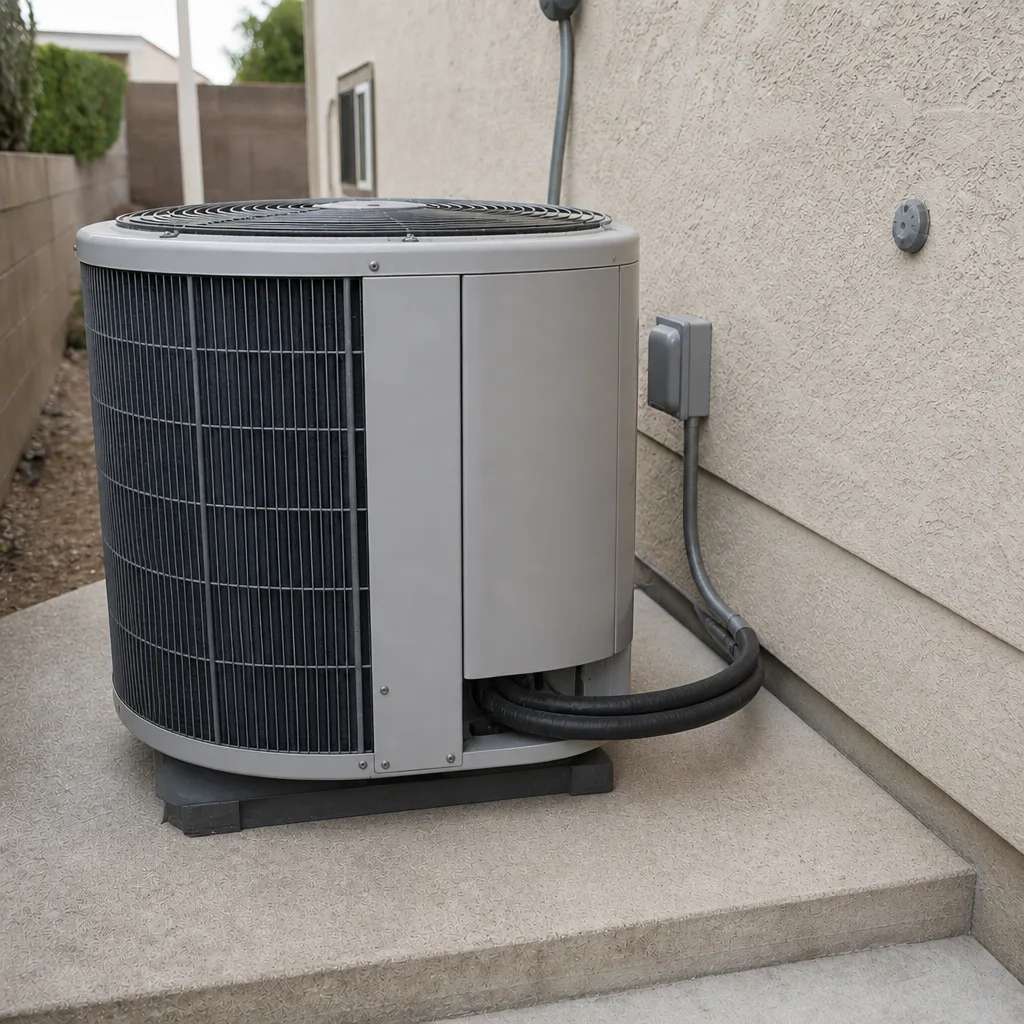 After
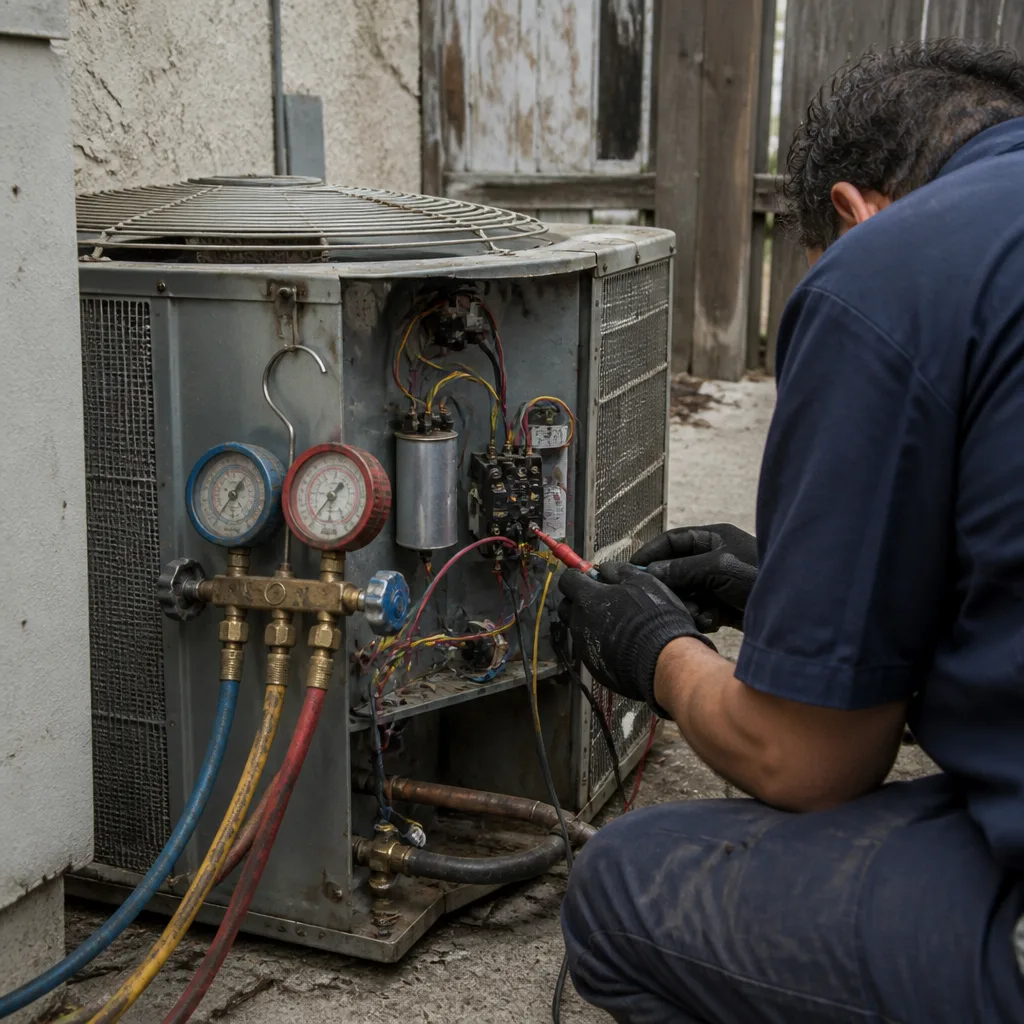 Before
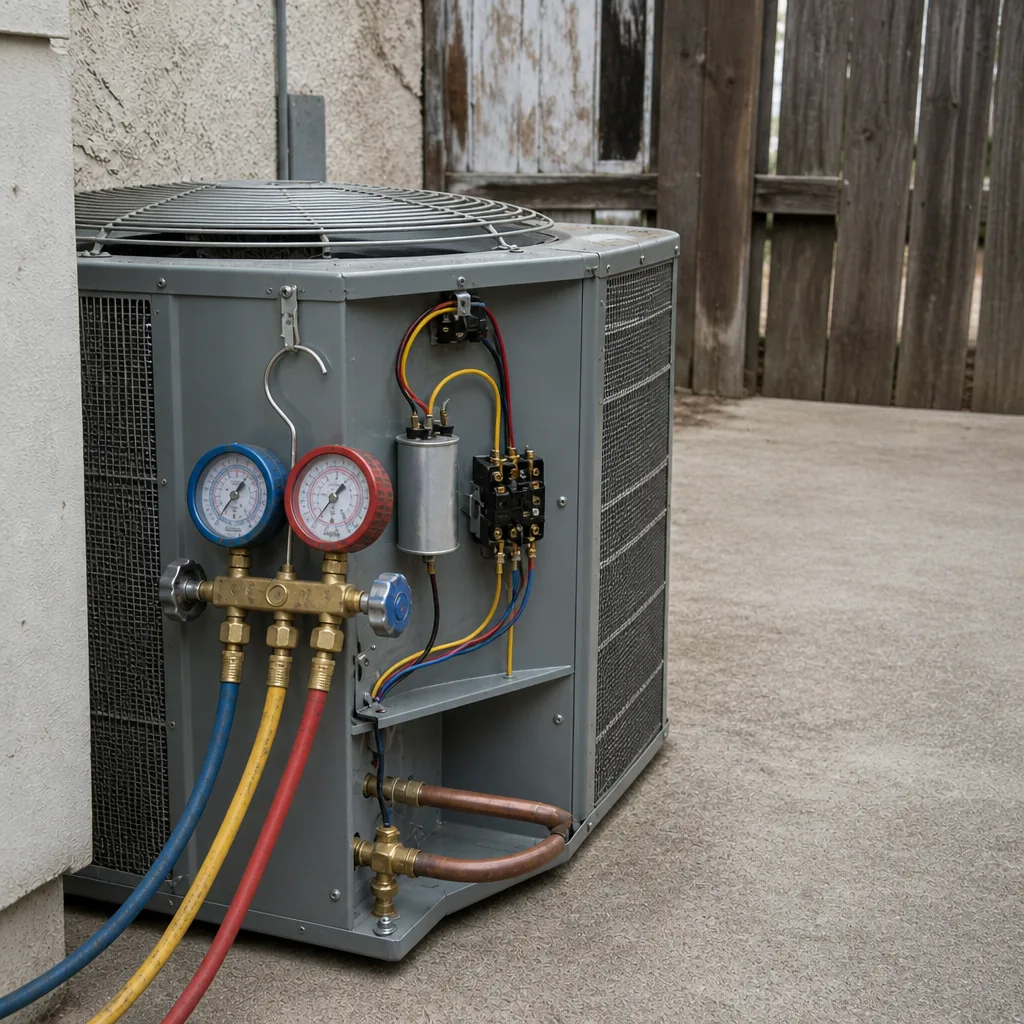 After
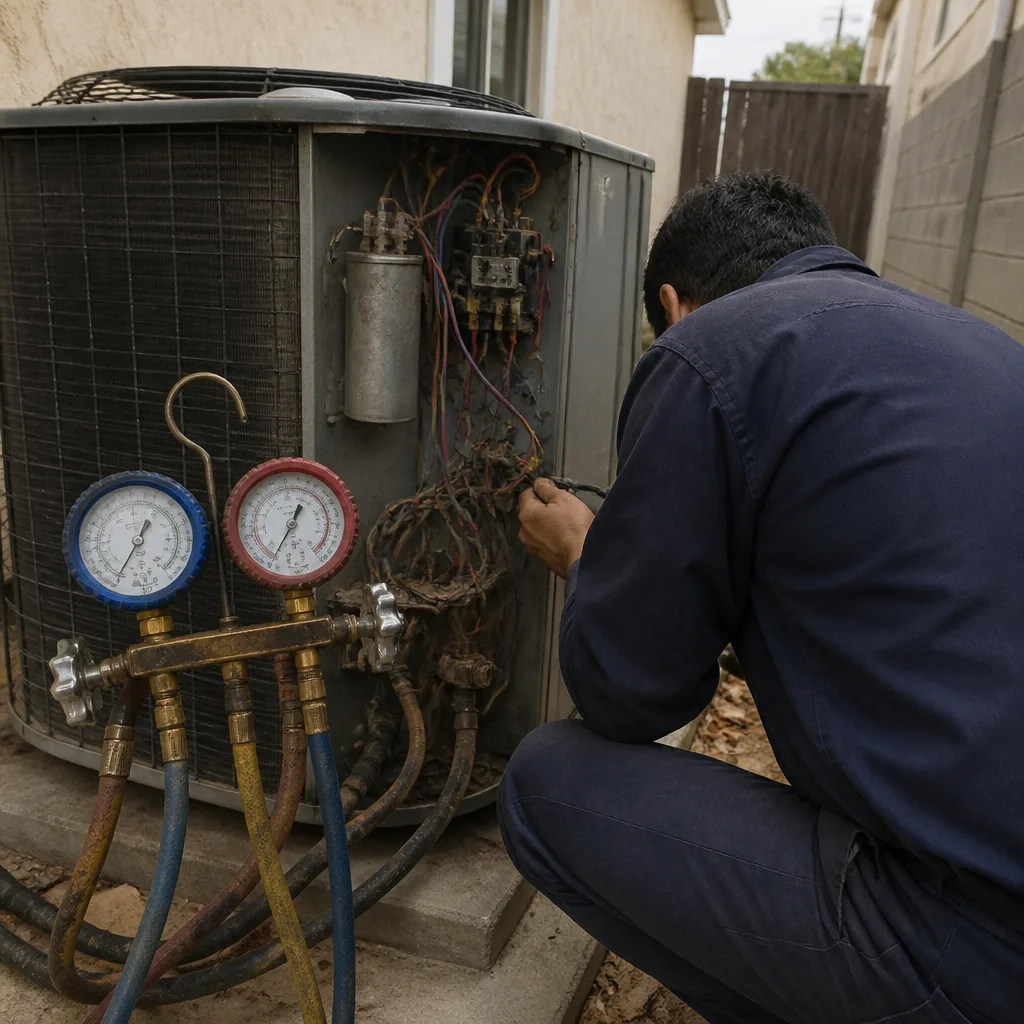 Before
 After
When to Call a Professional
Some HVAC problems are worth a phone call, and some are worth an urgent one. Call us when your system stops cooling or heating the way it used to, when you hear grinding or scraping from the outdoor unit, when you notice a refrigerant smell or ice forming on the indoor coil, or when a system over ten years old needs its second or third major repair in as many years. Call us when you get a quote that doesn’t itemize permits and HERS testing, or when you want a second opinion on a repair-vs-replace decision before you commit. And call us when you’re ready to plan a replacement – a written estimate and a set install date are how replacement work should be handled, not a scramble.
Jasper AC Repair offers free estimates in Glendale – call (855) 473-8857. We answer 24/7. Fast dispatch from 7am to 7pm, Sunday through Friday. If your system fails on a Saturday, call anyway – we’re closed on Saturday and will book you for Sunday.
Frequently Asked Questions
A typical central AC replacement in Glendale runs roughly $6,500-$9,500 for a standard-efficiency system, with high-efficiency or hillside-access jobs pushing toward $11,000-$14,000. That’s $1,500-$2,500 above many national averages, driven by regional labor rates, permit costs, and hillside installation logistics. The written estimate sets the final price. Call (855) 473-8857 for an exact quote – estimates are free.
Regional labor rates, permit costs, and hillside access logistics are the three main reasons. California changeouts also commonly require HERS testing, which most national pricing guides omit. Those are legitimate costs, not padding – a reputable contractor will itemize each one. Call (855) 473-8857 and we’ll walk through the line items with you.
Yes – GWP offers efficiency rebates and TECH Clean California offers statewide incentives on qualifying equipment. In 2026, the realistic combined value for a qualifying system swap lands in the low-to-mid four figures, but qualification depends on the exact model, efficiency rating, permits, and HERS results. Call (855) 473-8857 to see what your job is likely to qualify for.
If the system is under ten years old and a single component failed, repair almost always wins. If the repair costs more than half of replacement and the system is past a decade, replacement usually wins on five-year cost. We diagnose first and tell you plainly which way the math goes. Call (855) 473-8857 for a free estimate.
Most cities require a permit for HVAC replacement, and California commonly requires HERS verification on changeouts – so ask your city’s building department what applies at your address. Your contractor should itemize both. If a quote doesn’t mention them, ask. Call (855) 473-8857 and we’ll help you sort through the requirements.
We answer 24/7 and dispatch Sunday through Friday from 7am to 7pm, so same-day service is often possible. Fast dispatch is the norm on urgent calls, and the price is set per job by the written estimate – no bump for urgent work. Call (855) 473-8857 for a free estimate.
The Bottom Line
Glendale HVAC pricing is higher than the national average for three real reasons: regional labor rates, permit and HERS testing costs, and the hillside access logistics that a lot of California homes require. Once you understand those factors, you can read a quote rather than just gulp at the bottom line. Compare itemized scopes, not totals. Run the five-year cost math on equipment tiers, not just the purchase price. And treat rebates as legitimate but conditional – qualification depends on the model, the permits, and the HERS record. The written estimate sets the final price, and a good contractor will put every line on the page. If you want to understand your system’s options, see our Glendale service page or call (855) 473-8857 – estimates are free.
Written by the team at Jasper AC Repair.