
Last updated November 15, 2026
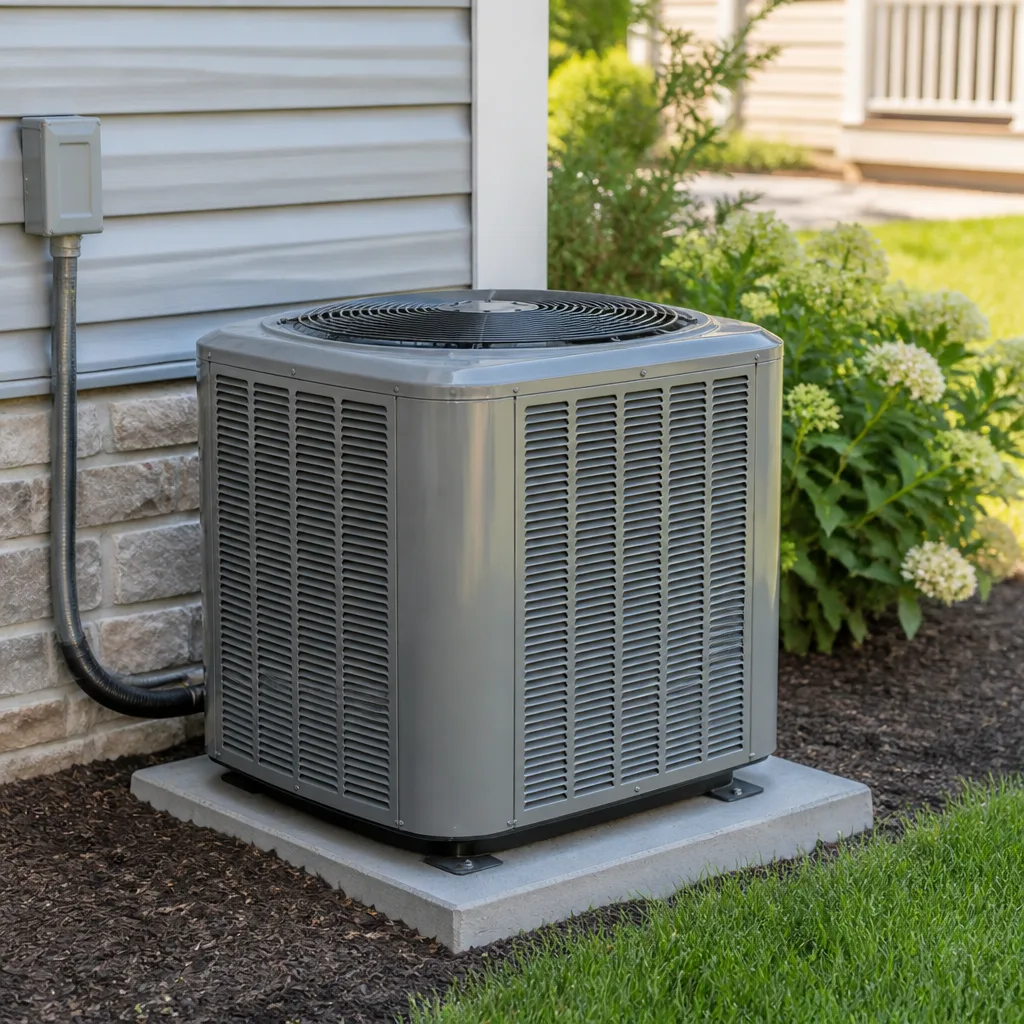 AC repair
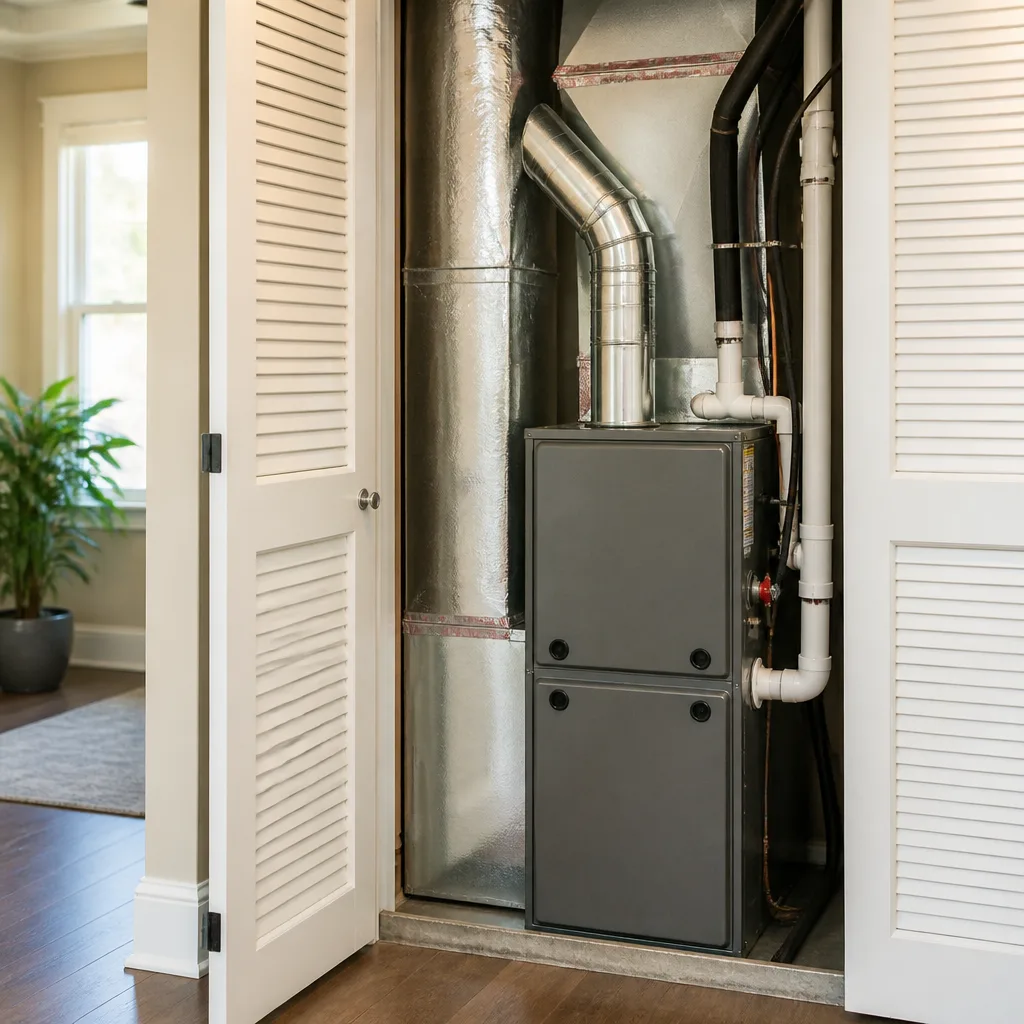 Furnace & heating
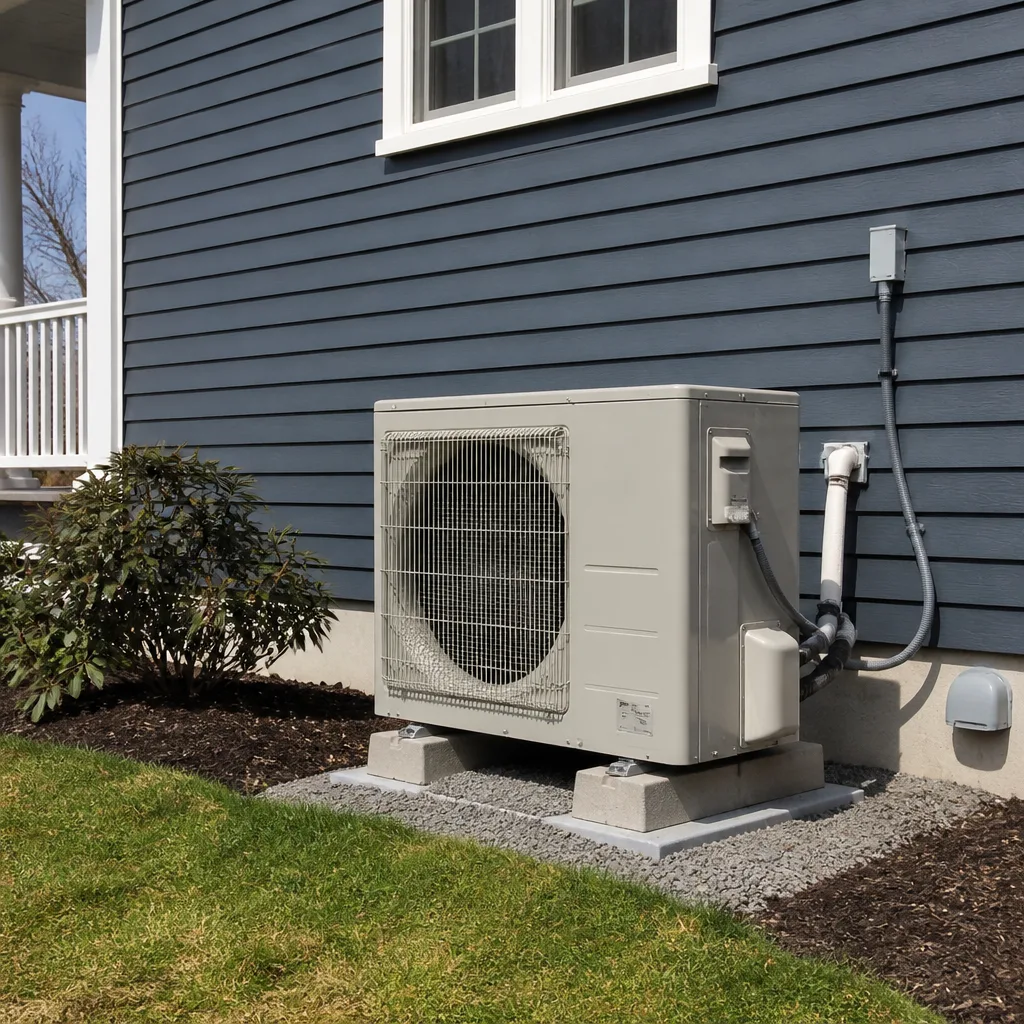 Heat pumps
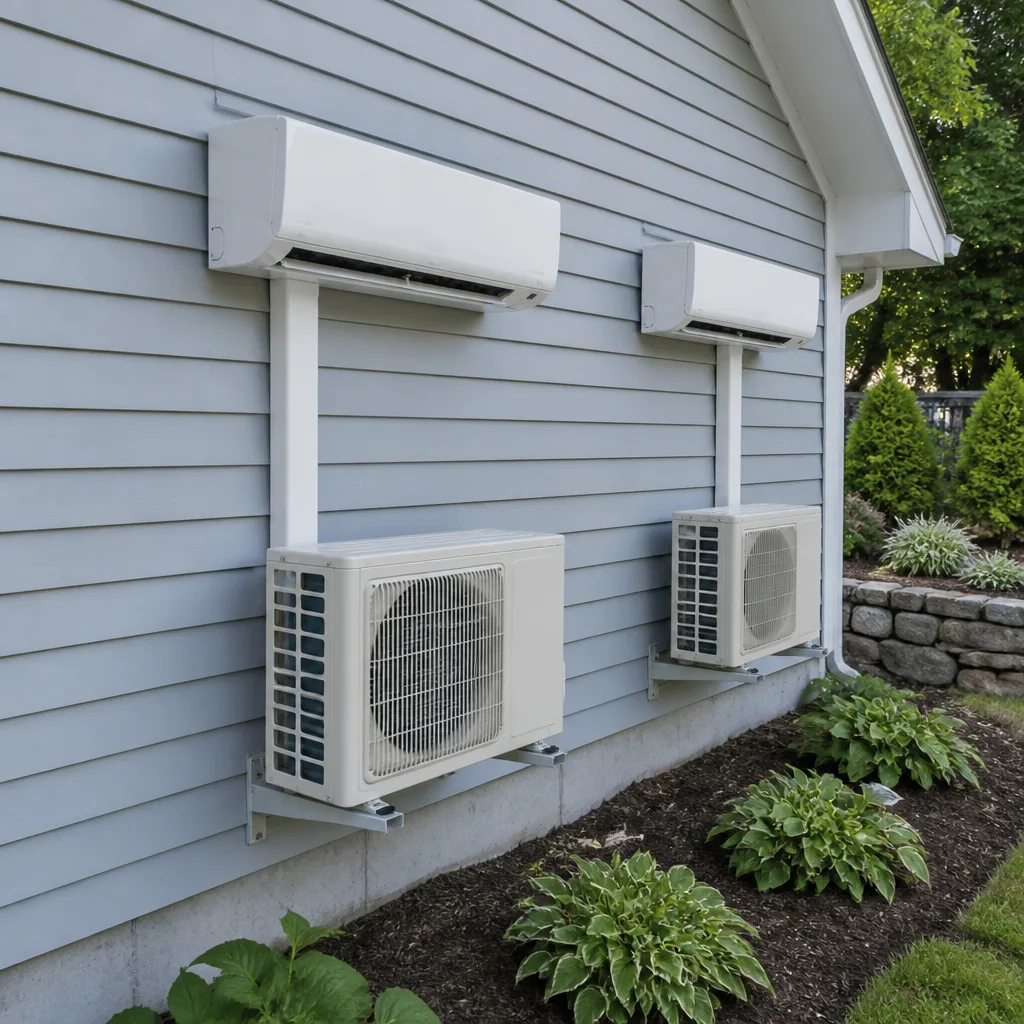 Ductless mini splits
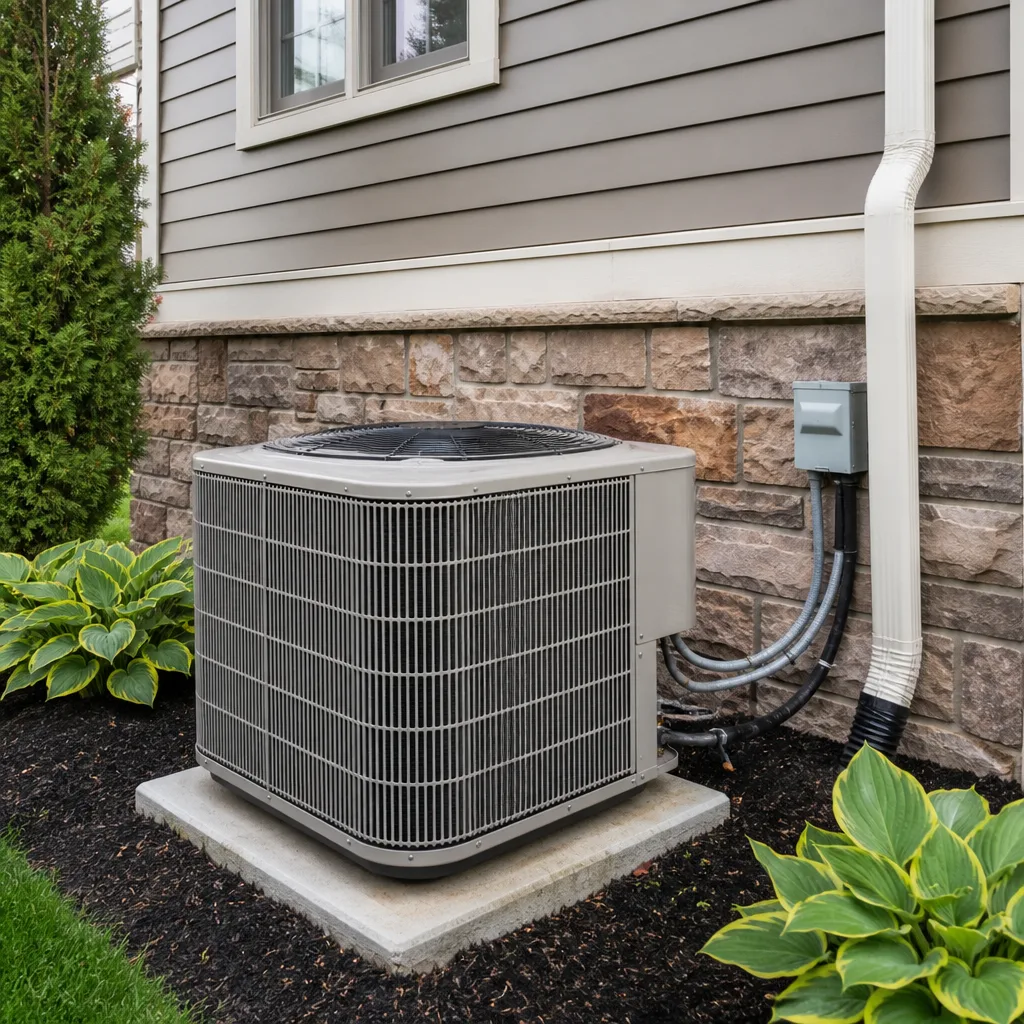 Carrier
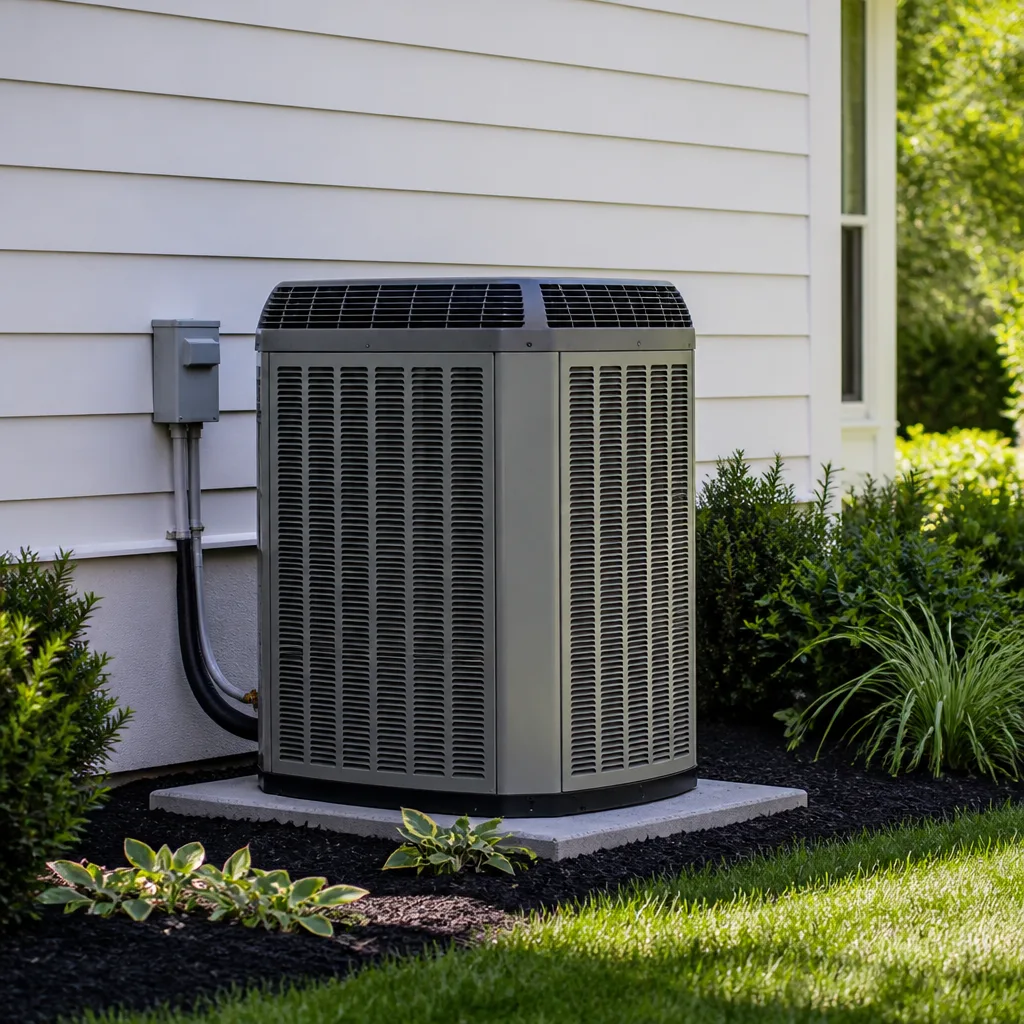 Trane
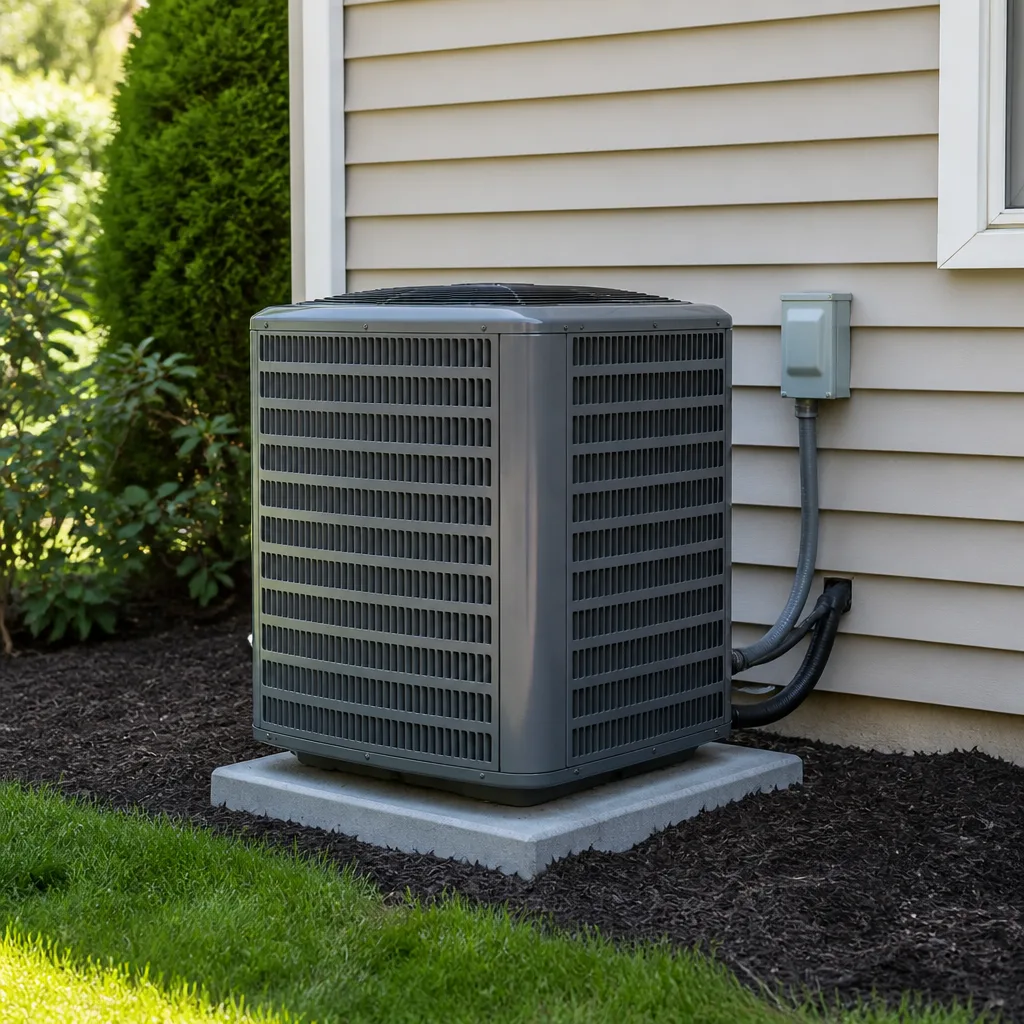 Goodman
Seasonal tune-up and full diagnostic on your Carrier, Trane, or Goodman system - readings shown to you before any repair is proposed
Diagnosis first, numbers second - you approve the repair price before a single part goes in.
Get your free estimateChoosing the Right HVAC Brand: A Buyer’s Guide for Glendale
Here’s the part of this conversation almost no one starts with: the brand name on your condenser matters less than the person who chooses its size and installs it. Homeowners in Glendale spend hours comparing Carrier to Trane to Lennox, then hand the decision to whoever answers the phone first. That’s backwards. Every major manufacturer publishes efficiency ratings tested at 95°F outdoor temperature, and Glendale’s summers push well past that mark, which means the real differences between brands show up where the spec sheets stop. This guide covers how to read performance data honestly, why parts availability around greater Los Angeles changes the math, how California warranty law interacts with each manufacturer’s coverage, and where premium pricing buys you something real versus where it doesn’t.
Quick Answer
The right HVAC brand for a Glendale home is the one with a local distributor that stocks its parts, a warranty that plays well with California’s Song-Beverly protections, and a proven track record in high-ambient heat – not simply the most expensive nameplate. For most homes here, a well-matched mid-tier system from a brand like Carrier, Trane, or American Standard, installed by a technician who performs a proper load calculation, will outperform a premium system that was oversized and rushed in. Brand is the third most important decision you’ll make, behind sizing and installation quality.
Styles & brands we work with
- AC repair
- Furnace & heating
- Heat pumps
- Ductless mini splits
- Carrier
- Trane
- Goodman
Table of Contents
- How to Read AHRI Ratings in Glendale’s Heat
- Parts Availability in the Los Angeles Market
- California Warranty Law Meets Manufacturer Coverage
- Mid-Tier vs. Premium: Where the Difference Is Real
- Why Single-Brand Loyalty Limits Your Options
- Seven Steps to Choosing Your Brand
- Common Mistakes to Avoid
- Frequently Asked Questions
How to Read AHRI Ratings in Glendale’s Heat
AHRI efficiency ratings are measured at 95°F outdoor ambient temperature – a fixed test condition that every manufacturer uses so their numbers can be compared. But Glendale regularly sees operating conditions 10°F to 13°F above that test point during July, August, and September. When you push any air conditioner past its rated outdoor temperature, the efficiency curve turns downward. The question is how steeply each brand’s curve drops, and that answer isn’t on the yellow EnergyGuide sticker.
Here’s what that means practically. A system rated at a certain SEER2 number will deliver that number under test conditions and something lower on a 108°F afternoon in Glendale. The gap between rated and delivered efficiency varies by equipment design – condenser coil surface area, fan speed strategy, compressor modulation range. Two units with identical ratings can behave differently once ambient climbs. Manufacturer engineering data sheets often show these extended performance tables, but they’re buried in technical literature most homeowners never see.
What to ask for when comparing brands:
- The AHRI certificate for the specific matched system (outdoor unit plus indoor coil plus air handler), not just the outdoor unit’s rating. Matched combinations are what actually earn the rated number.
- Extended performance data at 105°F and above, if the manufacturer publishes it.
- Whether the system uses a single-stage, two-stage, or variable-speed compressor. In sustained high heat, a variable-speed unit holds closer to its rated capacity by ramping rather than cycling hard.
- The sensible heat ratio, which tells you how much of the total capacity actually goes toward removing heat versus dehumidifying. In a dry inland climate like Glendale’s, you want a system tuned for sensible capacity.
A properly sized system with strong extended-temperature performance at a mid-tier price beats an oversized premium unit every time. We’ve seen this hold across every brand we work on. It’s why we lead with load calculation before we ever discuss a nameplate.
Parts Availability in the Los Angeles Market and Why It Matters in Glendale
When your air conditioner fails in August, the repair timeline is set less by diagnostic skill than by whether the needed part is sitting in a warehouse within driving distance. The greater Los Angeles market has deep distributor networks for the highest-volume brands, and much shallower ones for lower-volume or specialty manufacturers. That’s a real difference, and it’s one you can’t evaluate from a spec sheet.
The brands with the broadest local parts distribution in this region tend to be the ones with the largest installed base – Carrier, Trane, Lennox, Goodman, and Rheem all have established distributor networks serving the LA basin. This means a failed capacitor, contactor, blower motor, or control board can often be sourced the same day. For less common brands, or for proprietary components, the part may have to ship from a regional depot or the factory, and the wait stretches into days.
Consider what a multi-day wait costs you in Glendale in mid-summer. A home without cooling during a heat wave isn’t just uncomfortable – it’s a genuine health risk for older adults, young children, and anyone with respiratory or cardiac conditions. That’s the real-world consequence of brand choice that a showroom conversation never covers.
How to check parts availability before you buy:
- Ask which local distributor carries the brand’s parts and how far away that distributor is.
- Ask whether the specific model uses proprietary control boards or motors, or standard components that are more widely available.
- Ask what the typical lead time is for a compressor or condenser fan motor failure on that model.
- Ask whether your installing contractor stocks common failure parts for that brand on their truck or in their shop.
These four questions will tell you more about how a system will age in Glendale than any efficiency brochure. If your contractor can’t answer them, that’s a signal about their depth with the brand.
California Warranty Law Meets Manufacturer Coverage
Most homeowners know their new HVAC equipment comes with a manufacturer’s limited warranty – typically a set number of years on parts, sometimes a longer or lifetime term on the compressor, and often a shorter term on labor. What fewer know is that California’s Song-Beverly Consumer Warranty Act adds a layer of implied warranty protection that runs independently of the manufacturer’s paperwork. This matters in Glendale because it can strengthen your position when a component fails sooner than it should.
The Song-Beverly Act requires that consumer goods be fit for their ordinary purpose and, in broad terms, establishes implied warranties that in many cases must run for a specified minimum period regardless of what the manufacturer’s written warranty says. For HVAC equipment, that implied warranty can be invoked on a defective part even after the written warranty terms might suggest otherwise. The practical effect: a brand that drags its feet on a clear defect claim may find California’s implied warranty gives you leverage the manufacturer’s own language doesn’t grant.
Where brands differ in how this plays out:
- Some manufacturers have streamlined claims processes with local distributor support and honor warranty parts without much friction.
- Others require the installing contractor to file the claim, which makes contractor relationships important long after installation.
- Almost all require you to register the equipment within a specified window after installation or the parts warranty is reduced or voided. Registration is not automatic – you or your contractor must do it.
- Labor is almost never covered by the manufacturer’s warranty, which is why the installing contractor’s own labor policy matters as much as the brand’s parts coverage.
Before you sign, ask to see the manufacturer’s written warranty in full, verify the registration deadline, and confirm in writing who handles the registration and when. A strong brand with a weak local service network is worse than a mid-tier brand with a motivated local contractor who knows how to file a claim properly.
Mid-Tier vs. Premium: Where the Difference Is Real
There’s a persistent assumption that premium brands are always better built. In some respects they are. In others, the gap comes down to features you may not need and marketing you’re paying for. Understanding where the line falls will save you real money on a Glendale installation without sacrificing performance.
Where premium brands genuinely deliver more:
- Better sound insulation and cabinet construction, which matters if the unit sits near a bedroom wall or a shared property line in a denser Glendale neighborhood.
- Higher-tier compressor technology, especially variable-speed and inverter-driven systems, which modulate capacity more smoothly and hold efficiency better in extended high heat.
- Longer parts warranties on select product lines and more generous compressor coverage.
- More sophisticated controls, communicating system diagnostics, and better integration with smart thermostats.
Where premium pricing does not always translate into real-world gains:
- Efficiency ratings that only marginally exceed a well-matched mid-tier system, especially when the mid-tier unit is properly sized and installed.
- Feature sets aimed at comfort preferences that many Glendale homeowners never use or tune.
- Cabinet finish and cosmetic details on equipment that lives in a side yard or on the roof.
- Brands that trade on a reputation for reliability but have thinned their local distributor bench, making service harder.
Here’s the honest position: in most Glendale homes, a correctly sized, correctly installed mid-tier system from Carrier, American Standard, or Trane will deliver comfort and efficiency that a homeowner cannot distinguish from a premium system in daily use. Put the premium budget toward a load calculation, ductwork improvements, or a better thermostat instead. In the homes where premium does pay off – larger single-family houses with multiple zones, properties with tight side-yard clearances, owners who plan to stay twenty years – the investment can be justified. That’s a conversation worth having with a technician who isn’t tied to a single brand’s sales targets.
Why Single-Brand Loyalty Limits Your Options
A lot of homeowners end up tied to a single manufacturer because their original contractor only installed that brand. That feels like loyalty to a good system. In practice, it’s a constraint that becomes a problem the moment the relationship changes. Contractors retire. Shops close. Authorizations get dropped after ownership changes. When any of these happen, the homeowner is left holding a brand they may not be able to get serviced easily by the next contractor they call.
What brand-locked homeowners run into:
- Contractors who decline the work entirely because they don’t stock or aren’t trained on that brand.
- Longer wait times while the new contractor orders parts from an unfamiliar supplier.
- Higher diagnostic costs when the technician is learning the equipment on your dime.
- Advice to replace instead of repair, simply because the contractor doesn’t want to deal with the brand.
The fix isn’t to avoid good brands, it’s to avoid being locked to one. When you choose your next system, ask your contractor which brands they service beyond the one they’re installing. If they can only service what they sell, your options shrink the day their business changes.
At Jasper AC Repair, we work on equipment from nine major manufacturers – Carrier, Trane, Lennox, Goodman, Rheem, York, Daikin, Bryant, and American Standard – which means a homeowner in Glendale never hears us say we don’t service that unit. That’s not a marketing line; it’s how brand-neutral advice works. We recommend based on your home, not on which nameplate pays a spiff. When a system isn’t worth repairing, our furnace repair and AC installation teams have seen enough systems of every brand to give you a straight answer on repair versus replacement.
Seven Steps to Choosing Your HVAC Brand in Glendale
If you want a repeatable process that gets you the right brand for your home instead of the right brand for someone’s commission, work through these steps in order. They’re the sequence we use internally when we help a homeowner weigh options.
- Get a load calculation first. Before any brand conversation, insist on a room-by-room Manual J (or equivalent) load calculation. Size is set by your home’s envelope, window orientation, and insulation – not by brand availability or what’s in stock. A wrong-sized premium unit will underperform a right-sized mid-tier one every time.
- Look at the existing infrastructure. Duct sizing, refrigerant line routing, electrical capacity, and whether you have a side yard or rooftop location all shape which brands and configurations will fit. A brand that excels on paper may be a poor match for your specific installation constraints in Glendale’s varied housing stock.
- Check local parts distribution. Use the four-question list above when evaluating each brand on your shortlist. Prioritize brands with strong LA-area distributor coverage.
- Read the actual warranty document. Not the summary on the brochure. Look at parts terms, compressor terms, labor coverage (typically none from the manufacturer), registration requirements, and the process for filing a claim.
- Compare extended-temperature performance where you can find it. Ask for manufacturer engineering data at higher ambient temperatures. If the brand doesn’t publish it, ask your contractor what they’ve observed from installed systems in hot climate zones.
- Weigh mid-tier against premium honestly. If the only differences are cosmetic or feature-based, put the savings elsewhere. If the premium unit offers genuinely better modulation, sound, or warranty terms that matter for your home, it may be worth the step up.
- Confirm long-term service access. Ask your contractor which of the nine major brands they service, and confirm they can support the unit you’re choosing for the life of the equipment.
Run these steps and you’ll end up with a brand choice that’s grounded in your home, not a sales pitch. That’s a meaningful difference in outcome over the twelve to twenty years you’ll own the system.
Common Mistakes to Avoid
- Choosing the brand before the contractor. A great brand installed poorly will hammer you for two decades. A decent brand installed well will hum quietly for the same length of time. Interview contractors first, then talk brands.
- Letting the sales pitch lead on efficiency alone. SEER2 numbers are useful, but they’re test-condition numbers. In Glendale, how a brand performs at 105°F and above is what actually determines your summer comfort and your energy bill.
- Skipping the load calculation because the quote was free. A quote without a load calculation is a guess dressed up as a proposal. Size errors are the single most common reason a new system underperforms. Insist on the calculation.
- Assuming the manufacturer warranty covers everything. Parts coverage is not labor coverage, and it isn’t automatic; you must register. Under California’s implied warranty law you have protections the manufacturer’s paperwork doesn’t spell out, but they don’t replace reading the actual terms.
- Locking into a brand that only one local contractor can service. If your contractor retires or loses authorization, you’re stuck. Confirm any brand you’re considering is serviced by multiple local technicians, not just your installing one.
- Ignoring parts lead times. A brand with beautiful performance specs but no local distributor is a liability in a heat wave. Ask about typical part lead times for that specific model family.
- Chasing the lowest price as if brands were interchangeable. The lowest-priced bid almost always trims something – sizing accuracy, ductwork, line-set quality, or labor hours. The right move is to compare proposals for what they actually include, not what they cost.
See the difference
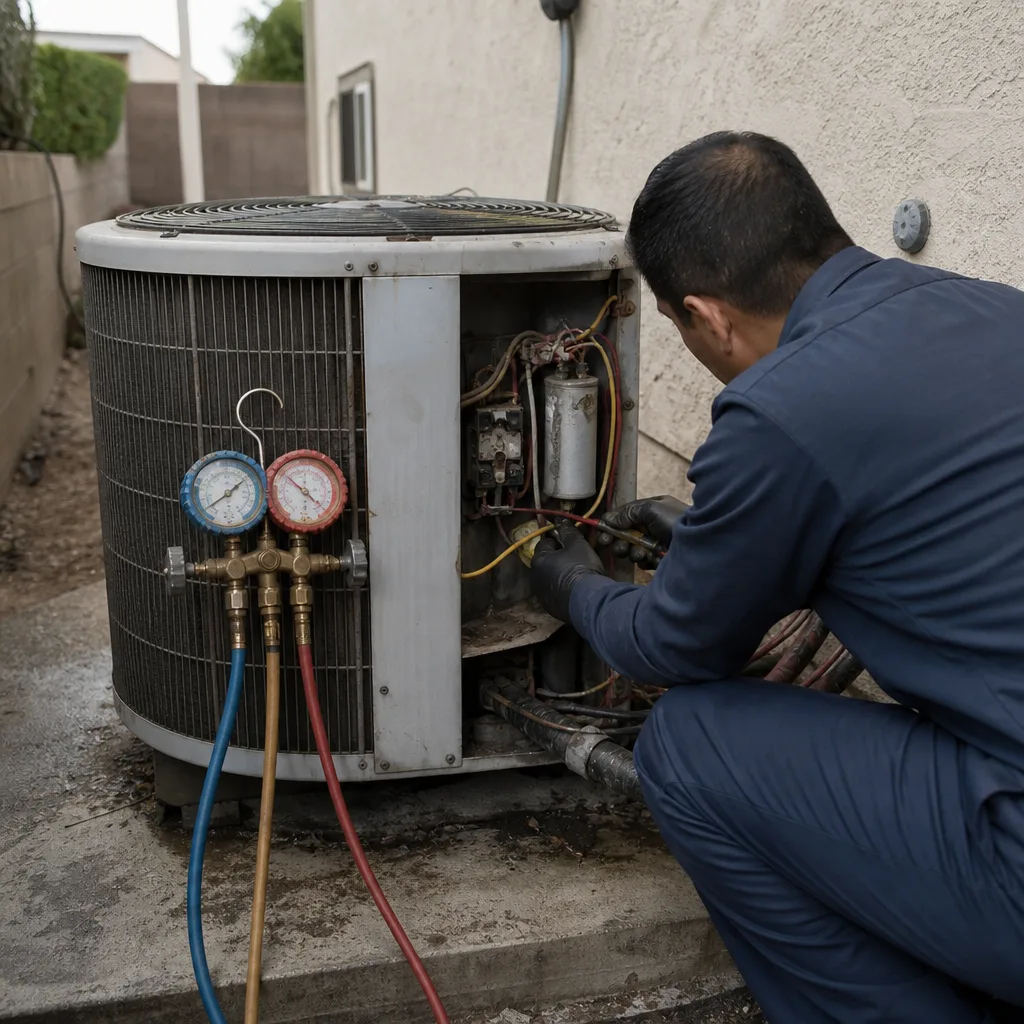 Before
 After
 Before
 After
 Before
 After
When to Call a Professional
Any decision involving a diagnostic of your existing system, a load calculation, a repair versus replacement call, or a new installation should involve a trained technician. Refrigerant handling requires EPA certification. High-voltage electrical work inside an air handler or condenser is genuinely dangerous. Gas-fired furnace work, on the heating side, involves fuel lines and combustion that must be handled by someone qualified. If your current system is failing in hot weather, if you’re weighing repair against replacement, if your contractor can’t answer basic questions about parts availability, or if you’re starting fresh on a brand choice and want a second opinion before you commit, call a professional rather than guess.
Jasper AC Repair offers free estimates in Glendale – call (855) 473-8857. We answer 24/7, with fast dispatch from 7am to 7pm, Sunday through Friday. Our technicians have up to 15 years of experience across the nine major HVAC brands, and our advice on brand choice is driven by your home and budget, not by any single manufacturer’s sales incentive.
Frequently Asked Questions
There isn’t a single best brand – the best brand for your Glendale home depends on your load calculation, your existing infrastructure, local parts availability, and the warranty terms that matter to you. For most homes, a well-matched mid-tier system from Carrier, Trane, or American Standard installed by a qualified technician delivers results comparable to a premium system at lower cost. Compare proposals on sizing accuracy and service access, not on nameplate. Call (855) 473-8857 for an exact quote – estimates are free.
AHRI ratings are measured at 95°F outdoor ambient temperature, but Glendale regularly sees operating conditions 10°F to 13°F above that. Every air conditioner loses efficiency as outdoor temperature climbs, but the rate of loss varies by brand and system design. Ask for extended-temperature performance data where it’s published, and prioritize variable-speed systems if you want the flattest real-world curve in high heat. A technician who works on multiple brands can compare this data honestly – call (855) 473-8857 for guidance.
Yes – California’s Song-Beverly Consumer Warranty Act adds implied warranty protections to consumer goods, including HVAC equipment, that run alongside the manufacturer’s written warranty. In practical terms, this can strengthen your position if a component fails prematurely, even after written warranty terms might seem to have lapsed. The manufacturer’s written terms still matter, and registration deadlines still matter, so read both carefully. If you have a warranty dispute, ask us for help understanding your options – call (855) 473-8857.
Not necessarily – brand loyalty to a single manufacturer limits your service options if your contractor retires, closes, or loses authorization. Choose a brand that has broad local parts distribution and is serviced by multiple local technicians, not just your installer. At Jasper AC Repair, we service nine major brands, so brand choice is never a dead end for our customers. Call (855) 473-8857 for a free estimate on install or repair.
It depends on your home. Premium brands earn their price in larger single-family homes with multiple zones, tight side-yard clearances, and owners planning to stay long-term, where better modulation, sound insulation, and warranty terms matter. In smaller or well-matched homes, the real-world difference versus a correctly sized mid-tier system is often negligible in daily use. Put that budget into a proper load calculation and ductwork improvement instead. Call (855) 473-8857 to talk through your specific home.
If the failed part isn’t stocked by a local distributor, repairs can extend from same-day to several days or longer, depending on the manufacturer’s regional depot turnaround. That delay matters during a Glendale heat wave, when a home without cooling is a health risk. Before you choose a brand, ask your contractor which local distributor carries its parts and what typical lead times are for common failures. If your current system is down, call (855) 473-8857 and we’ll dispatch fast from 7am to 7pm, Sunday through Friday, with a free estimate.
Can a furnace and AC come from the same brand, or should they differ?
They can, and often do, come from the same brand – matched systems are common and sometimes simplify warranty handling. But there’s no rule requiring it. What matters is that the indoor coil, air handler, and outdoor unit are matched for AHRI-rated performance, and that your contractor can service both halves. We handle AC installation and furnace repair across nine major brands, so we never hand you off to a second contractor. Call (855) 473-8857 for both.
Ask your contractor directly. A few questions tell you almost everything: which local distributor carries the brand, whether the model uses proprietary or standard components, typical lead times for common failures, and whether they stock the parts themselves. If the contractor can’t answer, that’s a warning sign. We can talk through parts availability for the nine brands we service – call (855) 473-8857 for a free estimate.
The Bottom Line
For most homeowners in Glendale, the brand on the box comes third, behind a proper load calculation and a skilled installation. When brand does matter – and it does – the factors that count are parts availability in the LA market, a warranty you actually understand, and how the system performs above the 95°F AHRI test point in Glendale’s hotter summer afternoons. Mid-tier units from Carrier, American Standard, and Trane are often the smarter buy than premium. The bigger risk is getting locked into a single brand with limited local service. Choose a brand your contractor can service for the life of the system, verify the warranty terms in writing, and confirm parts lead times before you commit. That’s how you get a system that lasts.
If you’re evaluating a brand or weighing repair versus replacement for what you already own, call us. Jasper AC Repair handles AC installation, furnace repair, and furnace replacement across nine major brands. Call (855) 473-8857 for a free estimate. We answer 24/7. Fast dispatch from 7am to 7pm, Sunday through Friday.
Written by the team at Jasper AC Repair.