
Last updated November 15, 2026
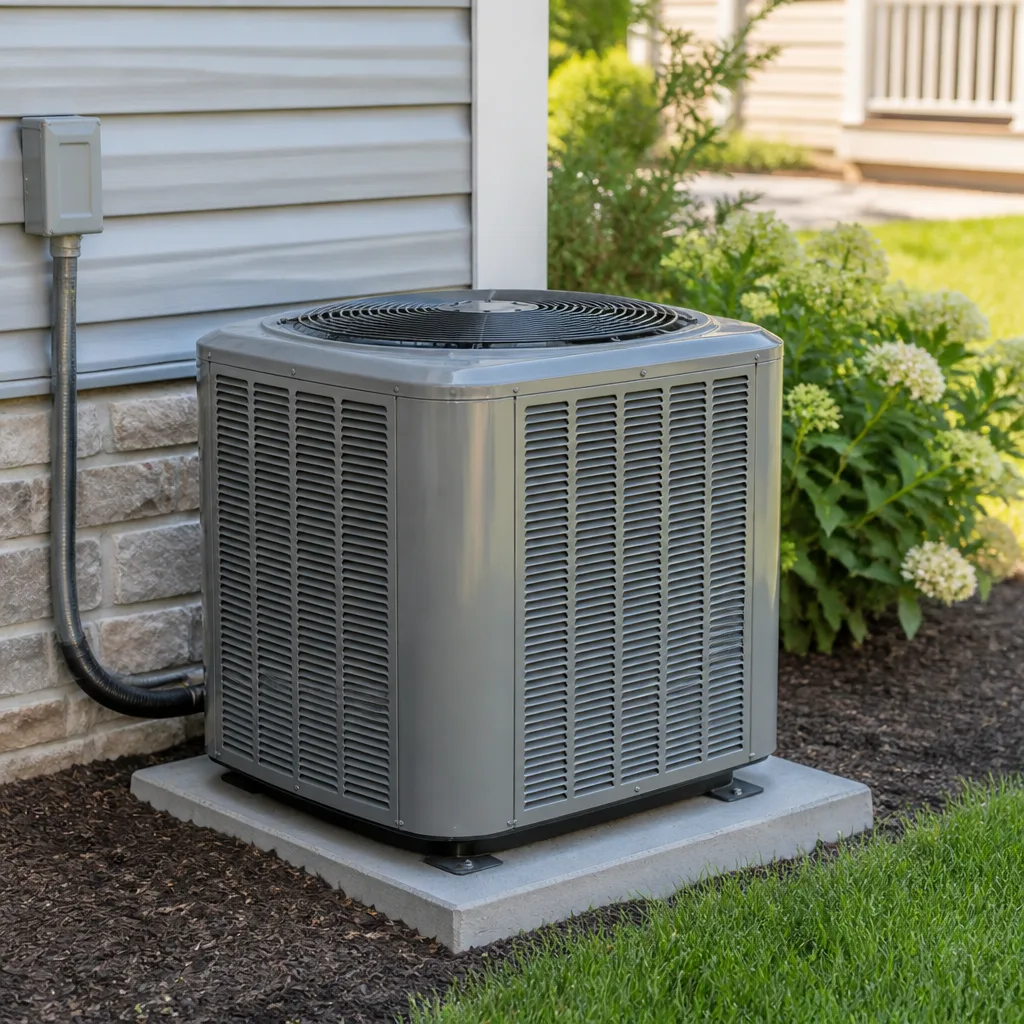 AC repair
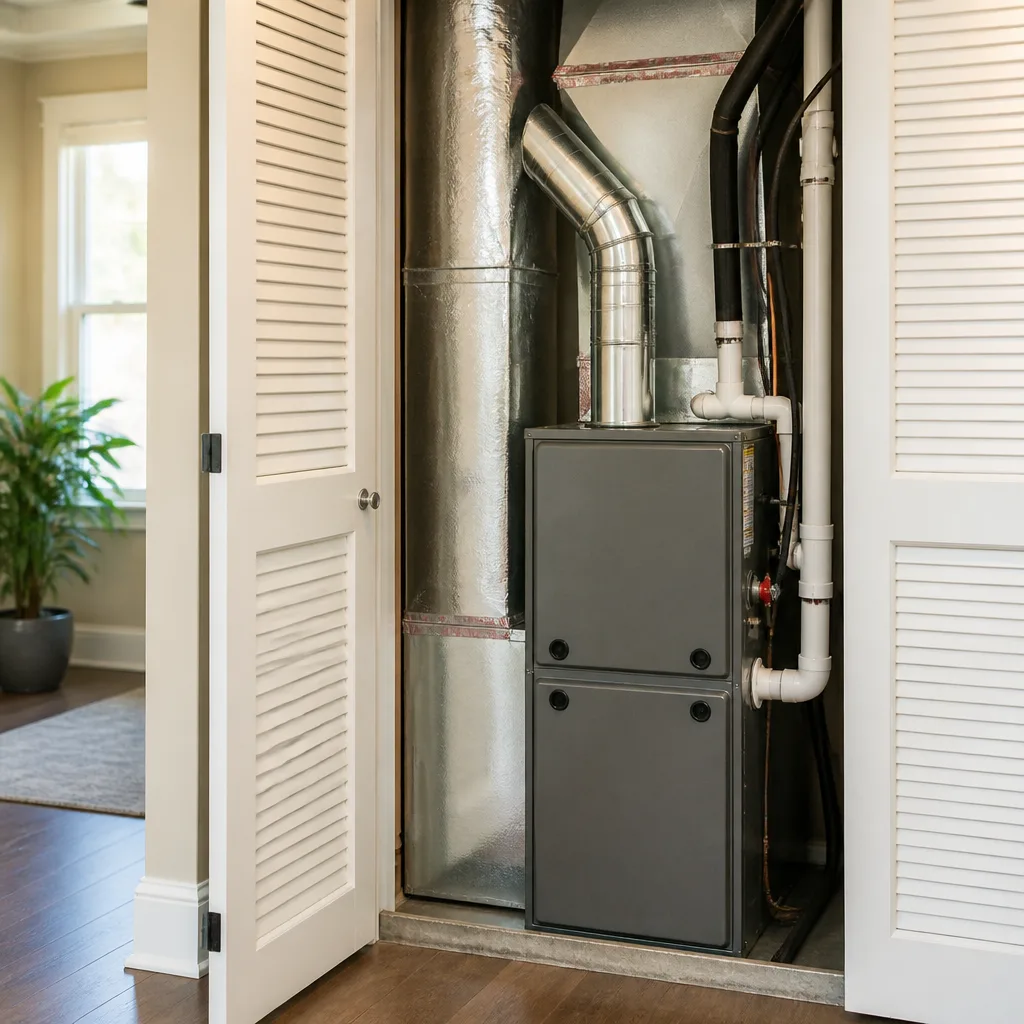 Furnace & heating
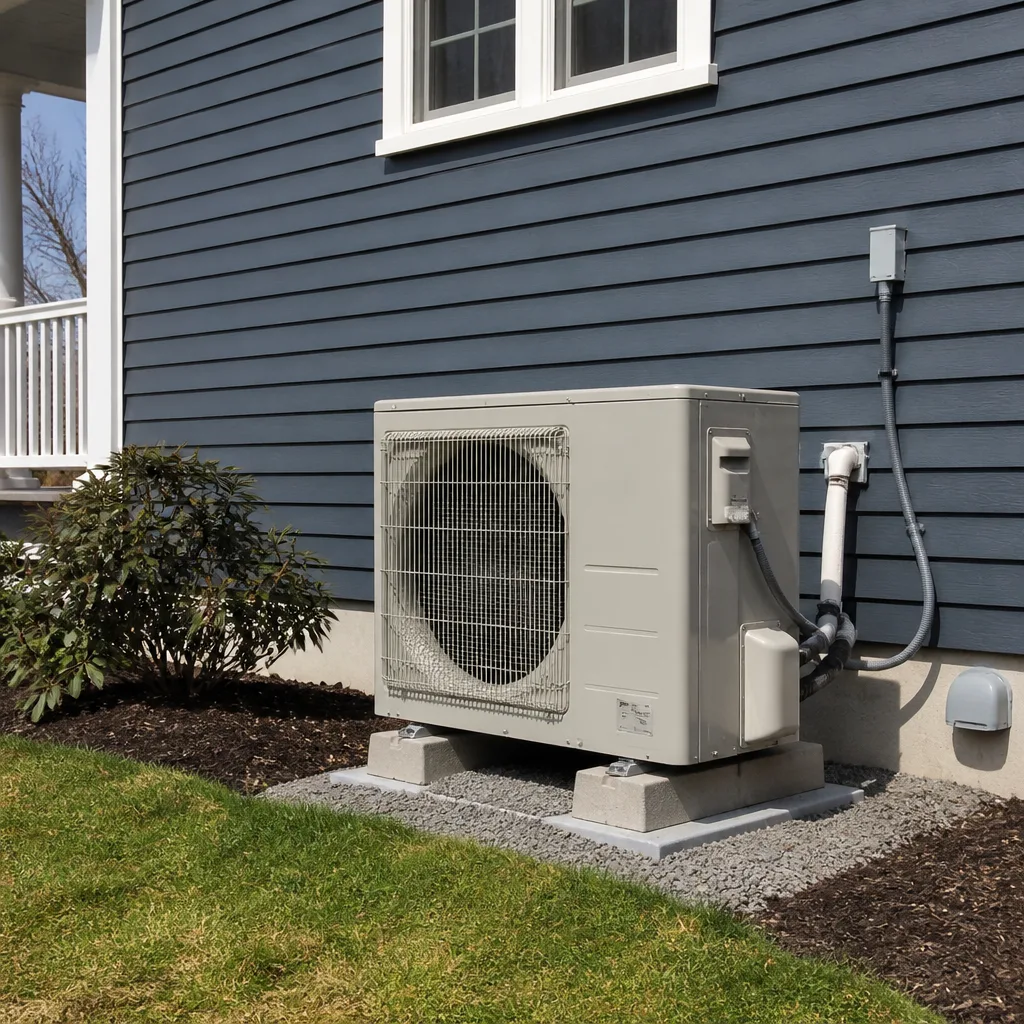 Heat pumps
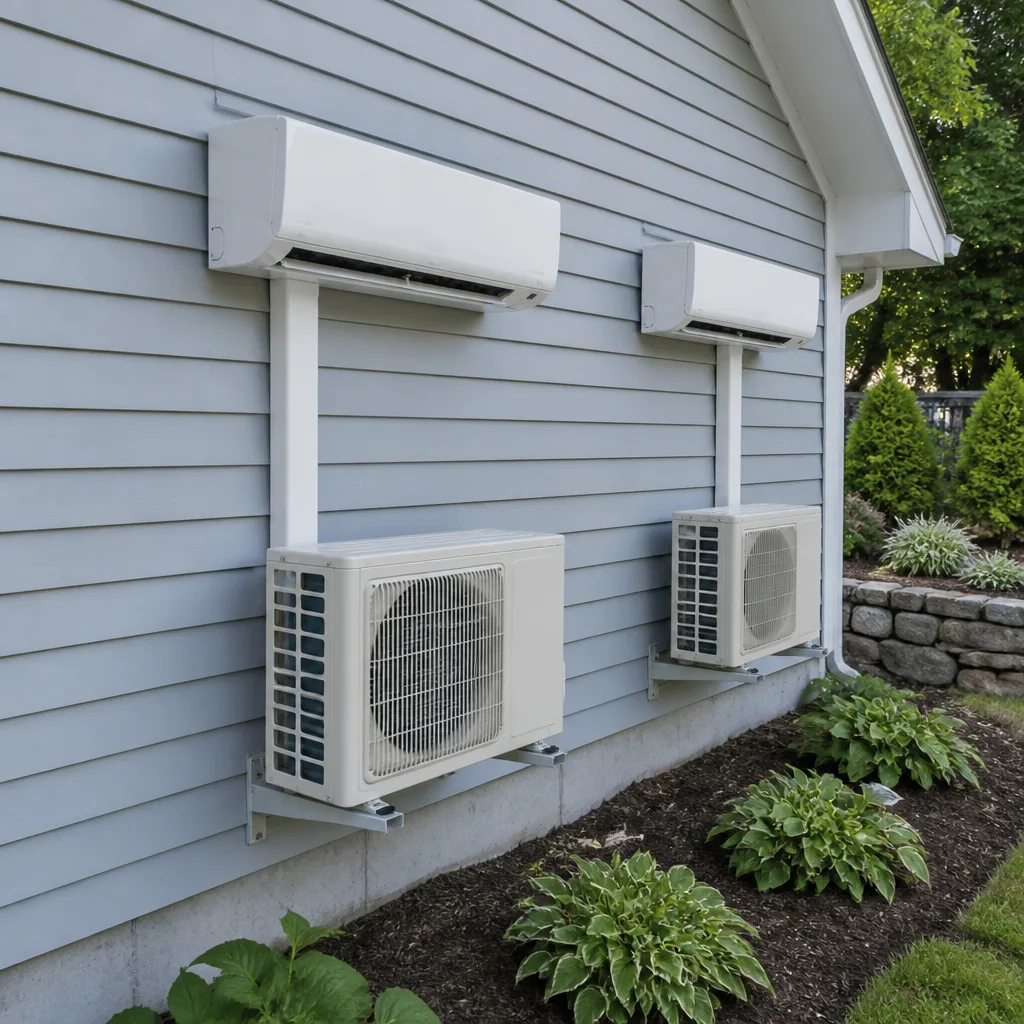 Ductless mini splits
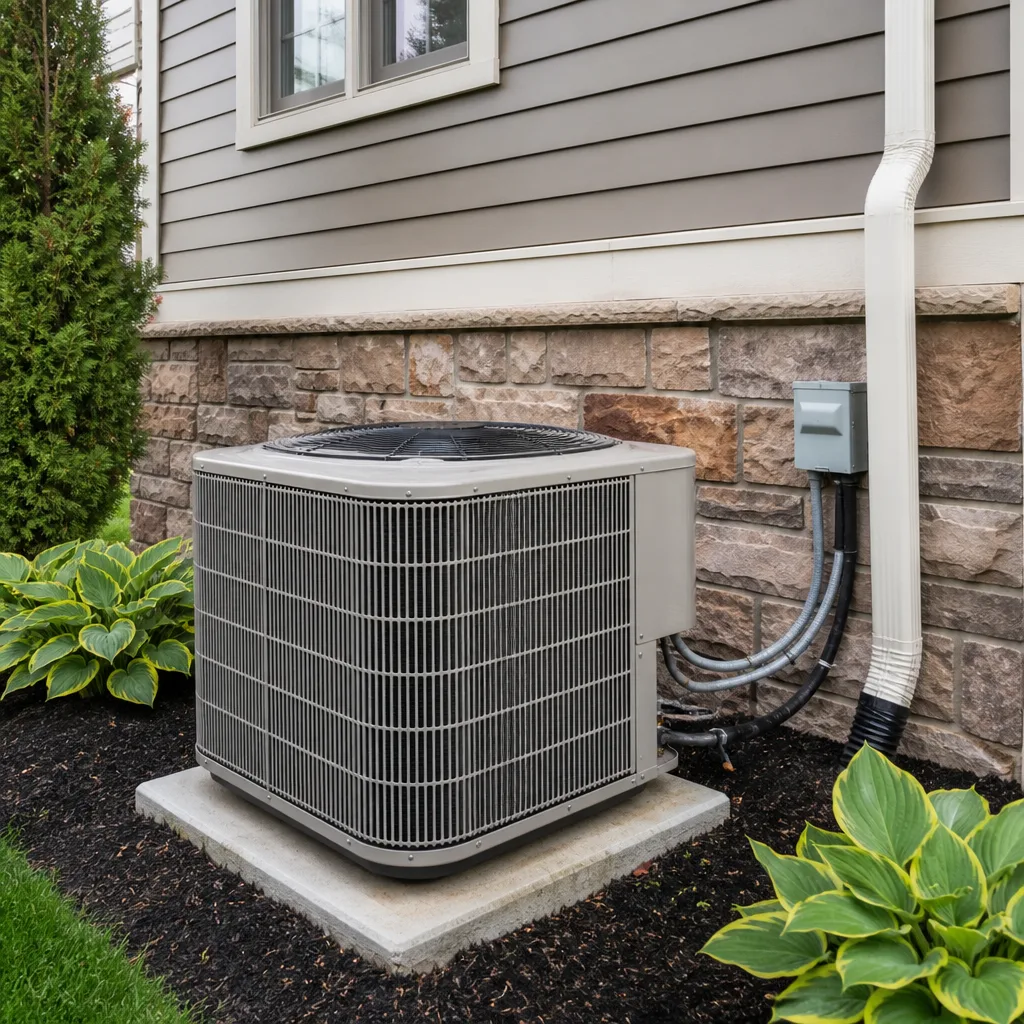 Carrier
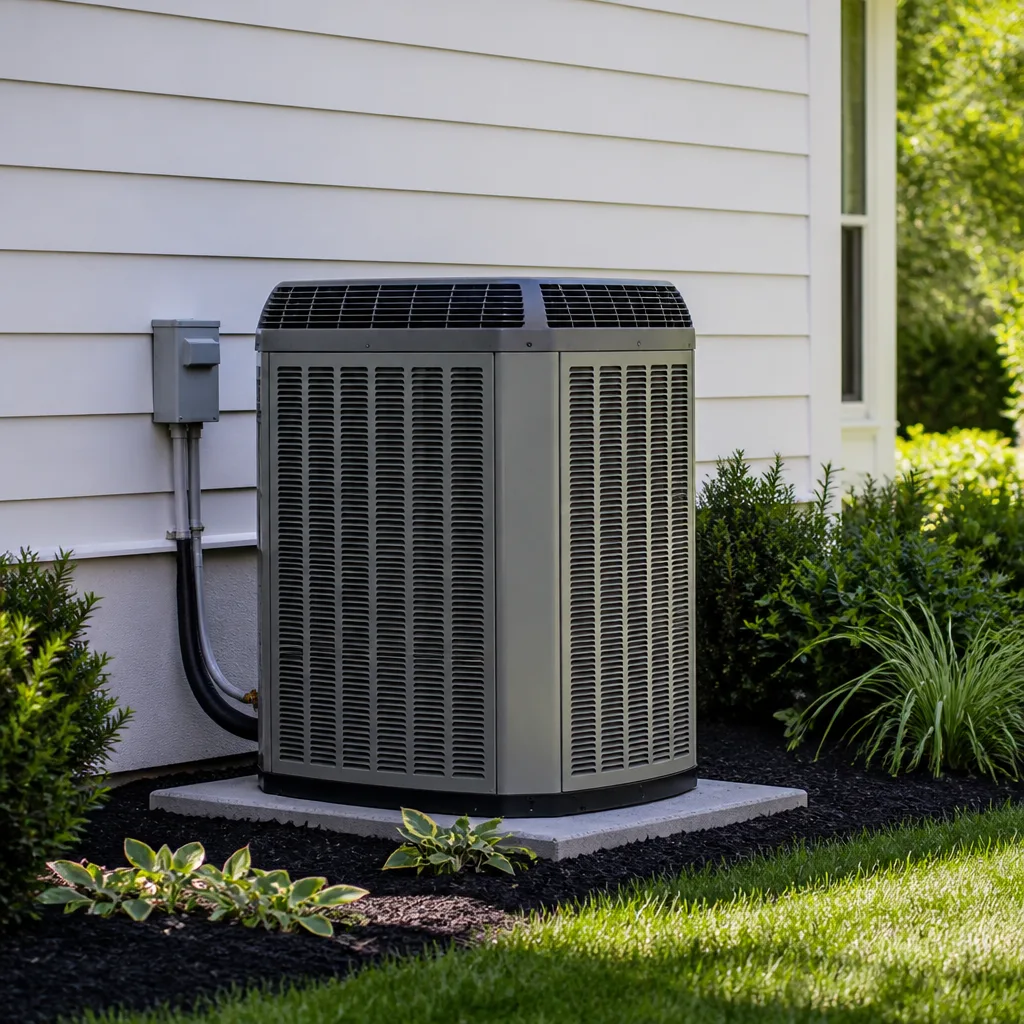 Trane
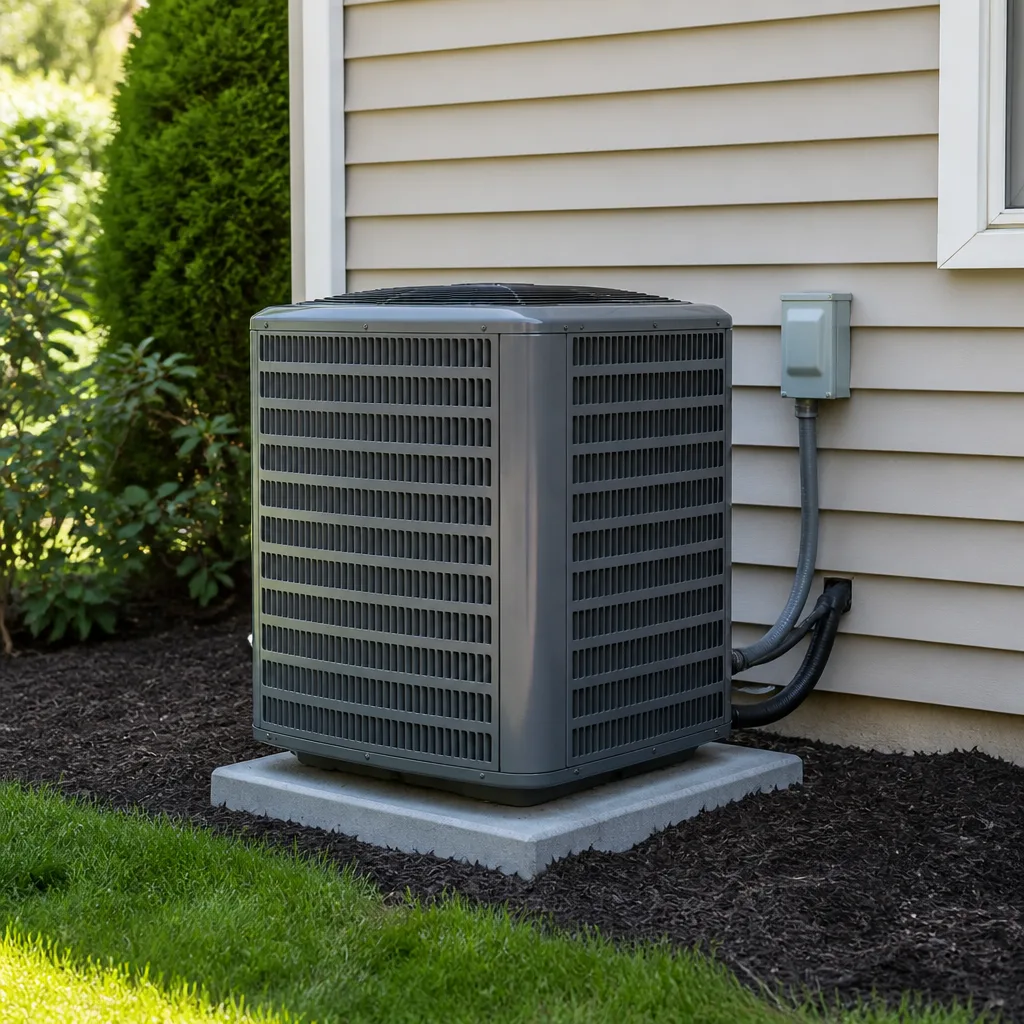 Goodman
Seasonal tune-up and full diagnostic on your Carrier, Trane, or Goodman system - readings shown to you before any repair is proposed
Diagnosis first, numbers second - you approve the repair price before a single part goes in.
Get your free estimateDIY vs Professional HVAC: The Glendale Homeowner’s Decision Guide
Most arguments about DIY HVAC focus on money, and most of them get the money wrong. The ownership question in California isn’t “can I turn a wrench.” It’s “am I legally allowed to touch this part of the system.” Handling refrigerant without an EPA Section 608 certification is a federal violation, not a building code issue, and it applies to homeowners, not just contractors. That single fact settles a good chunk of the decision before you open the unit. This guide draws the line where California actually draws it: what you can legally and safely do yourself, what requires a licensed C-20 contractor, how each choice touches your warranty, and when the savings from a DIY job get swallowed by the repair it causes. We wrote it for Glendale homeowners who want to own the easy work and stay out of the legal and liability traps on the rest.
Quick Answer
You can legally and safely DIY filter changes, thermostat swaps, condensate line clearing, and outdoor condenser cleaning in Glendale. Anything involving refrigerant, electrical wiring beyond a thermostat, gas connections, or compressor and coil work falls outside homeowner scope: refrigerant requires EPA Section 608 certification, and most of the rest requires a California C-20 licensed contractor. The dividing line is legal first, practical second. Get that order right and the cost question answers itself.
Styles & brands we work with
- AC repair
- Furnace & heating
- Heat pumps
- Ductless mini splits
- Carrier
- Trane
- Goodman
Table of Contents
- The Legal Line: What California Actually Restricts
- What Glendale Homeowners Can Legally DIY
- What Requires a C-20 Licensed Contractor
- EPA Section 608: Why Refrigerant Is Off-Limits
- How DIY Work Affects Your Manufacturer Warranty
- Cost-Benefit: Where DIY Actually Pays
- Glendale-Specific Considerations
- How to Choose a Contractor When You Do Call
The Legal Line: What California Actually Restricts
The frame most homeowners use is “am I capable,” and it’s the wrong frame. The right one is “am I allowed.” California draws a specific line around HVAC work, and that line holds whether or not you own a torque wrench and have watched the videos. Capability doesn’t create permission.
Here’s how the restrictions actually break down:
- Refrigerant handling: Governed by federal law (EPA Section 608), not state law. It applies to anyone who opens a refrigerant circuit, professional or homeowner. No certification, no legal refrigerant work.
- Electrical work on HVAC equipment: Beyond swapping a thermostat, hooking up line voltage to a condenser or air handler falls under contractor licensing in California. Homeowners can work on their own single-family residence in narrow circumstances, but most HVAC electrical work requires a C-20 (Warm-Air Heating, Ventilating and Air-Conditioning) licensed contractor, and the permit process follows accordingly.
- Gas connections on furnaces: Gas line work is its own licensed trade in California. Furnace replacement involves gas hookup, and that step alone pushes the job out of DIY scope.
- Permits: Most cities require a permit for HVAC replacement and for significant system modifications. Glendale is no different. If a permit is required, the work needs to be inspected, which means it needs to be done by someone whose work will pass inspection.
The consequence of crossing the line isn’t a fine in most cases. It’s worse. If you do the work yourself without a license and something goes wrong later (a fire, a carbon monoxide incident, water damage from a condensate leak), your homeowner’s insurance can deny the claim on the grounds that unpermitted, unlicensed work caused the loss. The liability follows the homeowner, not the job. That’s the piece most DIY guides skip, and it’s the piece that makes the legal framework the real starting point. If you’re ever uncertain where a specific task falls, ask your city’s building department before you touch anything.
What Glendale Homeowners Can Legally DIY
Four HVAC tasks are squarely within homeowner scope in Glendale: filter changes, thermostat swaps, condensate line clearing, and outdoor condenser cleaning. Each is legal, each is safe with basic precautions, and each genuinely extends system life when done consistently. Here’s how to do them right.
1. Filter changes
Check the filter monthly during cooling season and swap when it’s visibly loaded. In Glendale, spring pollen and summer dust load filters faster than people expect, so month six of a “change it every three months” habit is often month four of the filter’s actual life. Match the MERV rating to what your system’s manufacturer recommends; too high a MERV on a system not designed for it chokes airflow and strains the blower. Write the swap date on the filter edge with a marker. It takes five seconds and ends the guessing.
2. Thermostat swaps
Replacing a thermostat is legal for a homeowner when you’re replacing like-for-like on low-voltage wires. Kill the breaker to the air handler first. Label the wires before you disconnect them (R, W, Y, G, C are the usual suspects). The gotcha in Glendale homes is the C-wire: older thermostats often ran on batteries and didn’t need one, so a smart thermostat swap can stall when there’s no C-wire pulled to the wall. If you find four wires and no fifth, that’s the moment to stop and call rather than improvise a jumper.
3. Condensate line clearing
The condensate drain carries water from the indoor coil to a drain or the exterior. When it clogs, water backs up and either trips the float switch (good) or overflows into the pan and adjacent drywall (bad). Clearing it is legal DIY: locate the drain line, look for the cleanout tee or cap, and flush with water or a wet/dry vacuum at the outdoor termination. Do this at the start of cooling season in Glendale, and again mid-summer if the system runs hard. In our experience, a clogged condensate line is one of the most common “system won’t cool” calls we diagnose, and it’s almost always preventable with two minutes of maintenance.
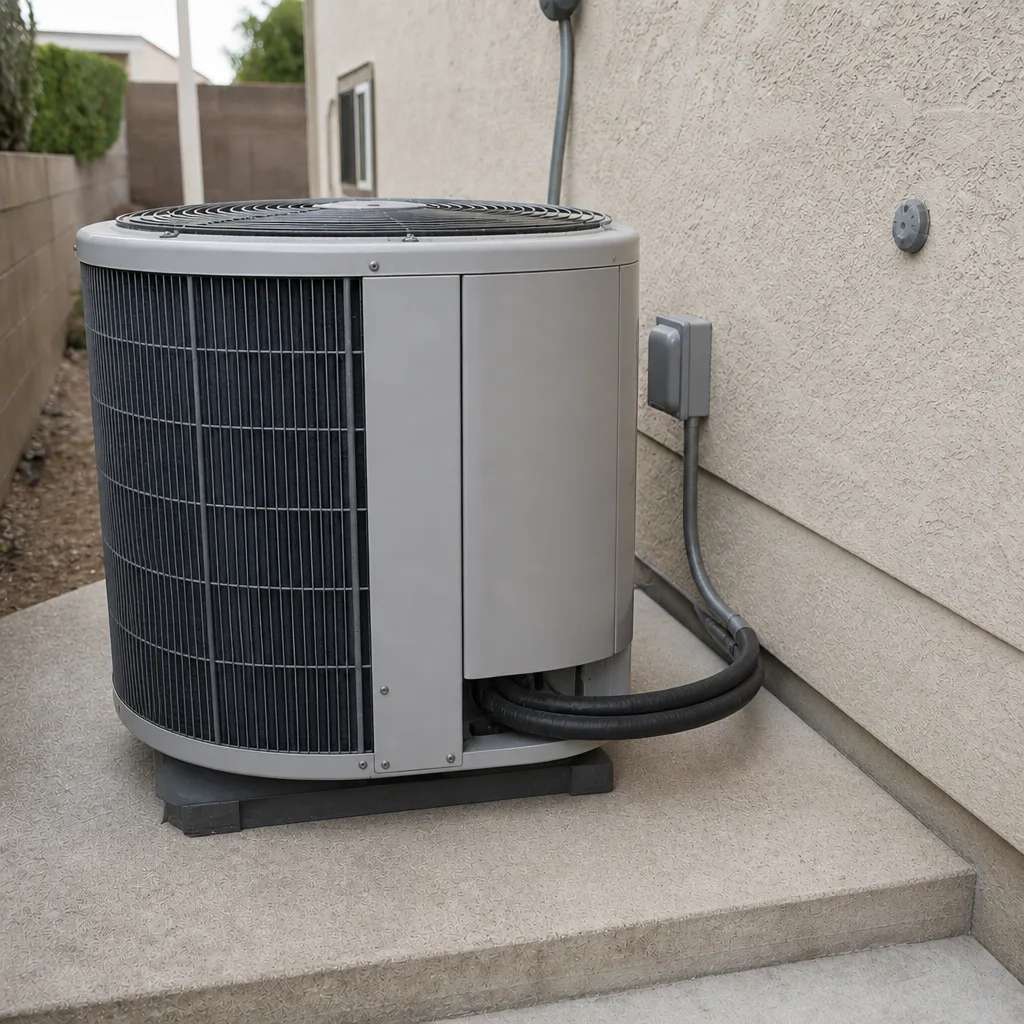
4. Outdoor condenser cleaning
With the breaker off, rinse the outdoor coil from the inside out with a garden hose on low pressure. Clear leaves, pollen fluff, and lint from the fins. Don’t use a pressure washer; bent fins reduce airflow and cost more to comb straight than the cleaning saved. In Glendale, spring jacaranda and pollen season loads outdoor coils noticeably, so a rinse in late spring and again in late summer is a reasonable rhythm.
What Requires a C-20 Licensed Contractor
California requires a C-20 licensed contractor for warm-air heating, ventilating and air-conditioning work that goes beyond routine maintenance. That covers more of the HVAC system than most homeowners realize. If you’re wondering whether a task is on this list, assume it is and verify with your building department.
Tasks that require a C-20 license regardless of homeowner skill level include:
- Any work that opens the refrigerant circuit: adding refrigerant, recovering refrigerant, replacing a compressor, evaporator coil, condenser coil, or metering device.
- Electrical work on HVAC equipment beyond a thermostat swap, including line-voltage connections, contactors, capacitors, control boards, and blower motor replacement.
- Gas line work on a furnace or any gas-fired heating equipment. This is its own licensed trade and cannot be done by an unlicensed homeowner.
- Full system replacement: AC installation, furnace replacement, ductwork installation or major modification, and anything requiring a permit and inspection.
- Refrigerant line installation and brazing. This work must be performed by someone with EPA Section 608 certification in addition to the C-20 license.
The insurance consequence is the part that matters most. If a homeowner does licensed-scope work themselves and a subsequent covered loss traces back to that work, most homeowner policies will exclude the claim. Unlicensed work is a standard exclusion. And if a neighbor or guest is injured by work you did, that liability sits with you, not with a contractor whose insurance would otherwise absorb it. The savings on a capacitor or a gas valve swap are small compared to a denied claim or a personal injury suit. This is where we tell Glendale homeowners to stop and call. The math almost never works in favor of DIY on these.
EPA Section 608: Why Refrigerant Is Off-Limits
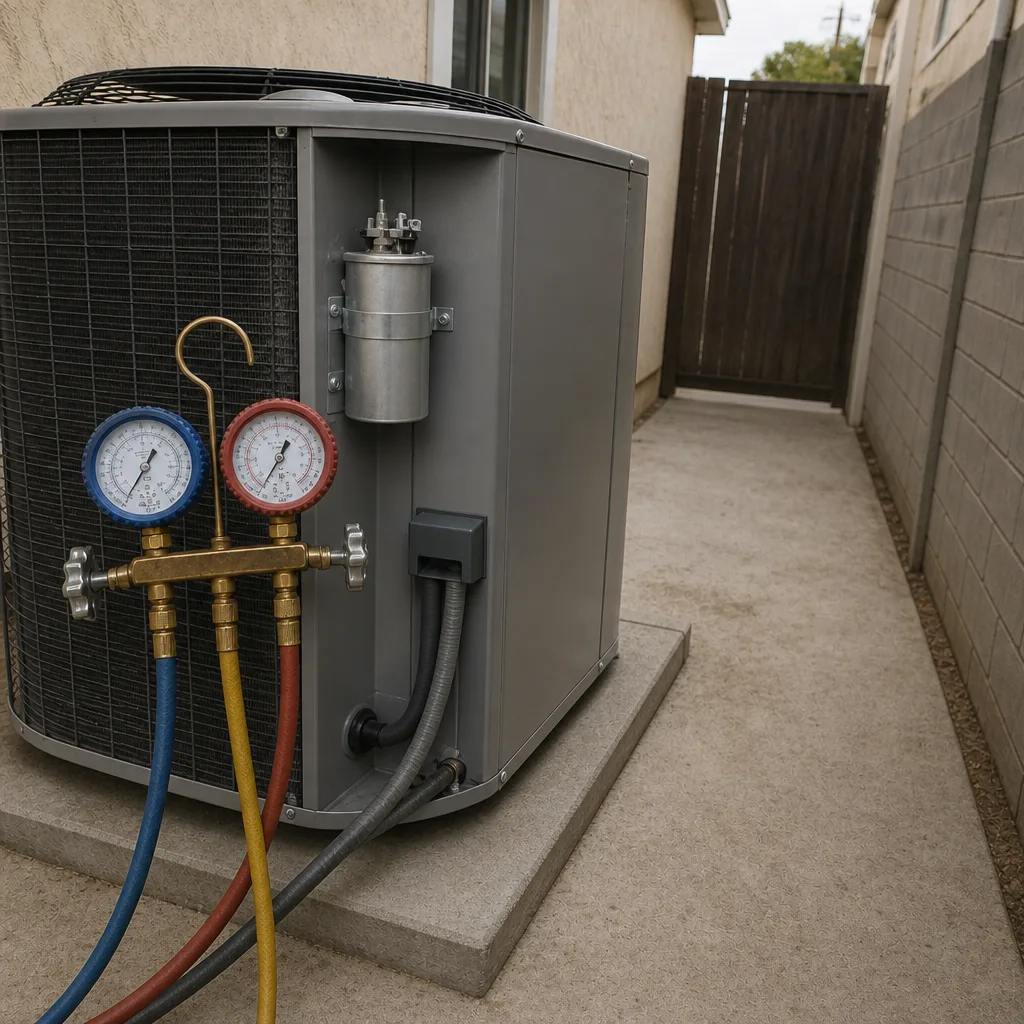
EPA Section 608 of the Clean Air Act restricts who can legally handle refrigerants, and the restriction is federal. It’s not a state code, not a city permit rule, and not something a homeowner can sidestep by being careful. It applies to anyone who opens a refrigerant circuit, whether they’re charging a system, recovering refrigerant, or simply disconnecting a line set.
What the certification actually covers:
- Safe refrigerant handling practices
- Refrigerant recovery, recycling, and reclamation
- System evacuation and charging procedures
- Leak detection and repair under the refrigerant management rules
- Recordkeeping requirements
What that means for you as a homeowner: no matter what videos you watch or tools you buy, recharging your own system or swapping a compressor is a violation. Releasing refrigerant into the atmosphere is also a violation, which is the core reason the rule exists; many refrigerants are potent greenhouse gases. Equipment manufacturers sell refrigerant in cylinders that require certification to purchase, so the market itself enforces the rule before you even get to the violation question. If your system is low on refrigerant, the correct response is not “add some and see.” That’s a sign of a leak, and finding and fixing the leak is the actual job. Both of those steps require certified hands.
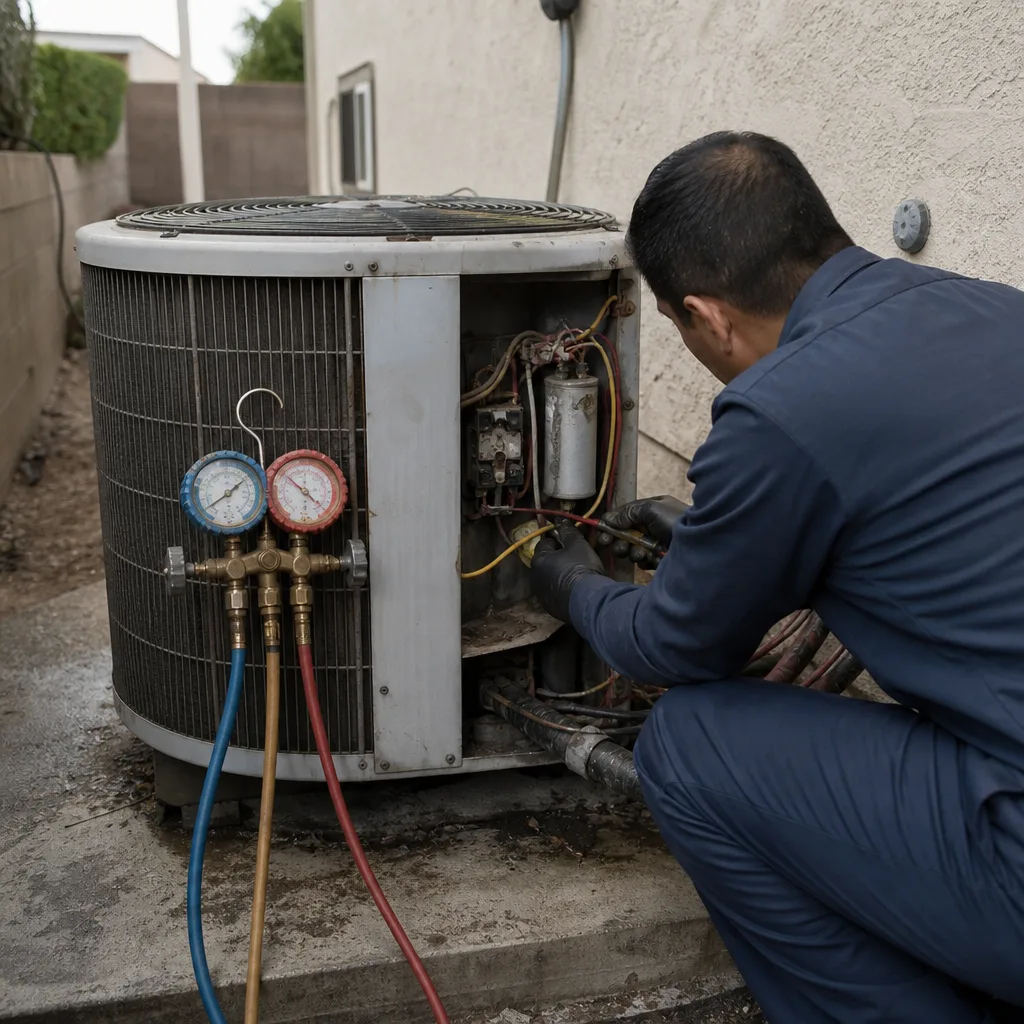
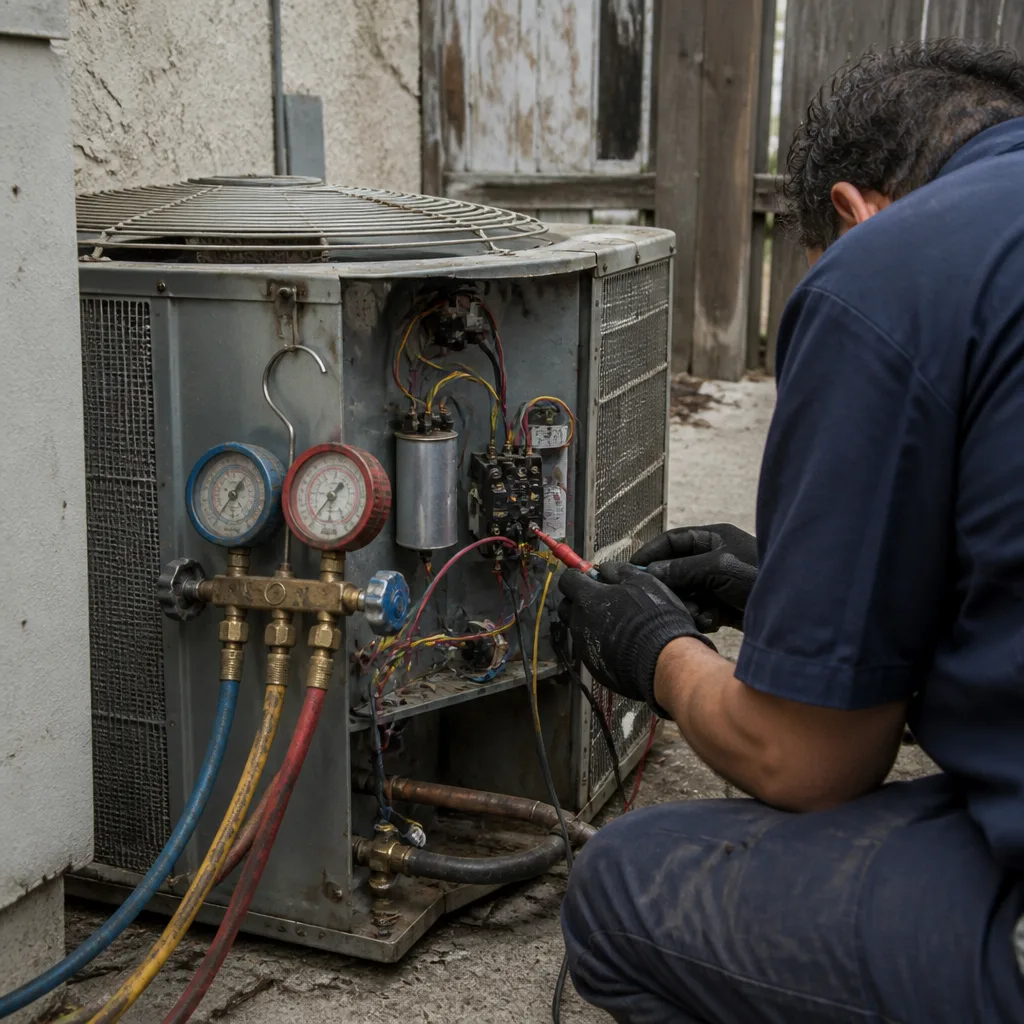
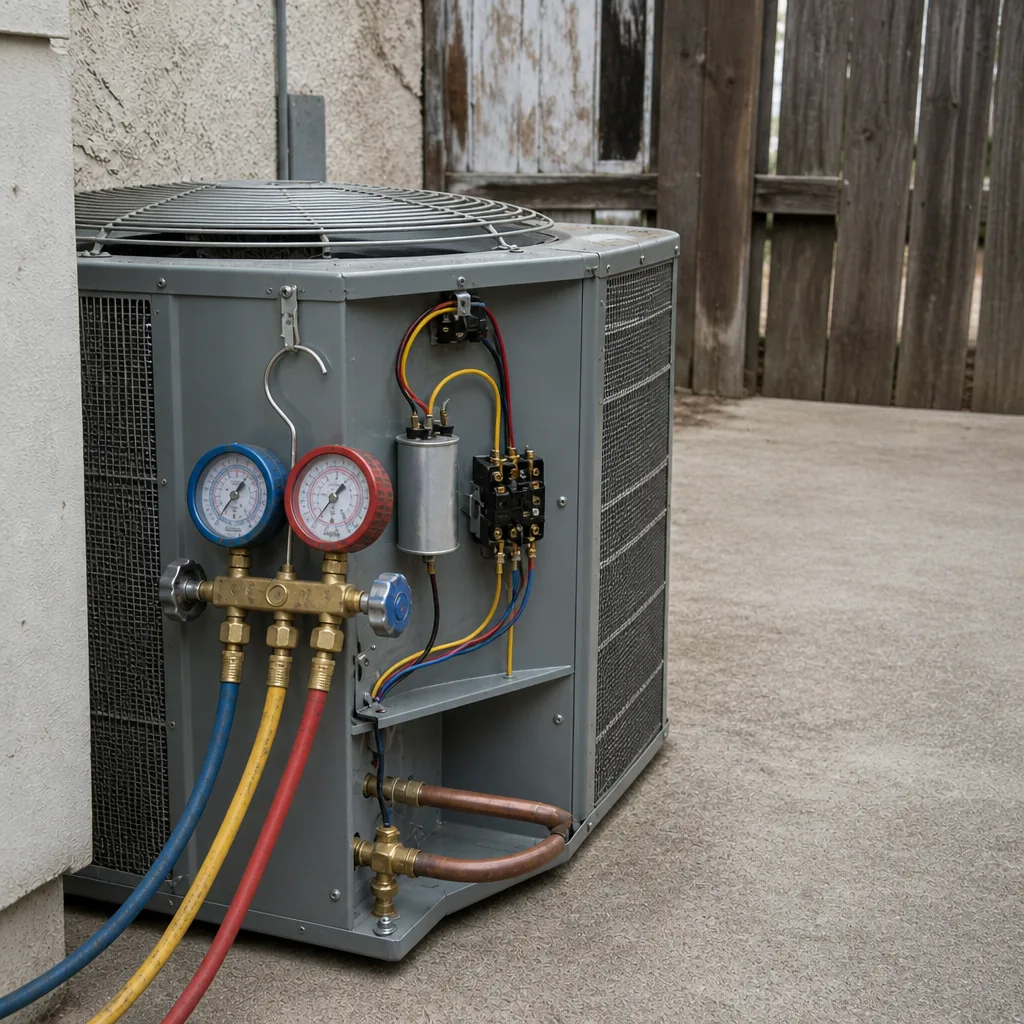
When we diagnose a Glendale system that won’t cool, low refrigerant is one of several possibilities, and confirming it means using gauges and taking superheat and subcooling readings. You can’t do that diagnostic from a homeowner’s position legally, which is why “just recharge it” doesn’t work as a DIY shortcut. Call us if you suspect you’re low; the diagnostic is straightforward and the leak almost never fixes itself.
How DIY Work Affects Your Manufacturer Warranty
Manufacturer warranties on residential HVAC equipment generally require professional installation and service for the warranty to stay intact, and DIY work is a standard exclusion across the industry. If your system came with a Goodman, Rheem, Daikin, or York warranty (we work on all of them, plus the other major brands), the paperwork almost certainly contains language along these lines: the warranty doesn’t cover damage caused by improper installation or service, work performed by unlicensed or uncertified personnel, or parts not installed by a qualified technician. Those clauses are what you’re fighting against when you open the unit yourself.
The warranty piece that catches homeowners most often is the parts-versus-labor split. Even if the part in question still seems covered, if the failure traces back to unapproved work, the manufacturer can deny the claim. And on a major component like a compressor, that denial is expensive. The cost of the compressor part plus labor on a mid-size residential system can easily exceed the cost of the whole DIY project the homeowner was trying to save on.
Two practical defenses:
- Keep your receipts and your filter change dates. Warranty administrators ask for maintenance records when they evaluate a claim, and a simple log helps.
- Have any non-trivial work done by a contractor who documents the job properly (invoice, permit where required, model and serial numbers). That paper protects you if a warranty question comes up later.
None of this should stop you from changing filters or flushing a condensate line. Those tasks are maintenance, not service, and they don’t void anything. It should stop you from opening the sealed system or replacing a control board in the name of saving a service call.
Cost-Benefit: Where DIY Actually Pays
Here’s the honest calculation on the four tasks homeowners can legally do. The savings on each are real but small compared to the cost of one downstream repair they can cause if done wrong. That’s not an argument against doing them. It’s an argument for doing them correctly and knowing exactly where to stop.
Weighing the trade in plain terms:
- Filter changes ($10 – $30 in filter cost): Always worth it. A dirty filter chokes airflow, strains the blower, and drives up runtime. This is the highest-return HVAC dollar you spend.
- Thermostat swap ($50 – $250 for a basic to mid-tier thermostat): Worth it if the wiring is a straight like-for-like swap. If there’s no C-wire or the wires are mislabeled, the savings evaporate quickly. Improper thermostat wiring can blow a low-voltage transformer or a control board, which runs a real service call.
- Condensate line clearing (a few dollars for supplies): Always worth it. A clogged line can overflow into drywall, which turns a five-minute maintenance task into a drywall and paint repair on top of the HVAC service call.
- Outdoor coil cleaning (a garden hose): Worth it if you’re careful. A pressure washer does damage, a bent-fin repair costs more than the cleaning saved, and a coil that ends up worse off reduces efficiency and shortens equipment life. Rinse low and often rather than hard and once.
The tasks that never pay in DIY: anything that opens the refrigerant circuit, any electrical work on the equipment itself, any gas work, and any component swap on a system still under manufacturer warranty. The savings look big in the moment and turn into a denial or a downstream failure the first time something goes wrong. If you’re weighing a repair against replacement, the math is more complicated than DIY versus pro, and the honest framing usually comes down to how old the system is and what else is on the horizon.
Where we come in is exactly that conversation. For Glendale homeowners, we handle AC installation when a system has reached the replacement point, and we do furnace repair when the heating side is the one giving trouble. Because we work on all nine major brands (Carrier, Trane, Lennox, Goodman, Rheem, York, Daikin, Bryant, and American Standard), the conversation is about your house and budget, not about a brand we’re trying to move.
Glendale-Specific Considerations
Glendale’s climate shapes how each of these tasks behaves. Summers are hot and dry, winters are mild, and the system gets a long cooling workout and a comparatively gentle heating season. That means the wear distribution leans heavily toward the cooling side. If we had to pick the single most important maintenance task for a Glendale homeowner, it’s keeping airflow clean through the cooling months. Filters, outdoor coils, and condensate lines do most of that work.
The city’s housing stock matters too. Many homes in Glendale (from older bungalows to mid-century ranches) run on systems with configurations that weren’t designed for today’s airflow expectations. That matters in two ways:
- Older ductwork can be undersized for a newer condenser, which means even a well-maintained system underperforms. This is a case where a contractor evaluation is worth it before spending on replacement.
- Condensate drain routing varies widely. Some homes drain to the exterior, some to a utility sink or landscape line, and some have long runs that clog more easily. Knowing your home’s path helps you check it correctly.
Glendale’s own building department handles permits and inspections for HVAC work within the city, and the requirement to pull a permit for replacement or significant modification is not an optional procedure. If a contractor offers to skip the permit for a system swap, that’s a reason to look elsewhere; the permit protects you at resale and if a warranty question ever comes up.
Seasonal timing matters too. In Glendale, the demand crunch for AC work runs late spring through summer, and if you’re waiting for a system to fail on the hottest day of the year, you’re on the wrong side of the queue. If a system is already showing signs of age or underperforming, a shoulder-season evaluation is a much calmer conversation than an emergency in August. For more about our full coverage in the city, see our Glendale page.
How to Choose a Contractor When You Do Call
The right time to think about which contractor to call is before you need one. When you’re already in an emergency, price shopping gets harder and the temptation to take the first available job goes up. Here’s what to check before the system fails on you.
- License type: Confirm the contractor holds a California C-20 license. That’s the classification for warm-air heating, ventilating and air-conditioning work.
- EPA 608 certification: Ask if the technicians who will handle your system carry it. Anyone touching refrigerant needs it. A contractor who can’t confirm this is telling you something.
- Brand coverage: If a contractor only services one or two brands, your recommendation is shaped by what they carry, not what your home needs. We work on all nine major brands, so recommendations come from your home, not from what’s on the shelf.
- Permit willingness: A contractor who always pulls permits when required and puts the work through city inspection is doing the job correctly. One who offers to skip the permit is trading your protection for their convenience.
- Written estimate before work: Ask for a written scope, a written price, and a clear statement of what’s included. If a contractor can’t put it on paper before work begins, that’s the moment to walk.
We handle the full equipment lifecycle: new AC installation on the cooling side, furnace repair when a heating problem is fixable, and full furnace replacement when the repair no longer makes financial sense. That last conversation is the one repair-only shops tend to avoid. Because we service all nine major brands, the recommendation comes down to what your house actually needs and what fits your budget. Nothing else.
Common Mistakes to Avoid
- Recharging your own system. This is a federal violation under EPA Section 608 and the most common HVAC DIY mistake on the internet. No amount of video watching makes it legal; the certification is the requirement, not the knowledge.
- Swapping a thermostat without checking for a C-wire. Most Glendale smart-thermostat installs stall on a missing C-wire. Improvising with a jumper wire can blow a low-voltage transformer, which costs more than the thermostat did.
- Using a pressure washer on the outdoor coil. Glendale outdoor coils are loaded with pollen every spring, and a hard spray bends fins that cost more to comb straight than a careful low-pressure rinse ever would.
- Skipping the permit on a replacement. A system swap without a permit can fail an inspection at resale and can complicate a warranty claim. Glendale requires permits for this work, and skipping them saves nothing in the long run.
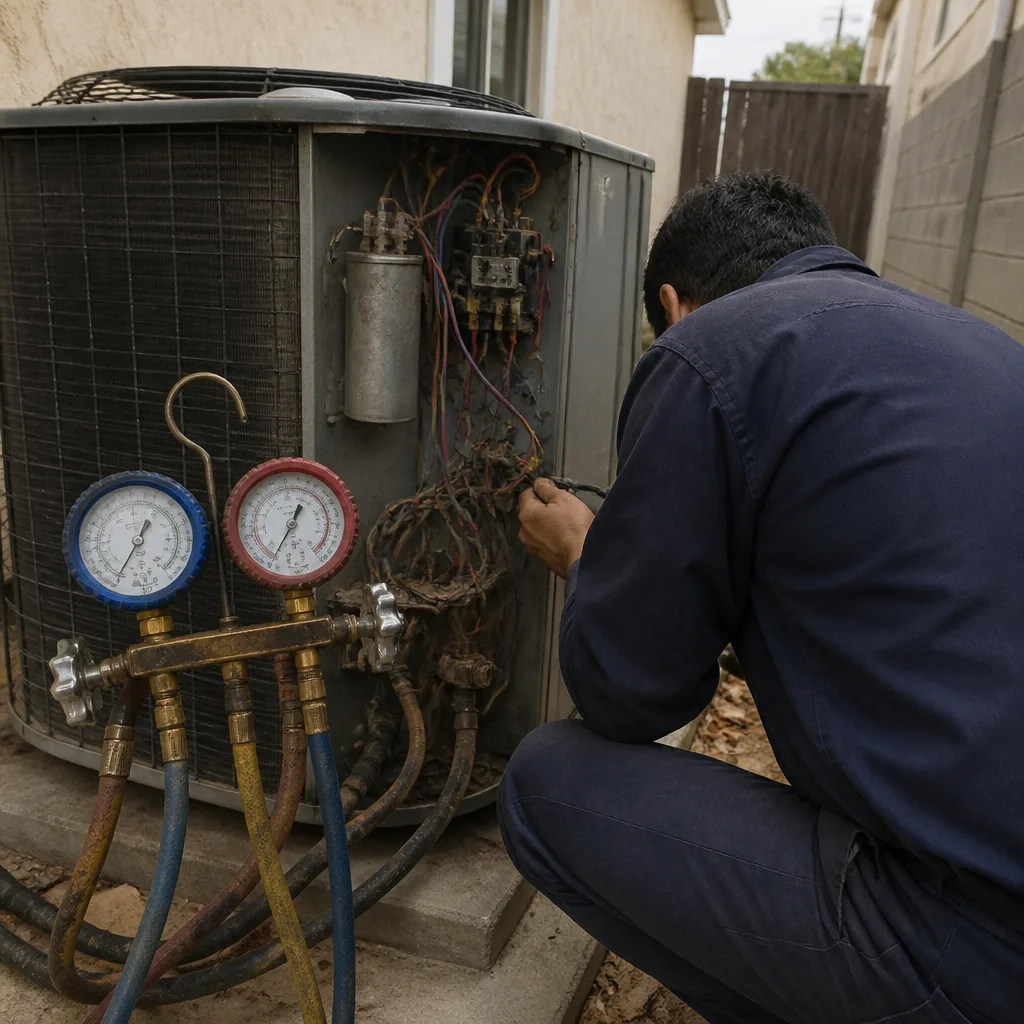
- Doing electrical work “just this once.” Capacitor and contactor swaps look simple in a video and are exactly the kind of unlicensed work that can deny an insurance claim later. Walk away from this one.
- Assuming a dirty filter is “good enough” for another month. In Glendale’s long summers, airflow restrictions accumulate faster than the filter’s packaging suggests. A monthly visual check during cooling season is the right rhythm.
- Calling during the peak week. Waiting for a system to fail in the middle of July puts you at the back of the queue. Shoulder-season evaluations are lower-stress and lower-wait.
See the difference
 Before
 After
 Before
 After
 Before
 After
When to Call a Professional
Some situations aren’t a judgment call. Call us when any of the following applies: the system isn’t cooling and you’ve already verified the filter is clean; you suspect low refrigerant (that’s a leak, not a top-off); the compressor, contactor, capacitor, blower motor, or control board is the suspected culprit; the furnace isn’t igniting or is short-cycling on gas; you’re weighing repair against replacement; and any task that touches the sealed system, gas lines, or electrical connections beyond a thermostat. If you’re in the middle of a Glendale heat wave and the system just died, waiting a few days to save a service call rarely ends well.
For everything on that list, and for the honest conversation about whether to repair or replace, Jasper AC Repair offers free estimates in Glendale. Call (855) 473-8857. We answer 24/7. Fast dispatch from 7am to 7pm, Sunday through Friday. Our technicians have up to 15 years of experience, and we work with whatever brand your home already has.
Frequently Asked Questions
No. Recharging an AC system requires EPA Section 608 certification, which is a federal requirement that applies to homeowners as well as contractors. Handling refrigerant without it is a federal violation regardless of how carefully you do the work. If your system is low, it has a leak, and finding and fixing the leak is the actual job. Call (855) 473-8857 for a diagnostic; we handle refrigerant work legally and correctly for Glendale homeowners.
Filter changes, thermostat swaps on low-voltage wires, condensate line clearing, and outdoor condenser cleaning are all legal for a homeowner in Glendale. Anything that opens the refrigerant circuit, touches gas lines, or involves electrical work beyond a thermostat requires a licensed contractor. When in doubt, ask your city’s building department before you start.
Routine maintenance like filter changes and condensate line clearing doesn’t void a warranty, but improper installation or service can. Manufacturer warranties on residential equipment, including Goodman, Rheem, Daikin, and York models, typically exclude damage from work done by unlicensed or uncertified personnel. Keep your maintenance records and receipts, and let a licensed contractor handle anything beyond basic upkeep.
Most cities, Glendale included, require a permit for HVAC replacement and for significant system modifications. The permit protects you at resale and if a warranty question ever comes up. A contractor who offers to skip the permit on a system swap is trading your protection for their convenience. Ask your building department to confirm the requirement for your specific project.
A C-20 is a California contractor’s license for warm-air heating, ventilating and air-conditioning work. EPA 608 is a federal certification that’s required specifically for refrigerant handling. A contractor doing system replacement needs the C-20; anyone touching the refrigerant circuit needs both. We hold the certifications required for the work we do, and our team is set up for both cooling and heating.
You can’t reliably tell from outside the system, and you shouldn’t try to diagnose it yourself. Low refrigerant usually shows up as reduced cooling, ice on the indoor coil or outdoor lines, or a system that runs constantly without reaching setpoint. A dirty filter shows up as the same symptoms, so verifying the filter first is the right first step. If the filter is clean and the system still underperforms, call us for a diagnostic. Call (855) 473-8857; estimates are free.
The Bottom Line
The DIY versus professional HVAC question is a legal one first and a cost one second. California homeowners can legally own filter changes, thermostat swaps, condensate line clearing, and outdoor coil cleaning; those tasks genuinely extend system life and are worth doing yourself. Everything else that touches the sealed system, gas, or electrical work on the equipment requires a licensed C-20 contractor and, for refrigerant, EPA Section 608 certification on top. The risk of crossing that line isn’t a fine. It’s denied insurance claims, voided warranties, and liability that follows you. Own what’s yours. When you need the rest handled correctly, we’re ready: Jasper AC Repair covers cooling and heating, all nine major brands, and the honest repair-versus-replace conversation. Call (855) 473-8857 for a free estimate. One company. Both seasons.
Written by the team at Jasper AC Repair.