
Last updated November 15, 2026
 AC repair
 Furnace & heating
 Heat pumps
 Ductless mini splits
 Carrier
 Trane
 Goodman
Seasonal tune-up and full diagnostic on your Carrier, Trane, or Goodman system - readings shown to you before any repair is proposed
Diagnosis first, numbers second - you approve the repair price before a single part goes in.
Get your free estimateThe Complete AC Installation Guide for Glendale Homeowners
Most Glendale homeowners assume a new AC is a box you buy and bolt on. It isn’t. The equipment is maybe half the job. The other half is your house: the way your walls hold heat, the shade (or lack of it) on your west-facing rooms, the size of your electrical panel, the ducts already running through your attic. A unit that’s perfectly sized for a home in Long Beach can struggle in a Glendale house a few miles inland. This guide walks through what actually decides whether your install works for the next fifteen summers, from load calculations to permits to choosing equipment for our climate rather than a national ranking list.
Quick Answer
A correct AC installation in Glendale starts with a room-by-room load calculation (Manual J), not a rule-of-thumb square-footage guess, because our inland heat runs hotter than coastal Los Angeles and stucco homes with single-pane windows gain heat fast. The right unit is sized to your actual load, matched to a compatible duct system, and supported by an electrical panel that can carry a modern multi-stage condenser. A City of Glendale permit and inspection are part of a legitimate job, and the written estimate sets the final price. Get the sizing and the panel right and the rest of the install usually falls into place.
Styles & brands we work with
- AC repair
- Furnace & heating
- Heat pumps
- Ductless mini splits
- Carrier
- Trane
- Goodman
Table of Contents
- Why Glendale’s Climate Changes the Sizing Math
- What Older Glendale Housing Means for Your Ducts and Equipment
- Your Electrical Panel and High-Efficiency Equipment
- The City of Glendale Permit Process, Explained
- How to Judge Any Brand for Glendale Conditions
- What a Proper Installation Actually Involves
- What AC Installation Typically Costs in Glendale
- Common Mistakes to Avoid
Why Glendale’s Climate Changes the Sizing Math
Glendale sits in a thermal bowl. On a hot afternoon the city routinely runs noticeably hotter than the coastal side of Los Angeles, and the neighborhoods on the valley-facing edges feel it most. That gap matters because the load calculation that sets your equipment size is driven by design-day temperatures, not by ZIP code averages pulled from a regional list. A unit chosen off a coastal temperature assumption comes out undersized here, and an undersized system runs constantly, never quite catches up, and wears out early.
Manual J, the standard residential load calculation, looks at more than outdoor temperature. It counts:
- Window area, orientation, and glass type (a west-facing single-pane window in July is a big heat source)
- Ceiling and wall insulation levels
- Roof color and attic ventilation
- How much shade the house gets from trees or neighboring buildings
- Air infiltration through older doors, windows, and penetrations
- Internal gains from appliances, lighting, and occupants
The urban heat island makes the outdoor design temperature higher in dense parts of Glendale than in leafier pockets a few blocks away. Pavement, rooftops, and low tree canopy all push the local reading up. A real load calculation uses the conditions at your address, not a county-wide figure. That’s also why a contractor who sizes by “about 500 square feet per ton” will sometimes come out close and sometimes miss by a full ton. In our experience, the miss usually happens on older homes with unshaded west walls and original windows.
The result of getting this right: a system that hits its setpoint on the hottest afternoon without running flat out all day, cycles normally the rest of the summer, and last years longer.
What Older Glendale Housing Means for Your Ducts and Equipment
A large share of Glendale’s housing went up before 1980, and much of it is stucco over wood frame with single-pane windows. Stucco itself isn’t the problem in summer the way it can be in colder climates, but the wall assembly behind it often has thin or no insulation, and single-pane glass lets radiant heat straight into the rooms. Homes like this gain heat faster than a newer build, which feeds straight into the sizing question above.
The duct system is the other half of the story. Older homes in Glendale often have:
- Ductwork sized for a furnace-only system, with undersized returns for cooling
- Flex duct that has sagged, kinked, or pulled loose at connections over the years
- Ducts routed through an unconditioned attic, where they lose capacity to the heat around them
- Fewer supply registers than the layout now calls for, leaving rooms that never cool properly
Before quoting new equipment, a good installer checks the ducts. If the existing system is compatible and in decent shape, it can be reused, which keeps the job simpler and less expensive. If returns are choked or a run is pinched behind a wall, we’d rather flag it up front than install a new condenser onto a duct system that will strangle it. Duct assessment is a big part of why a written estimate takes more than a phone call.
Room layout matters too. Additions and converted garages common in Glendale homes sometimes sit on the far end of a long duct run, and those rooms stay warm unless the system is balanced after installation. Balancing dampers, adjusted after the equipment is running, are part of the finish work, not an optional extra.
Your Electrical Panel and High-Efficiency Equipment
This is where a lot of Glendale installs hit a snag, and it’s the step most homeowners don’t think about until the day of the job. Modern high-efficiency condensers, especially multi-stage and variable-speed units, draw power differently than the single-stage equipment installed decades ago. A 100-amp panel serving an older house may already be close to its limit once the AC, furnace, range, dryer, and everything else are counted. If there isn’t enough headroom, the panel may need upgrading before the new equipment can go in.
Here’s the sequence a careful installer follows. This is not a do-it-yourself checklist; panel work is genuinely dangerous, so treat it as what your contractor should be doing:
- Read the panel label and count the existing breakers and their loads
- Calculate the available capacity against the new condenser’s requirements
- If capacity is short, recommend a licensed electrician handle the panel upgrade, and build that into the timeline
- Confirm the disconnect and whip at the condenser location match the new unit
- Verify the low-voltage control wiring reaches the new equipment cleanly
We can’t speak to your panel without looking at it, and we won’t guess. What we can tell you is that panel capacity is worth confirming before you commit to any equipment choice, because a unit that’s perfect on paper is useless if the house can’t feed it. Electrical work around a panel or live wiring should only be done by a trained, licensed professional. If your panel is 100 amps or older, plan for the conversation, not just the compressor swap.
The City of Glendale Permit Process, Explained
AC replacement and new installation generally require a permit from the City of Glendale, and the work is subject to inspection. Homeowners are often surprised by two things: that a permit is required at all for a like-for-like changeout, and that the inspection isn’t a formality. It checks the installation, not just the paperwork. The exact requirements depend on your scope, so the building department is the authority on your specific job, but the shape of the process is consistent.
What typically happens, in order:
- The installer pulls the permit from the City of Glendale before work begins
- The equipment is installed per the approved plan and manufacturer’s instructions
- An inspector verifies the installation, including electrical connections and the equipment’s placement and clearances
- Any corrections the inspector notes are made and re-inspected
- The permit is finalized and closed
Why it’s worth insisting on the permit: an unpermitted installation can surface as a problem when you sell the home, and it shifts the risk onto you. Insurance questions, disclosure requirements, and future inspections all assume the work was done to code and on record. We pull permits as part of the job because a proper installation in Glendale means the installation is documented, not just working. Ask your installer directly whether the permit is included in the written estimate. If the answer is vague, that tells you something.
How to Judge Any Brand for Glendale Conditions
National “best AC brands” lists are close to useless for a Glendale homeowner, because they rank equipment against an average climate that doesn’t exist here. What matters more is whether a given unit’s performance data lines up with your calculated load, whether parts are readily available locally, and whether the installing contractor knows the equipment well enough to set it up correctly. Setup is not trivial. A well-regarded unit installed poorly outperforms badly and fails early, and an ordinary unit installed precisely runs quietly for years.
We work on equipment from Carrier, Trane, Lennox, Goodman, Rheem, York, Daikin, Bryant, and American Standard, and that shapes how we advise. When you’re not tied to one manufacturer, the recommendation can follow the house. If your home’s load points to a Daikin system and your budget points to a Bryant, you get that conversation honestly. If a York unit fits the existing duct and panel better than anything else, you hear that. Whatever brand you have, we know it, and whatever brand you’re considering, we can tell you how it holds up under Glendale summers without a single incentive steering the advice.
Evaluating a brand for our climate really comes down to a short list:
- Does the published capacity match your calculated load across the hot months, not just at a nominal rating point?
- Are the efficiency ratings the unit is sold on relevant to how you’ll actually run it?
- Are parts and qualified technicians available locally, so a repair doesn’t stall waiting on a special order?
- Does the unit’s electrical draw fit your panel without a major upgrade?
Ask the contractor how they arrived at a specific model for your home. If the answer is a square-footage rule, keep asking questions.
What a Proper Installation Actually Involves
A proper installation follows a sequence, and the order matters. Skipping a step shows up as noise, short cycle times, uneven cooling, or a system that never quite keeps up. This is how a careful job runs, in general terms:
- Load calculation: A room-by-room Manual J calculation using your home’s actual conditions.
- Equipment selection: A model chosen against that load, checked against the duct system and panel capacity.
- Permit: Pulled from the City of Glendale before any work starts.
- Site preparation: Old equipment removed, pad or platform checked, refrigerant lines and electrical assessed.
- Installation: New condenser and air handler or coil set, connected, sealed, and wired to the required practices.
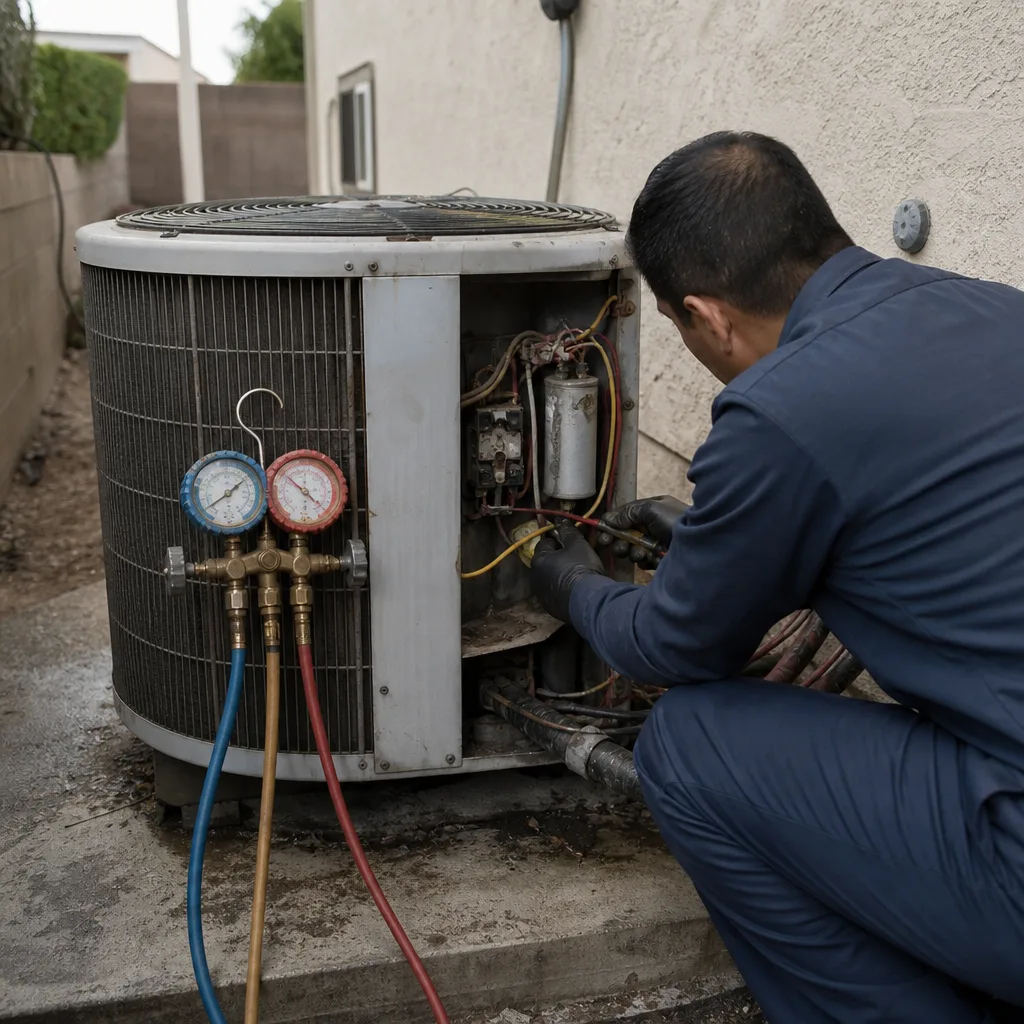
- Evacuation and charge: The refrigerant circuit is evacuated and charged to the manufacturer’s specification, not “to feel.”
- Air balance: Dampers adjusted so every room gets its share, with problem rooms corrected where possible.
- Verification: Airflow and temperature readings taken and recorded. A good installer leaves you the numbers.
- Inspection: The city inspector signs off, and the permit closes.
Notice what’s not on that list: a quick swap. The finish work is where a lot of installations go wrong, and it’s also where you can’t easily see the difference. Ask for the readings afterward. If they don’t exist, the balance was probably never checked. Our technicians have up to 15 years of experience, and they’ll walk you through what was measured on your system and why.
If your home is ready to move on heating or cooling work beyond what we’ve covered here, start with our Jasper AC Repair overview of what we handle. For the cooling side specifically, the details of AC installation show where the pieces above come together.
What AC Installation Typically Costs in Glendale
Costs vary with the home, and no reputable installer can quote from the phone. That said, here’s the shape of the spend so you can plan. These are typical, estimated ranges for the Glendale market, not quotes for your house. The written estimate after a load calculation and an inspection of your ducts and panel is what sets the final price.
| Line item | Typical estimated range |
|---|---|
| Split system condenser and air handler (standard efficiency) | $4,500 – $7,500 |
| Split system condenser and air handler (high-efficiency, multi-stage) | $7,000 – $11,000 |
| Duct modifications or sealing, if needed | $800 – $2,500 |
| Electrical panel upgrade, if required | $1,500 – $3,500 |
| City of Glendale permit (pass-through) | Varies with scope; itemized on the estimate |
Where the range lands depends mostly on sizing. A correctly sized standard unit for an older Glendale home with a compatible duct system sits toward the lower end. A high-efficiency multi-stage unit paired with duct fixes and a panel upgrade moves toward the upper end. Neither is “better” in the abstract; the right answer follows the load calculation and the condition of what’s already in your house.
If the heating side is aging too, planning the two together usually helps. Our furnace repair service is the place to start when a repair makes sense, and full furnace replacement is available when it doesn’t. One company, both seasons, means one contractor to coordinate both pieces instead of two. If the estimate includes rebates or financing paperwork, ask the installer to walk you through it before you sign.
Common Mistakes to Avoid
- Buying off a square-footage rule. Rule-of-thumb sizing misses by a full ton on homes with west-facing single-pane windows and thin insulation, which is common in older Glendale stock. Insist on a room-by-room load calculation.
- Ignoring the panel until install day. A 100-amp panel that can’t feed a modern condenser becomes a last-minute change order or a delayed job. Check capacity before committing to equipment.
- Reusing a duct system that can’t carry the new equipment. Returning the new unit onto sagging, pinched flex duct will show up as hot rooms and constant running all summer. Inspect the ducts first.
- Skipping the permit to save time. Unpermitted work in Glendale creates trouble at resale and shifts the risk to you. A permit is a feature of a proper job, not overhead.
- Chasing nominal efficiency numbers. A unit rated for a housing stock and climate that isn’t ours won’t perform to that rating in a stucco Glendale home. Match the equipment to your actual load.
- Choosing a brand before understanding your home. Picking the logo first and the load second gets the priority backwards. Start with the house before the nameplate.
- Accepting a quote without a written scope. If the estimate doesn’t name the equipment, the duct work, the permit, and the inspection, it’s not a comparable quote. Ask for the details in writing.
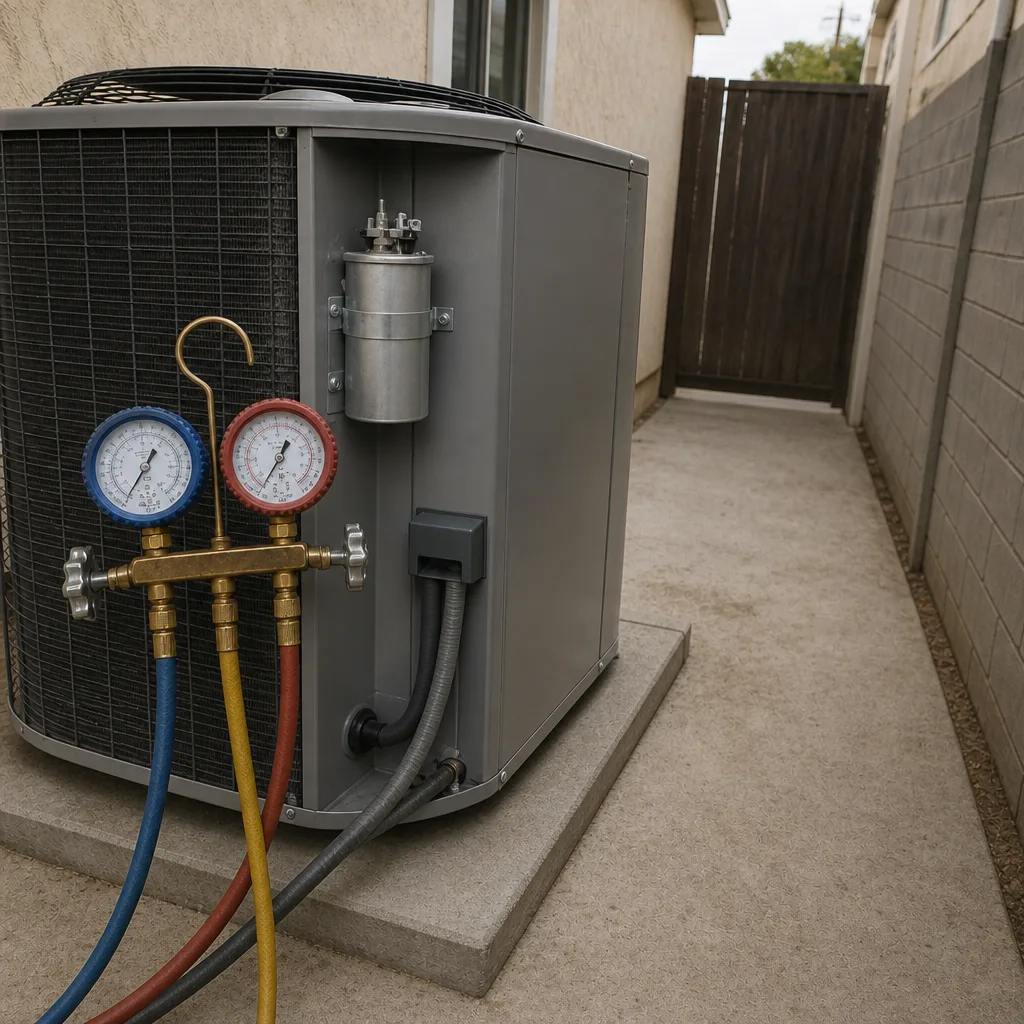
See the difference
 Before
 After
 Before
 After
 Before
 After
When to Call a Professional
Call us when your system is more than a few years from end of life and a repair estimate is climbing toward replacement, when rooms in your home never cool evenly no matter how long the unit runs, or when your panel is 100 amps or older and you’re considering a modern high-efficiency system. Call if you’re planning a sale in Glendale and need the installation documented, or if you’ve had multiple installers out and gotten quotes with no load calculation attached. These are the situations where an honest assessment of the whole house, not just the compressor, changes what you spend. Jasper AC Repair offers free estimates in Glendale. Call (855) 473-8857. We answer 24/7. Fast dispatch from 7am to 7pm, Sunday through Friday.
Frequently Asked Questions
A straightforward like-for-like changeout typically runs a full day. If the job includes duct modifications, an electrical panel upgrade, or a system that needs significant balancing afterward, plan for a second day. The permit and inspection add calendar time, not always work time, and the estimate should tell you what to expect. Call (855) 473-8857 for a free estimate with a realistic timeline for your home.
Yes, replacement and installation work generally require a City of Glendale permit and an inspection. The building department is the authority on the exact requirements for your scope, so confirm the specifics with them, but a permit is standard for this work. Ask any installer whether the permit is included in the written estimate. Call (855) 473-8857 for a free estimate that itemizes the permit.
There’s no single size. The correct size comes from a room-by-room Manual J load calculation that accounts for your home’s insulation, windows, orientation, shade, and the local design temperature, which runs hotter in inland Glendale than along the coast. A rule-of-thumb square-footage figure will sometimes land close and sometimes miss by a full ton. Call (855) 473-8857 for a free estimate that starts with a real load calculation.
It depends on the panel. A 100-amp panel serving an older home may not have the headroom for a modern multi-stage condenser, and if capacity is short, a licensed electrician needs to handle an upgrade before installation. Check the panel label and its existing loads before committing to equipment. Call (855) 473-8857 for a free estimate that confirms your panel’s capacity up front.
Yes. We work on equipment from Carrier, Trane, Lennox, Goodman, Rheem, York, Daikin, Bryant, and American Standard, so whatever unit you have your eye on, we can tell you how it fits your home’s load, duct system, and panel without a brand agenda. Recommendations follow the house and the budget. Call (855) 473-8857 for a free estimate.
Usually, yes, if the system is correctly sized and the ducts are addressed alongside it. An undersized or oversized unit, or one returning onto leaking ducts, wastes energy no matter how efficient the nameplate rating. The savings come from the whole system working together, not the unit alone. Call (855) 473-8857 for a free estimate that accounts for the full picture, and note that any rebate or financing paperwork can be handled with the estimate.
The Bottom Line
Installing an AC in Glendale is an engineering decision before it’s a purchasing one. The climate runs hotter than the coast, the older housing stock gains heat faster and carries duct systems that need checking, the electrical panel often needs a look, and the City of Glendale permit is part of a legitimate job. Get those right, choose equipment against your actual load rather than a national ranking, and the system should serve you well for years. At Glendale we handle AC installation, furnace repair, and furnace replacement under one roof, so one call covers both seasons. Our technicians have up to 15 years of experience and will show you the load calculation and the measurements. For a free estimate, call (855) 473-8857. We answer 24/7. Fast dispatch from 7am to 7pm, Sunday through Friday.
Written by the team at Jasper AC Repair.